
Qvevri
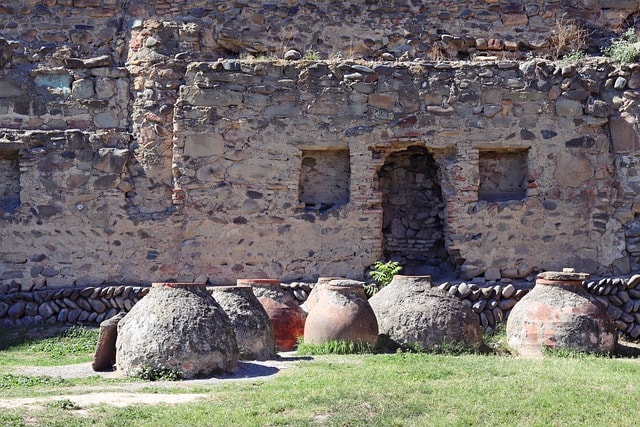
The Qvevri is an egg-shaped earthenware vessel used for making, ageing, and storing wine. A qvevri (also called a churi…
definition
The Qvevri is an egg-shaped earthenware vessel used for making, ageing, and storing wine. A qvevri (also called a churi in western Georgia) is a large, egg-shaped clay vessel with a narrow bottom and a wide mouth at the top. Qvevri (also spelled kvevri) are designed to be buried underground.
History of Qvervi
According to archeological evidence, the first Georgian wines were made and stored in clay vessels called qvevri and date back approximately 8,000 years. Kvevri-amphora manufactured in Caucasian Georgia in the third-fourth century AD do not differ much from the shape of the modern kvevri, and they were also buried in the ground.
The method of wine making in kvevri is still prevalent in many parts of Georgia and has continued for at least eighteen centuries. Most farmers across the country continue to use the qvevri method, highlighting its widespread adoption. This is probably the oldest technology of wine making still used on the planet.
The knowledge and techniques of qvevri winemaking have been passed down through generations, often within the family home. Children learn the craft by observing and participating in activities such as tending vines, pressing grapes, and making qvevris, ensuring the tradition continues. Wine cellars in Georgian homes are considered the holiest place, reflecting the deep spiritual and cultural importance of winemaking.
Wine plays a central role in Georgian culture, being integral to both daily life and celebrations. Rural communities and city dwellers participate in qvevri winemaking, showing its reach across different lifestyles. Georgian oral traditions are vital in preserving and transmitting qvevri winemaking knowledge, reinforcing community identity and authentic practices. Vines are frequently evoked in stories and rituals, underlining their cultural significance.
In 2013, UNESCO recorded the ‘Ancient Georgian traditional Qvevri wine-making method’ on the Intangible Cultural Heritage of Humanity list.
Introduction to Qvevri
Qvevri wine making is an incredible ancient tradition that sits right at the heart of Georgian culture, with roots stretching back over 8,000 years (that’s older than most civilizations!). Recognized by UNESCO as an intangible cultural heritage, this unique wine-making process is still practiced by local communities and village communities throughout Georgia today! Qvevri wines are crafted using a distinctive egg-shaped earthenware vessel, known as a qvevri, which is buried in the ground to create the perfect environment for fermentation and storage.
The wine-making process begins by pressing grapes and pouring the juice, along with the skins and stems, directly into the qvevri. The mixture undergoes alcoholic fermentation, transforming the grapes into wine in a completely natural and unhurried way. This traditional method, passed down through generations for thousands of years, continues to produce high-quality wines that reflect the rich heritage and enduring spirit of Georgian winemaking!
Characteristics of a Qvevri
A qvevri is a large, egg-shaped earthenware vessel that plays a central role in the production of traditional Georgian wine, which is crafted from locally sourced clay. Each qvevri is shaped by skilled qvevri makers and can range in size from small vessels of 20 liters to massive containers holding over 10,000 liters. These vessels are typically buried in the ground or set into the floors of wine cellars.
The earth helps regulate temperature during fermentation and aging – nature’s own climate control system! The qvevri is sealed with a stone lid to protect the wine from air exposure, ensuring a stable environment for the wine to develop its character. Inside, the vessel is coated with beeswax to act as a natural antiseptic and to make it water-tight.
The exterior is often treated with limestone for added strength and protection against earthquakes – because Georgian winemakers think of everything! This careful construction and traditional design make the qvevri an ideal vessel for fermenting, aging, and storing Georgian wine, a testament to thousands of years of winemaking wisdom.
Different Types of Qvevris
While the basic egg shape remains consistent, qvevris vary primarily in size rather than fundamental design. Most Qvevris have a capacity of 1-2 tonnes, but some of them are even bigger. Traditional versions were smaller, with a height of about 1-1.5m, with flat bottoms.
Small qvevris are particularly valued for fermentation due to their ability to diffuse heat efficiently. In contrast, larger qvevris tend to accumulate more heat during fermentation, which can influence the wine style. Modern qvevris are larger and maintain the distinctive egg shape.
How Qvevri is Used in Qvevri Winemaking
The qvevri winemaking process involves several key steps:
- Press Grapes: The first step in making wine in qvevri is to press grapes to extract the juice, often using traditional, communal methods. This juice, along with grape skins, stems, and seeds, is then placed in the qvevri.
- Burial: The vessels are buried underground up to their necks, which provides natural temperature control.
- Fermentation: The qvevri is used to ferment wine naturally, with grape skins playing a crucial role in developing the wine’s character and structure. This process often utilizes unique varieties of Georgian grapes, contributing to the individuality of the wines.
- Sealing: When filled with the fermenting juice of the harvest, the kvevris are topped with a wooden lid and then covered and sealed with earth. Some may remain entombed for up to 50 years.
- Rest and Ageing: After fermentation, the wine is left to rest in the qvevri for several months, typically five to six months, allowing for proper ageing. The underground environment provides stable temperatures for this ageing process, which is essential for the wine’s development.
This extended ageing in qvevri influences the wine’s flavour, creating unique profiles distinct from those produced by modern methods. This method creates distinctive “orange” or amber-colored wines from white grapes due to extended skin contact, and produces unique flavor profiles in red wines.
Qvevri in Modern Times
Georgia remains the primary center of qvevri winemaking; it has spread to winemaking regions such as Italy, Slovenia, Austria, the United States, and others. Modern winemakers in various countries are adopting this ancient technique, often combining traditional qvevri methods with contemporary winemaking technologies to create unique wines that appeal to today’s markets.
Wineries worldwide are now incorporating qvevri vessels into their production facilities, blending heritage with innovation. After fermentation in qvevri, wines are often transferred for bottling, and many are bottled directly from the vessel to preserve their unique qualities.
Benefits of Qvevri Wine
Qvevri wine-making offers a range of amazing benefits that set it apart from modern wine-making techniques! The use of the clay qvevri vessel (these incredible buried clay pots!) allows for a slow, natural fermentation process, which helps preserve the authentic flavors and aromas of the grapes in ways that stainless steel just can’t match.
Qvevri wines are celebrated for their unique mineral notes. Beyond the distinctive taste, qvevri wine making is deeply woven into the fabric of Georgian society, playing a vital role in everyday life and at both secular and religious events throughout the year. The tradition brings together local communities, village communities, farmers, and families (imagine entire villages coming together for harvest!), fostering a strong sense of cultural identity and continuity that you don’t see in commercial wineries.
Passed down through generations (some families have been doing this for over 8,000 years!), the process of making qvevri wine is an inseparable part of Georgia’s heritage, supporting local economies and preserving ancient knowledge that would otherwise be lost forever. For many Georgians, qvevri wines are not just a drink, but a living symbol of tradition, quality, and the enduring spirit of Georgian winemaking that continues to thrive today!
Conclusion
The qvevri represents one of humanity’s oldest continuous winemaking traditions, spanning approximately 8,000 years. Knowledge and experience of Qvevri manufacture and wine-making are passed down by families, neighbours, friends, and relatives, all of whom join in communal harvesting and wine-making activities. Skilled qvevri makers collect clay from local sources, shape the vessels by hand, and fire qvevris in traditional kilns, with the minerals in the clay contributing to the vessel’s inert properties and ongoing discussions about their effect on the wine.
The close relationship between healthy vine cultivation and qvevri winemaking is central to this tradition. What began as a uniquely Georgian tradition has now spread globally, with winemakers worldwide embracing this ancient clay vessel technology to create distinctive wines that bridge millennia of winemaking heritage with modern tastes.