
vitis rupestris
Vitis rupestris, commonly known as the sand grape or rock grape, is a species of wild grape native to the…
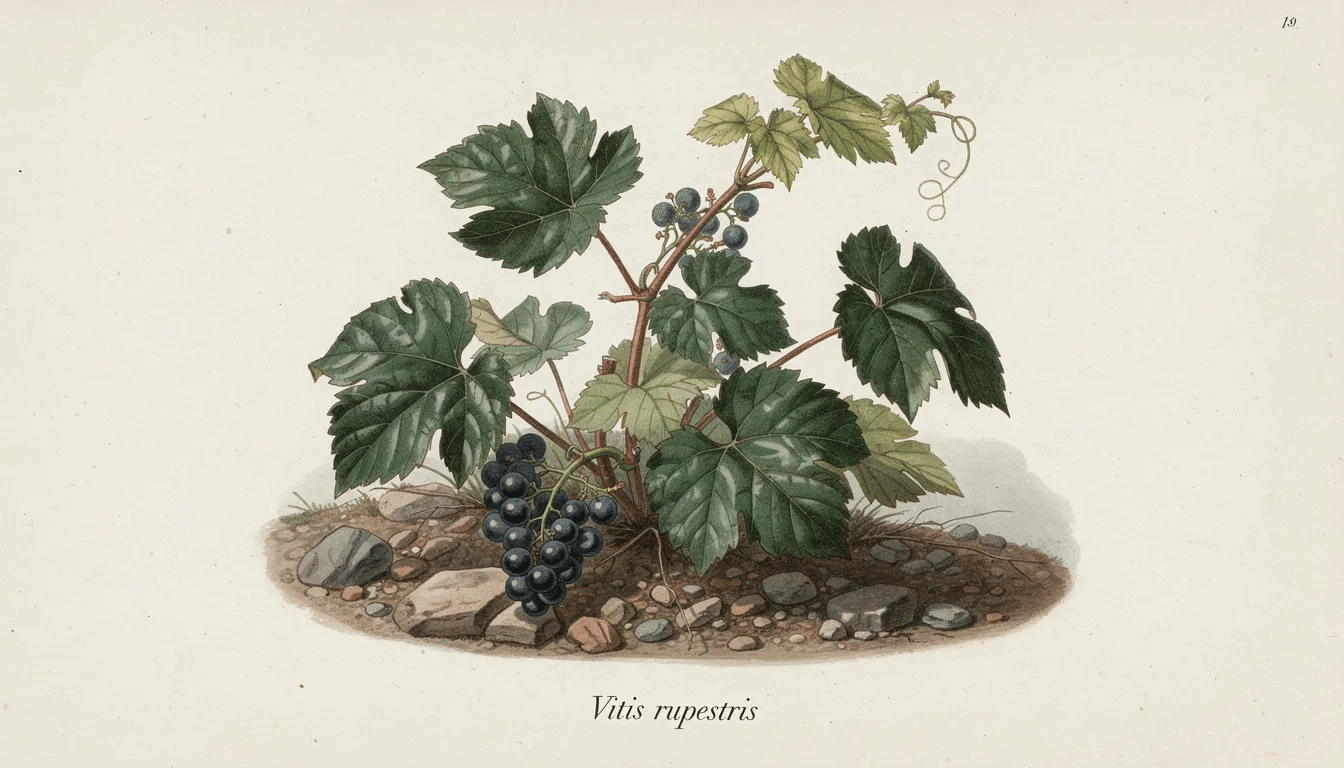
definition
Vitis rupestris, commonly known as the sand grape or rock grape, is a species of wild grape native to the central and southern United States. Its natural growing habitat extends from Missouri and Illinois south to Texas and east to Tennessee, typically growing in rocky, sandy soils along streams and on hillsides—hence its Latin name “rupestris,” meaning “of the rocks.”
The species occurring in these habitats is also found in the Ozark region and West Virginia, with scattered populations east to Pennsylvania and southwest to Oklahoma and Texas. The species thrives in well-drained, often nutrient-poor soils where other grape species might struggle.
Ecology and Habitat
Vitis rupestris’s natural home is centered in the beautiful Ozark Hills of Missouri and Arkansas, with scattered populations as far east as Pennsylvania and southwest into Oklahoma and Texas. This grape species grows well along rocky riverbanks and streambanks, where gravel bars and limestone-rich areas provide well-drained, mineral-packed soils. The plant’s deep roots dig deep into the soil (often reaching the water table), and it flourishes in places where water is in short supply.
Unlike many climbing grape species, wild Vitis rupestris typically grows as a sturdy, self-supporting bushy plant that rarely climbs more than four to eight feet. Its growth pattern is in a tapering, upright form with lots of branches, and the young shoots start smooth and red before maturing into wood that’s perfectly cylindrical and finely lined, all covered in dark bark. This species absolutely loves sunny spots and dappled shade, but not extreme shade. It’s perfect for open woodland gardens and light green soils.
From an ecological standpoint, Vitis rupestris plays such a vital role in its native habitats. Its early-ripening, gorgeous, deep crimson fruit provides incredible food for many grazing mammals, which also love to munch on its tender young leaves. The plant’s flowers are absolute pollen powerhouses, supporting all the local pollinator populations.
You’ll often find Vitis rupestris getting cozy with other Vitis species (like the Riverbank grape), which really adds to the genetic diversity of the whole Vitaceae family. This amazing background has made it a true superstar in breeding programs, where it’s used to create disease-resistant varieties and hybrids that can stand up to attacks from downy mildew, powdery mildew, black rot, and other grapevine pests and diseases.
Vitis rupestris can handle environmental stresses like drought and poor soil fertility due to its sprawling deep underground root system. This adaptability has led to the development of popular cultivars like Rupestris St. George, which is widely used as rootstock and in creating amazing hybrids with existing varieties to produce grapes that are both disease-resistant and pest-tolerant.
Despite being such a hardy survivor, Vitis rupestris is sadly considered a critically endangered species mainly due to habitat destruction and the ongoing challenges of climate change. Conservation efforts are essential to protect the scattered populations of this unique grape species and preserve its ecological and agricultural contributions for future generations. The sand grape’s ability to bear fruit on young shoots, its resistance to so many common vine diseases, and its role in supporting both wildlife and modern winemaking really highlight just how important it is in the landscape and in the continuing story of grape growing!
Is It Used to Make Wine?
Vitis rupestris is rarely used to make wine directly. The grapes themselves are small, highly acidic, and lack the sugar content and flavor complexity desired for quality winemaking. The berries are quite tart and somewhat astringent, making them unsuitable for producing palatable wine on their own. The pulp clings closely to the skin, giving the berries a tender texture. The fruit often appears as two berries joined together or berries coalesced, and they are frequently slightly flattened at the stem. Additionally, the fruit ripens early, which contributes to the species’ adaptability. While indigenous peoples and early American settlers may have occasionally fermented these grapes, the results were generally considered inferior to other grape species.
Other Uses for Vitis Rupestris
The primary and most significant use of Vitis rupestris is as rootstock for grafting wine grape varieties. Following the phylloxera epidemic that devastated Vitis Vinifera in European vineyards in the late 19th century, viticulturists discovered that American grape species possessed natural resistance to this root-feeding aphid. Vitis rupestris became one of the most important species for developing phylloxera-resistant rootstocks, often crossed with other American species like Vitis berlandieri or Vitis riparia. Vitis rupestris is used for many root stocks and is important in breeding French hybrid grapes and modern European varieties.
These rootstocks are still widely used today in vineyards around the world, including in Southern France, providing pest and disease resistance while allowing desirable V. vinifera varieties to produce quality fruit. Hybrids widely use a Vitis rupestris background for pest and disease resistance, resisting fungus, and insect attacks. The species’ vigorous root system and adaptability to various soil conditions make it particularly valuable for viticulture.
Its botanical description growth—characterized by deep roots, robust wood, and resilient foliage—contributes to its selection in breeding programs. Additionally, some breeding programs have used Vitis rupestris in developing hybrid grape varieties that combine disease resistance with better fruit quality. Species frequently used in hybridization, such as Vitis rupestris, help produce varieties with improved traits, including the ability to thrive on their own roots.
Varieties categorized as French hybrid grapes and PIWI types often have a Vitis rupestris background. Notably, popular cultivars like Rupestris St. George and Ganzin Glory are widely used as rootstocks or for ornamental purposes. The flowers that produce abundant pollen further enhance their value in hybridization and breeding efforts.
Characteristics
Vitis rupestris is a deciduous climbing vine with several distinctive features. The leaves are relatively small, typically 7-12 centimeters wide, with a distinctive broadly heart-shaped or kidney-shaped form and coarsely toothed margins. Unlike many grape species, the leaves usually lack significant lobing.
The buds are small, nearly rounded, and slightly conical in shape, emphasizing their delicate and diminutive nature. The flowers feature stamens that are bent laterally and recurved, contributing to the plant’s unique reproductive morphology. The plant produces small, dark purple to black berries in compact clusters, each grape measuring only 6-10 millimeters in diameter.
The species has a remarkable drought tolerance and can survive in shallow, rocky soils with minimal water. Its root system is notably strong and deep-penetrating, contributing to its value as rootstock. The vine is also naturally resistant to phylloxera and shows good tolerance to various fungal diseases, though it can be susceptible to lime-induced chlorosis in highly alkaline soils.
Conclusion
While Vitis rupestris may not grace our wine glasses directly, its contribution to viticulture has been profound and enduring. This humble American wild grape played a crucial role in saving the world’s wine industry from phylloxera devastation and continues to support vineyards globally as a rootstock foundation.
Its story exemplifies how native species, even those producing unpalatable fruit, can possess characteristics of immense agricultural value. The sand grape stands as a testament to the importance of biodiversity and the unexpected ways different species can work together—in this case, American roots supporting European vines to produce the world’s finest wines.