
Romorantin
Romorantin is an ancient French white grape variety with a history stretching back to the early 16th century. The variety…
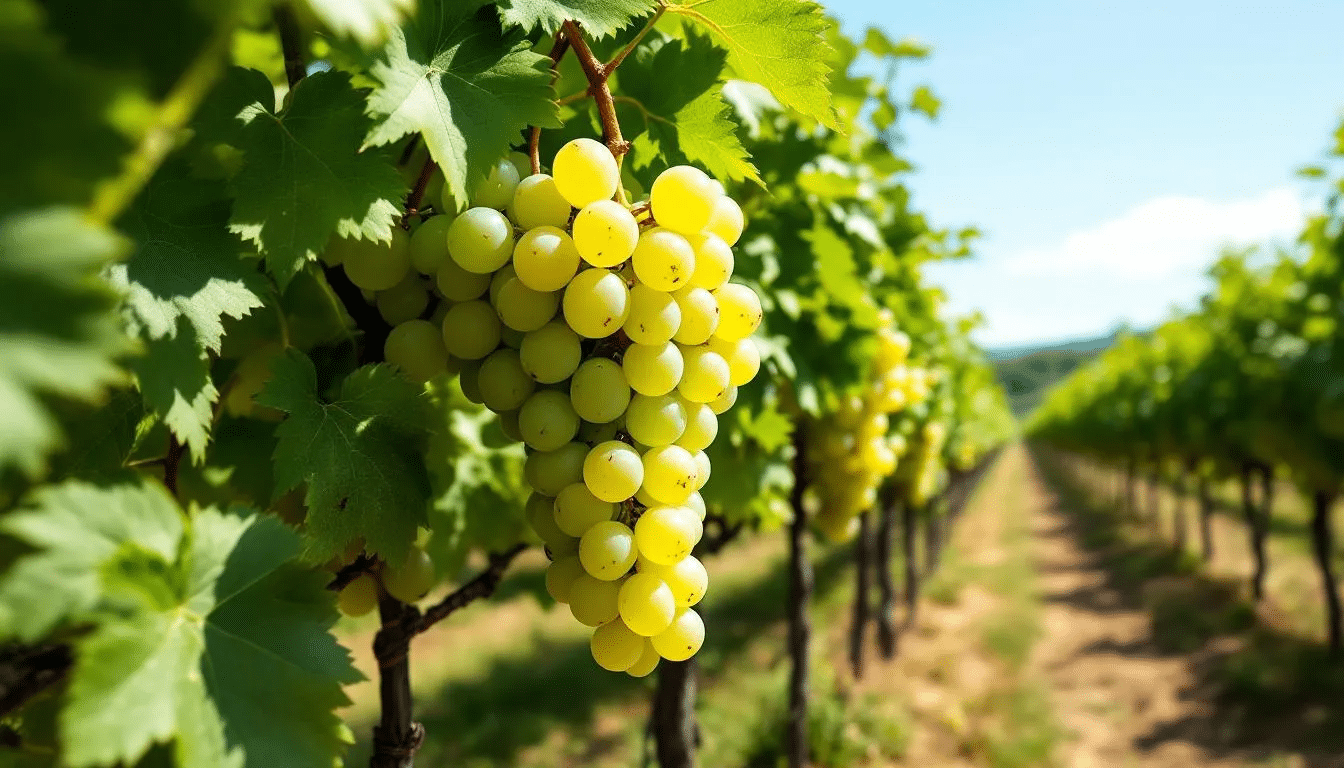
definition
Romorantin is an ancient French white grape variety with a history stretching back to the early 16th century. The variety takes its name from the town of Romorantin-Lanthenay in the Sologne region of the Loire Valley. According to tradition, King François I ordered vines from Burgundy to be planted in the area around 1519, with the intention of developing vineyards near his hunting lodge at Chambord. It was during this period that the vineyards and, according to some legends, even the town itself were created to support the king’s ambitions.
The earliest historical mention of Romorantin dates back to 1868, as documented in Pierre Rézeau’s dictionary published by CNRS Editions, which is considered an authoritative source on French grape varieties. These traditional stories and the debated origins of Romorantin have appealed primarily to enthusiasts and scholars, often rooted in local folklore rather than concrete historical evidence.
While the exact Burgundian origin remains debated by ampelographers, the grape found its home in the Loire and has remained there ever since. Some historians suggest local growers may have introduced it in the 19th century, possibly between 1820 and 1830. Genetically, Romorantin is closely related to the Pinot family, with Pinot Noir often mentioned as a possible ancestor, highlighting its connection to other historic French grape varieties.
The variety nearly disappeared during the phylloxera crisis of the late 19th century and struggled through the 20th century as more commercially viable grapes gained favor. By the 1990s, plantings had dwindled to fewer than 50 hectares, making Romorantin one of France’s rarest indigenous varieties.
What Makes Romorantin Unique
Romorantin stands apart for several compelling reasons. It’s essentially a monopoly grape—grown almost exclusively in one tiny appellation and championed by a handful of dedicated vignerons. The variety demonstrates remarkable adaptability to its terroir, producing wines that vividly express the sandy, gravelly soils and clay subsoils of Sologne.
The grape’s thick skin provides natural disease resistance and contributes to wines with surprising aging potential, unusual for a relatively obscure white variety. Romorantin also possesses naturally high acidity, which gives the wines remarkable freshness and the ability to develop complex tertiary flavors over time.
Some producers and enthusiasts even consider Romorantin an ‘edgy wine’ because of its assertive acidity, phenolic structure, and distinctive, sometimes racy profile that appeals to those seeking a bold, non-mainstream expression. Unlike many white grapes that produce overtly fruity wines, Romorantin tends toward mineral, floral, and herbal characteristics that evolve beautifully with age.
Where Romorantin Grows in the World
Romorantin’s geographical footprint is small. The grape is almost exclusively found in the Cour-Cheverny AOC in the Loire Valley, where it’s the only permitted white grape variety. The tiny appellation covers eight communes near the town of Cheverny in the Sologne region and was established in 1993. The vineyards are in a region famous for its natural landscape, with many vineyards bordered by forest, which influences the terroir and imparts unique nuances to the wine.
A few experimental plantings exist elsewhere in the Loire, and there have been scattered attempts to grow Romorantin in other parts of France, but these remain negligible. The variety’s reluctance to thrive outside its home territory, combined with limited commercial demand, has kept it firmly rooted in its historic heartland. Total worldwide plantings amount to approximately 60-70 hectares, making it one of the world’s rarest commercial wine grapes.
How Winemakers Use Romorantin
Winemakers approach Romorantin with methods that emphasize its natural character. The grape is vinified almost exclusively as a still, dry white wine. Traditional approaches involve stainless steel or neutral vessels to preserve the variety’s inherent minerality and acidity; some producers experiment with oak aging or extended lees contact to add texture and complexity.
The grape’s naturally high acidity means malolactic fermentation is often avoided to maintain freshness. Some avant-garde producers work with skin contact or natural fermentation techniques, which can draw out additional phenolic complexity from Romorantin’s thick skins. The variety is rarely blended, as the Cour-Cheverny AOC requires 100% Romorantin for wines bearing that designation. Some Romorantin wines, especially those from older or non-AOC vines, are instead labeled as Vin de France due to regulatory restrictions, despite their unique heritage and quality.
Harvest timing proves crucial—picked too early, the wines can be austere and overly acidic; too late, and they lose their characteristic freshness. Most producers aim for full physiological ripeness while maintaining the variety’s signature tension between fruit and acidity.
Tasting Notes and Wine Specifications
Color Wine color refers to the visual appearan… More: Pale to medium lemon-yellow, often with slight greenish reflections in youth. With age, the wines develop deeper gold hues.
Aroma: The aromatic profile leans toward delicate and complex rather than immediately expressive. Expect white flowers (acacia, honeysuckle), citrus blossom, green apple, and quince in youth. With age, honeyed notes emerge alongside beeswax, hay, chamomile, and subtle nutty characteristics. A distinctive flinty or chalky minerality often threads through the aromatic profile.
Flavor: On the palate, Romorantin typically offers flavors of green apple, lemon zest, white peach, and pear, supported by pronounced chalky minerality. There’s often an herbal quality—think vervain or lemon balm—and a slightly bitter, pleasantly astringent finish reminiscent of grapefruit pith. Aged examples develop rich flavors of honey, dried flowers, and toasted hazelnuts. The unique characteristics of Romorantin wines are often attributed to the specific vineyard sites where the grape is grown, with each site imparting subtle differences in flavor and minerality.
Structure: High natural acidity (often 6-8 g/L) provides a crisp, vibrant backbone. The wines generally range from 12-13% alcohol, maintaining elegance rather than power. Medium-bodied with a distinctive chalky or saline texture on the mid-palate. The thick skins contribute a subtle phenolic grip unusual in white wines.
Aging: Young Romorantin can be quite austere and benefits from at least a year of bottle age to integrate. The variety’s combination of high acidity and phenolic structure allows it to age gracefully for 5-10 years, with exceptional examples improving after 15-20 years spent aging. With time, the wines gain richness and develop fascinating tertiary complexity while retaining remarkable freshness.
Food Pairing: The wine’s high acidity and mineral character make it exceptionally food-friendly. Pairings include Loire Valley goat cheeses (Selles-sur-Cher, Valençay), freshwater fish (pike, zander), river crustaceans, asparagus, and dishes featuring cream sauces. The wine’s structure can handle richer preparations like chicken in cream sauce or veal sweetbreads. Aged examples pair beautifully with aged Comté or poultry with morel mushrooms.
Today
Romorantin has experienced a modest renaissance over the past two decades, driven largely by the efforts of passionate producers and growing interest in rare, terroir-driven wines. Compelling wines that demonstrate Romorantin’s unique qualities, from crisp, mineral-driven dry whites to more textured, age-worthy expressions that highlight the grape’s versatility.
The grape has attracted attention from sommeliers and wine enthusiasts seeking alternatives to more common varieties, and its rarity has become part of its appeal. While plantings remain minimal, they’ve stabilized and even increased slightly as younger winemakers recognize the variety’s potential. The wines command modest prices compared to their Burgundian counterparts, making them attractive discoveries for adventurous wine lovers.
Climate change may actually benefit Romorantin, as its naturally high acidity provides a buffer against warming temperatures. However, recent climatic events, such as the floods in June 2015, have also posed significant challenges for producers in the region. Some producers believe the variety could become increasingly relevant as a model for fresh, age-worthy white wines in a warmer future.
Should You Try It?
If you appreciate wines that prize elegance over power, minerality over fruit, and express a singular sense of place, Romorantin deserves your attention. This is emphatically not a crowd-pleasing, immediately gratifying wine—it rewards patience and contemplation. Those who love Chablis, Muscadet sur lie, or mineral-driven Chenin Blanc will likely find much to appreciate in Romorantin.
The wine offers exceptional value given its complexity and aging potential. For the price of a village-level Burgundy, you can explore a rare, historic variety that tells a compelling story about terroir, tradition, and the dedication required to preserve nearly extinct grape varieties.
Romorantin demands something from the drinker—time, attention, and perhaps a little faith. To truly appreciate Romorantin, consider visiting local producers in the region, where you can experience the wine in its authentic setting and gain deeper insight into its unique character.
Conclusion
Romorantin represents something increasingly rare in the wine world: a grape variety that exists almost entirely outside commercial production, preserved through the dedication of a handful of vignerons who believe in its unique expression. It offers a direct line to a specific place—the sandy soils and continental climate of Sologne—and to centuries of viticultural history.
In an era when international varieties dominate, and many wines taste increasingly similar, Romorantin’s stubborn particularity feels almost radical. It reminds us that wine’s greatest gift isn’t consistency or immediate appeal, but the ability to communicate the character of a place through flavor, texture, and time. For those willing to seek it out and give it the patience it deserves, Romorantin offers a quietly profound experience—a taste of what wine can be when shaped by place rather than market forces.