
Crush
Once grapes are harvested, they’re brought straight to the winery for the crush, and the winemaking begins. For red wines,…
definition
Once grapes are harvested, they’re brought straight to the winery for the crush, and the winemaking begins. For red wines, the grape skins play a vital role as they’re left in contact with the juice during fermentation to extract tannins, color, and complex flavors. In contrast, white wines are typically made by separating the juice from the skins early, resulting in a lighter, more delicate profile.
Crushing grapes is a crucial first step in releasing the juice, setting the stage for fermentation, a process where natural or added yeasts convert sugars into alcohol.
After fermentation, the young wine may be aged in oak barrels to develop deeper, more complex flavors and aromas, or in stainless steel tanks to preserve their fresh, fruity character. Whether crafted by enthusiastic home winemakers or seasoned professionals with decades of experience, every batch of wine is the result of careful monitoring and critical decision-making at every single stage, from grape to glass.
Grape Preparation
Before the winemaking can begin, grapes must be carefully prepared for crushing by sorting and cleaning the freshly harvested grapes to remove the leaves, stems, and any damaged or underripe fruit, ensuring only the best grapes are made into wine. The grape harvest is a pivotal moment the method and timing of harvesting can greatly influence the quality and style of the final wine.
In small-scale wine production or for those seeking a traditional touch, grape stomping remains a cherished method that’s been around for centuries. This gentle technique allows for careful extraction of juice from the grape skins, helping to manage tannin levels and preserve the delicate flavors.
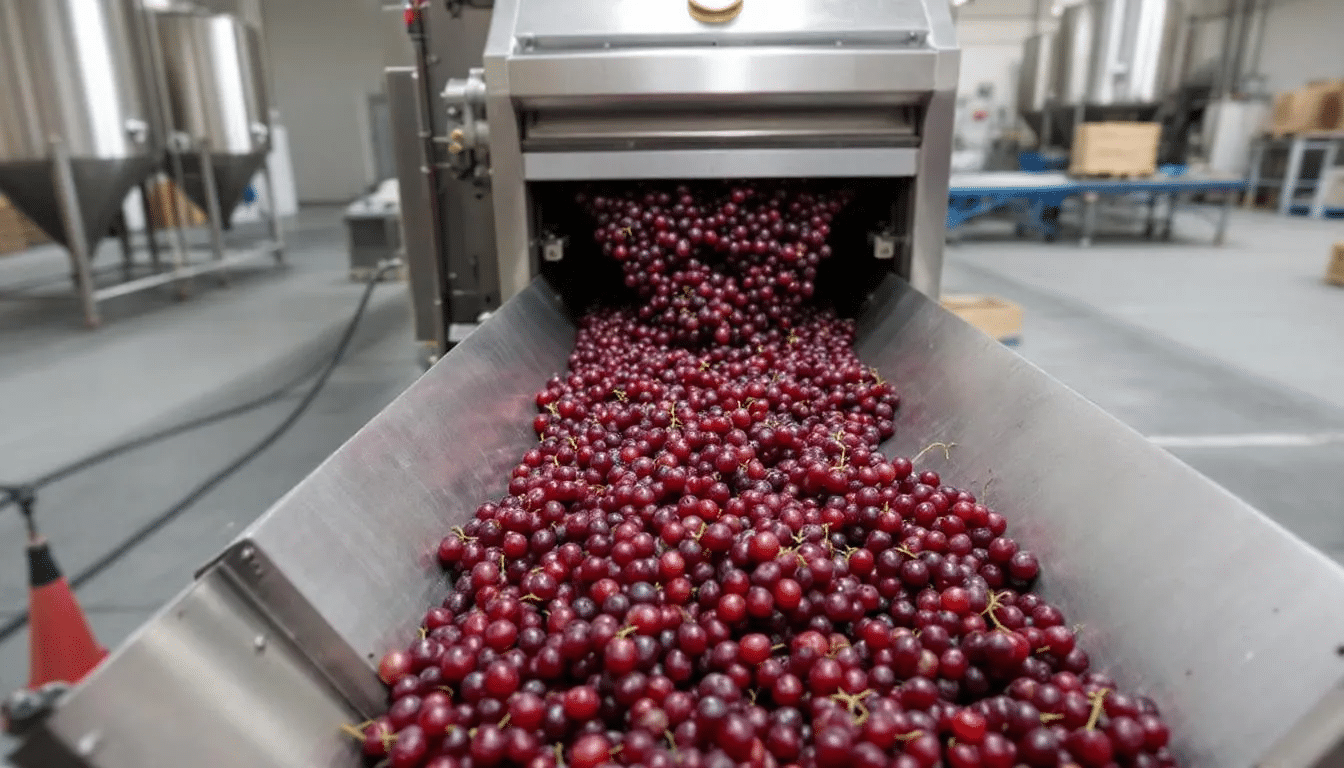
For larger batches and greater efficiency, most modern wineries rely on mechanical crushers that can process vast quantities of grapes quickly and consistently. They break the skins to release juice while minimizing damage to seeds and skins, which helps control bitterness and astringency in the finished wine.
What is it
The “crush” in winemaking refers to the process of breaking open grape berries to release their juice, pulp, and seeds. It’s also used as a term for the entire harvest season when grapes are picked and processed. The crush breaks the grape skins to allow the juice to flow out while keeping the stems, seeds, and skins largely intact (though the degree varies depending on the winemaking style).
Steps of the Crush
The crush process typically works as follows:
Destemming and crushing: Grapes first pass through a destemmer, which removes the stems (which can add bitter, astringent flavors). The berries then go through crushing rollers or paddles that break them open without pulverizing the seeds, which would release harsh tannins.
For red wines: The crushed grapes—juice, skins, seeds, and pulp together (called “must”)—go directly into fermentation tanks. The skins remain in contact with the juice during fermentation to extract color, tannins, and flavor compounds.
For white wines: After crushing, the juice is typically separated from the skins immediately or after a brief contact period, then clarified before fermentation begins.
For rosé wines: A middle approach is used, with limited skin contact time to achieve the desired pink color before the juice is separated and fermented.
Why are grape skins important
The crush is crucial for several reasons:
Juice extraction: It’s the first step in releasing the grape juice needed for fermentation, making the sugars accessible to yeast.
Control over extraction: The gentleness of the crush determines what gets extracted from the grapes. A harder crush might break seeds and release bitter compounds, while a gentle crush preserves delicate aromatics and prevents excessive tannin extraction.
Skin contact management: For red wines especially, crushing initiates the maceration process where phenolic compounds (color, tannins, flavors) are extracted from the skins into the juice.
Oxygen exposure: The crush introduces some oxygen to the must, which can be beneficial for certain yeast activities and can help stabilize color in red wines, though winemakers carefully manage this to avoid oxidation.
Winemaking
The winemaking process process can last for between four and six weeks with several key steps: crushing, fermentation, and aging (each requiring precise timing and temperature control). Red wines and white wines are crafted using distinct methods—red wines typically undergo extended aging in oak barrels (often for 12-24 months) to develop rich flavors and complexity, while white wines are often fermented and aged in stainless steel tanks (maintained at cool temperatures around 55-65°F) to maintain their crisp, fresh character.
Winemakers combine time-honored traditions (some dating back centuries) with modern techniques, carefully managing each stage to produce wines that reflect the unique terroir of their vineyards.
When is a crush not used
Several winemaking techniques intentionally skip or minimize the crushing process:
Whole cluster fermentation: Some winemakers, particularly in regions like Burgundy, ferment entire grape clusters without destemming or crushing. This technique (called whole cluster or whole bunch fermentation) can add complexity, spice notes, and silkier tannins, though it requires perfectly ripe stems to avoid vegetal flavors.
Carbonic maceration: Used famously in Beaujolais for wines like Beaujolais Nouveau, whole uncrushed grapes are placed in a carbon dioxide-rich environment. Fermentation begins inside the intact berries, creating fruity, low-tannin wines with distinctive banana and bubblegum aromas.
Whole berry fermentation: A variation where grapes are destemmed but not crushed, allowing some berries to remain intact during fermentation.
Gentle pressing only: For some premium white wines and sparkling wines, grapes may go directly to the press without crushing, allowing for extremely gentle juice extraction that captures only the highest quality, clearest juice.
Conclusion
The crush represents far more than simply breaking open grapes—it’s a critical decision point in winemaking that influences everything from the wine’s structure and flavor profile to its color and aging potential. Whether a winemaker chooses aggressive crushing, gentle handling, or forgoes crushing entirely reveals their stylistic approach and the character they wish to coax from their grapes.
Understanding the crush helps us appreciate that great wine begins not in the cellar, but in these first careful moments when grape becomes must, and the winemaker’s vision starts taking liquid form.