
Wine Bottles
The history of wine bottles is fascinating and spans thousands of years. The earliest glass wine bottles can be traced…
definition
The history of wine bottles is fascinating and spans thousands of years. The earliest glass wine bottles can be traced back to ancient civilizations, particularly the Romans around the 1st century AD. However, these early wine bottles were quite different from what we know today – they were often round-bottomed and required stands or holders.
The modern wine bottle, as we recognize it today, evolved much later. The English are credited with developing the first practical wine bottles in the 17th century, around the 1650s. Sir Kenelm Digby, an English courtier and diplomat, is often credited with creating stronger, more durable glass bottles using a coal-fired furnace that produced darker, thicker glass. These wine bottles had the characteristic punt (the indentation at the bottom) and could stand upright.
The iconic cylindrical shape we’re familiar with didn’t become standard until the 18th century, when glassmaking techniques improved, and wine bottles could be stored on their sides, allowing the wine to age properly, keeping the corks moist.
Different Styles of Wine Bottles
Wine bottle shapes have evolved to serve both practical and traditional purposes. Here are the main styles:
Bordeaux Bottles are tall with straight sides and pronounced shoulders. Originally from the Bordeaux region of France, they’re commonly used for Cabernet Sauvignon, Merlot, and Sauvignon Blanc. The shoulders help catch sediment during pouring.
Burgundy Bottles feature sloped shoulders and a more cylindrical shape. These originated in the Burgundy region and are typically used for Pinot Noir and Chardonnay. The gentler slope makes them elegant and easy to handle.
Rhine/Hock Bottles are tall and slender with minimal shoulders. These German-style bottles are commonly used for Riesling and other aromatic white wines. Their elongated shape is both distinctive and practical for storage.
Champagne Bottles are similar to Burgundy bottles but much thicker and heavier to withstand the pressure from carbonation. They have a deep punt and reinforced glass throughout.
Chianti Bottles traditionally featured a straw basket (fiasco) around the bottom, though modern versions are typically in standard glass. The straw wrapping helped protect the thin glass during transport.
Different Thicknesses of Wine Bottles
Wine bottle thickness varies significantly based on the wine type and quality level:
Standard bottles typically have a glass thickness of 3-4mm, suitable for most table wines that will be consumed relatively quickly. These provide adequate protection while keeping costs reasonable.
Premium bottles often feature 4-6mm thick glass, offering better protection for wines intended for aging. The extra thickness provides better temperature stability and protects against light damage.
Sparkling wine bottles are the thickest at 6-8mm or more, necessary to withstand internal pressures of up to 90 PSI. The reinforced glass prevents dangerous explosions and maintains wine quality.
Ultra-premium bottles can have even thicker glass, sometimes reaching 8-10mm. While this adds significant weight and cost, it provides maximum protection for expensive wines and creates a luxury feel.
The punt depth also varies with thickness – deeper punts in thicker bottles help distribute stress and provide better structural integrity, especially important for larger format bottles.
Different Colors of Wine Bottles
Wine bottle colors serve both aesthetic and functional purposes:
Clear/Flint Glass allows consumers to see the wine’s color and clarity, making it popular for white wines and rosés where visual appeal matters. However, it offers minimal UV protection.
Antique Green is the most traditional color, offering good UV protection while maintaining an elegant appearance. It’s commonly used for both red and white wines and provides a classic, premium look.
Dark Green provides excellent UV protection and is frequently used for red wines, particularly those intended for aging. The deep color helps preserve wine quality over time.
Amber/Brown offers the best UV protection of all colors, filtering out harmful light wavelengths. It’s often used for premium wines and those with extended aging potential.
Cobalt Blue is less common but provides good UV protection while creating a distinctive, premium appearance. Some regions and producers use it as a signature look.
Black/Dead Leaf Green is very dark, almost opaque, providing maximum light protection. It’s often used for ultra-premium wines where protection is paramount.
The choice of color often reflects regional traditions, with different wine regions historically favoring specific colors based on local glassmaking traditions and practical needs.
Different Wine Bottle Sizes
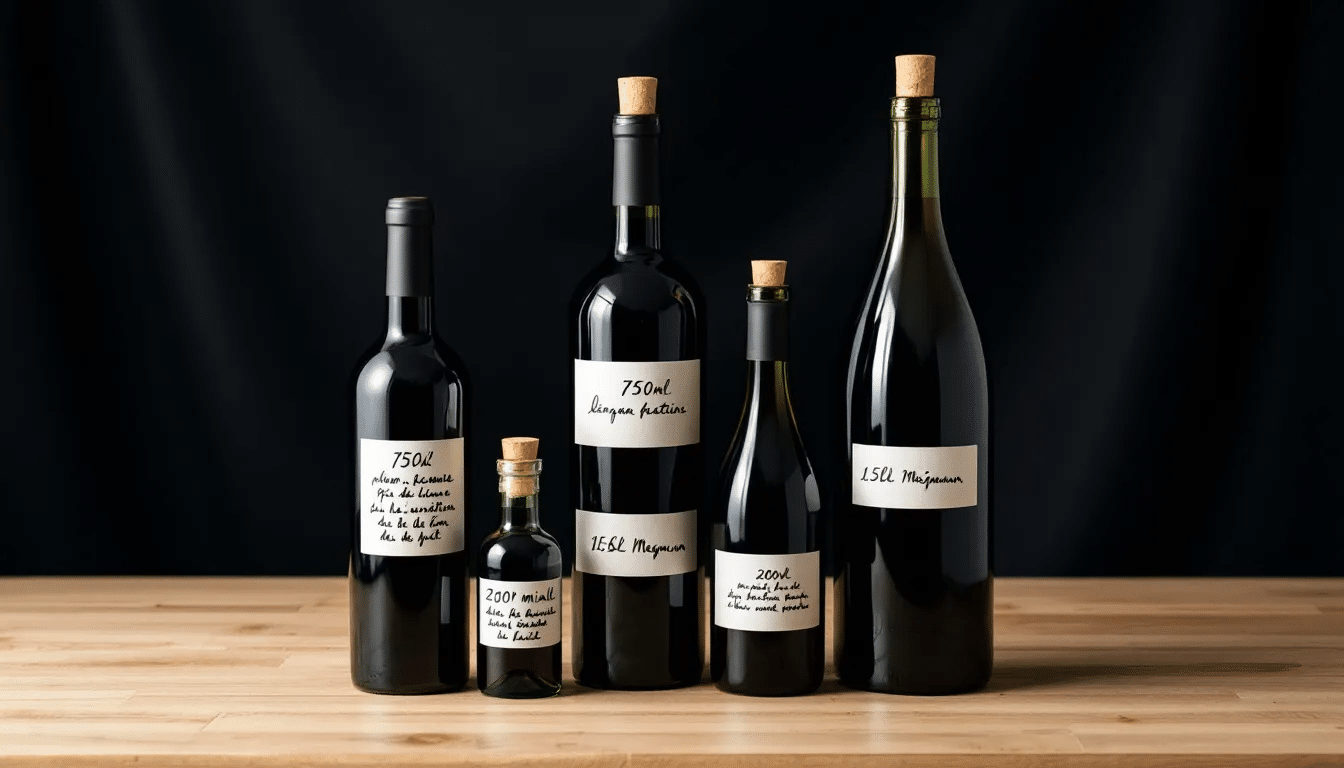
Wine bottles come in various sizes, each with traditional names:
Split/Piccolo (187.5ml) – Quarter of a standard bottle, perfect for single servings or airline portions. These small bottles are ideal for situations where only a small amount of wine is needed, such as tasting events, mini-bars, or for individual consumption without opening a full-sized bottle. They are also commonly used for sparkling wines and Champagnes, offering a convenient and elegant way to enjoy a single glass without waste.
Due to their compact size, Split bottles are easy to transport and store, making them popular choices for picnics, flights, or as a part of gift sets. The smaller volume also means the wine is consumed quickly after opening, preserving its freshness and preventing oxidation. Additionally, these bottles often come with the same type of quality closures as larger bottles, ensuring the wine’s integrity is maintained despite the reduced bottle size.- Quarter of a standard bottle, perfect for single servings or airline portions.
Half Bottles (375 ml) – Ideal for intimate dinners or when you want just a glass or two without opening a full bottle. Half-bottles are also popular for sampling different wines without committing to a larger quantity, making them a great choice for tastings or pairing with specific courses in a meal. Their smaller size helps preserve the wine’s freshness since the bottle is consumed more quickly after opening, reducing the risk of oxidation.
Half-bottles are convenient for single servings and easier to store in small refrigerators or wine coolers. They are often used for dessert wines, sparkling wines, and premium selections where quantity is less important than quality and experience. This size also appeals to those who want to enjoy wine without the pressure of finishing a standard 750 ml bottle, offering flexibility and reducing waste.
Standard Bottle (750 ml) – The most common size worldwide, providing approximately 5-6 glasses of wine. This size is the industry standard for most wines sold globally, striking a balance between convenience, storage efficiency, and optimal aging conditions. It is the ideal capacity for both individual consumption and sharing among small groups, making it widely popular in retail, bars, and restaurants.
The 750 ml wine bottle size also fits well into wine racks and coolers designed for home use; it is the default size for most wine competitions and reviews. The standard bottle is compatible with a wide range of closures, including corks and screw caps, which helps preserve the wine’s quality and flavor over time. Whether purchasing wine for casual drinking or collecting, the standard bottle remains the go-to choice for versatility and accessibility.
Magnum (1.5L) – Equivalent to two standard wine bottles, considered optimal for aging as the larger volume-to-surface ratio slows oxidation. Magnums are sought after by wine collectors and connoisseurs as the wine inside tends to develop deeper complexity and balance over time compared to standard-sized bottles. The larger capacity means that the wine is less exposed to oxygen relative to its volume, which helps preserve its flavors and aromas for longer periods.
Magnums make an impressive presentation at events and celebrations such as weddings or large partiess, combining practicality with elegance. They are easier to handle and pour than even larger format bottles, making them a popular choice for both personal enjoyment and professional settings. Many wineries produce limited editions or special releases in magnum bottles to highlight the wine’s aging potential and exclusivity.
Overall, the double magnum size strikes a balance between functionality and celebration, making it a favored choice for both wine enthusiasts and event planners looking to impress guests while supporting optimal wine quality over time. – Four standard bottles are impressive for celebrations and special occasions.
The tradition of naming large-format wine bottles after biblical kings and historical figures adds an element of grandeur and storytelling to wine culture. These names often reflect the bottle’s size and the celebratory nature of the occasions for which they are used. For example, the Jeroboam and Methuselah evoke images of ancient royalty and longevity, fitting for wines meant to be savored over time or shared during significant events.
Jeroboam (4.5L) – Six standard bottles, though the name can vary by region. This size is often used for larger gatherings and celebrations, providing a generous amount of wine without the bulk of even larger formats. The Jeroboam strikes a balance between practicality and impressiveness, making it a popular choice for parties and special events.
Imperial/Methuselah (6L) – Eight standard bottles, quite rare and expensive. These large-format bottles are often sought after for special occasions due to their impressive size.
Large bottles like the Imperial or Methuselah are visually striking, making them popular choices for celebrations, weddings, and high-end events where presentation matters. Overall, the Imperial/Methuselah size offers a perfect blend of functionality and elegance, enhancing both the wine drinking experience and the visual appeal of any wine display or celebration.
Salmanazar (9L) – Twelve standard bottles, typically reserved for the most special occasions. These large-format bottles serve as impressive centerpieces at celebrations.
Balthazar (12L) – Sixteen standard bottles, extremely rare and ceremonial. These large-format bottles are often reserved for grand celebrations or special events, where their impressive size makes a visual statement.
Nebuchadnezzar (15L) – Twenty standard bottles, the largest traditional size, and extremely rare.
In addition to these traditional sizes, some ultra-large wine bottles exist, such as the Melchior (18L) and Solomon (20L), which are mostly used for display or ceremonial purposes rather than practical consumption. These formats symbolize luxury and extravagance and are often seen at prestigious events or auctions.
Sustainable Wine Bottles
Environmental consciousness has driven innovation in sustainable wine packaging:
Lightweight Glass reduces the carbon footprint by using 15-30% less glass while maintaining structural integrity. Advanced manufacturing techniques create bottles that are lighter but equally protective.
Recycled Glass incorporates post-consumer recycled materials, with some wine bottles containing 85% or more recycled content. This significantly reduces energy consumption and environmental impact.
Alternative Materials include PET plastic bottles, which are much lighter and recyclable, though they’re primarily suitable for wines consumed quickly. Some premium producers are experimenting with high-quality plastics for certain markets.
Refillable Wine Bottles represent an emerging trend where consumers return bottles for cleaning and refilling, similar to beer growlers. This system dramatically reduces packaging waste.
Concentrated Wine and Bag-in-Box packaging eliminate glass while providing excellent protection. These formats can reduce packaging weight by up to 85%.
Local Sourcing of wine bottles reduces transportation emissions, with some wineries partnering with nearby glass manufacturers to minimize their carbon footprint.
Innovative Designs include wine bottles with reduced material usage through optimized shapes that maintain strength while using less glass, and closures that eliminate the need for foil capsules.
Conclusion
The wine bottle has evolved from a simple storage vessel to a sophisticated piece of packaging that protects, preserves, and presents wine. From the first Roman glass containers to today’s sustainable innovations, bottles reflect both technological advancement and environmental awareness.
Understanding bottle styles, colors, sizes, and materials helps wine enthusiasts make informed choices about storage, aging potential, and environmental impact. Whether you prefer the traditional elegance of a Bordeaux bottle or the sustainability of lightweight alternatives, the wine bottle remains an integral part of the wine experience.
As the industry continues to balance tradition with innovation, we can expect further developments in sustainable packaging while maintaining the quality and romance that make wine bottles so iconic. The future will likely see even more creative solutions that honor wine’s heritage while protecting our planet for future generations of wine lovers.