
Fining
Wine fining is a clarification process used to remove unwanted particles, proteins, tannins, and other compounds from wine before bottling….
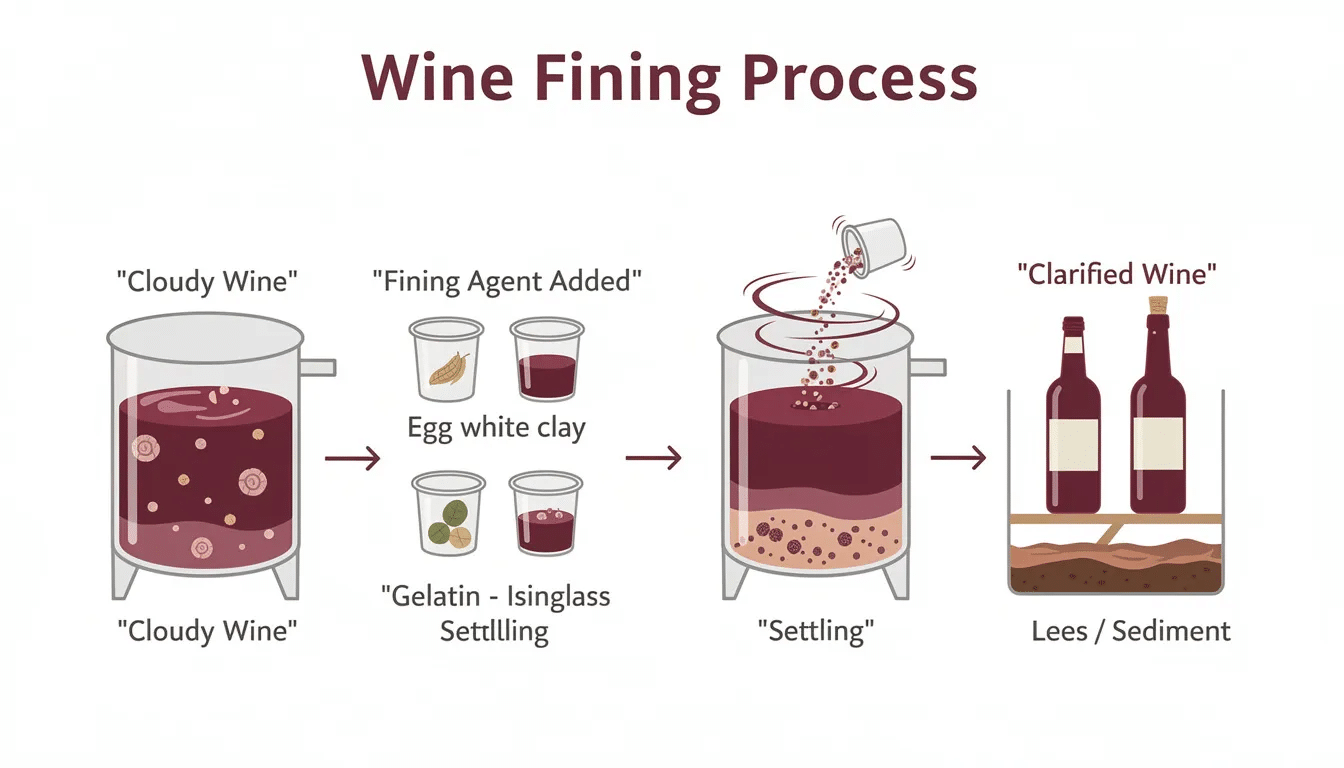
definition
Wine fining is a clarification process used to remove unwanted particles, proteins, tannins, and other compounds from wine before bottling. During fining, a substance called a “fining agent” is added to the wine. This agent binds to suspended particles, forming larger clumps that either settle to the bottom of the vessel or can be filtered out, wine clearer and more stable.
Common agents include bentonite (a type of clay), egg whites, isinglass (fish bladder protein), gelatin, casein (milk protein), and synthetic alternatives such as polyvinylpolypyrrolidone (PVPP). The choice of agent depends on what the winemaker wants to remove—proteins, tannins, color compounds, or other elements affecting the wine’s appearance, taste, or stability.
When Fining Wine is Used
Fining is typically used during the final stages of winemaking, after fermentation and aging, but before bottling. Winemakers use it in several situations: when wine appears hazy or cloudy, when they want to soften harsh tannins (especially in red wines), to prevent protein haze in white wines that could develop after bottling, to remove unwanted color or off-flavors, or to achieve the bright, clear appearance that many consumers expect. Clarification is a key goal that removes unwanted particles, substances, and materials such as dead yeast, bacteria, and proteins.
Bentonite clay is commonly used to remove protein haze and improve clarity in white wines.
Not all wines are fined. Some winemakers prefer minimal intervention, allowing wines to clarify naturally over time, or they may use only filtration. Natural settling allows particles and sediment, including lees, to fall out of the wine, and filtration can further remove yeast, bacteria, and other unwanted material. The characteristics of the grapes, juice, and even fruits used can influence the need for fining and clarification. Natural and organic wine producers often avoid fining entirely, accepting that their wines may appear cloudier.
Pros and Cons
Advantages: Fining improves visual clarity quickly and effectively, making wines more commercially appealing. It can enhance mouthfeel by reducing astringency from excessive tannins, particularly in young red wines, improving the taste and overall wine quality. The process stabilizes wine by removing proteins that could cause cloudiness after bottling, and it can eliminate off-flavors or undesirable compounds.
Bentonite, a mineral derived from volcanic ash, is commonly used to clarify white wines. Egg whites are prepared as a liquid solution and are traditionally used for fining red wines to reduce astringency and aggressive tannins. Other fining agents, such as milk protein, casein, and isinglass, are primarily used for specific purposes depending on the particular wine and batch.
Barrel aging is another method that helps stabilize wine naturally, allowing for gradual oxidation and integration of flavors, which can further improve wine quality. For commercial producers, fining provides consistency across batches and helps meet regulatory requirements for wine label disclosures, especially regarding allergenic substances.
Disadvantages: This process can strip away some desirable compounds along with unwanted ones, potentially reducing complexity, aromatics, or color intensity. Over-fining may also affect the wine’s aroma, flavor, and taste, and can impact the aging potential by removing phenolic compounds and condensed tannins that contribute to structure and longevity. Some traditional fining agents (egg whites, isinglass, gelatin, casein) make wines unsuitable for vegans and vegetarians, though alternatives exist.
Milk protein and other agents are used for specific purposes, and regulations may require their disclosure on the wine label to inform consumers of potential allergens. There’s also a risk of over-fining, which creates wines that taste bland or feel thin on the palate.
Some home winemakers and small wineries tend to avoid fining or use only minimal intervention, preferring to let wines settle naturally in the barrel or tank. Mixing and gently stirring helps clarify the wine. In some cases, sulfur dioxide is added to prevent microbiological instability.
Conclusion
Wine fining is a widely used tool in the winemaker’s arsenal, serving both practical and aesthetic purposes. While it effectively clarifies wine and can improve stability and drinkability, it represents a balance between achieving polish and preserving character.
The decision depends on the winemaker’s philosophy, the wine’s intended market, and the specific qualities they wish to preserve or enhance. As consumer preferences evolve and natural winemaking gains popularity, the conversation around fining continues to reflect broader debates about intervention versus authenticity in wine production.