
Attack
When you drink alcohol, the wine attack (or “l’attaque” in French) refers to the initial impression a wine makes on…
definition
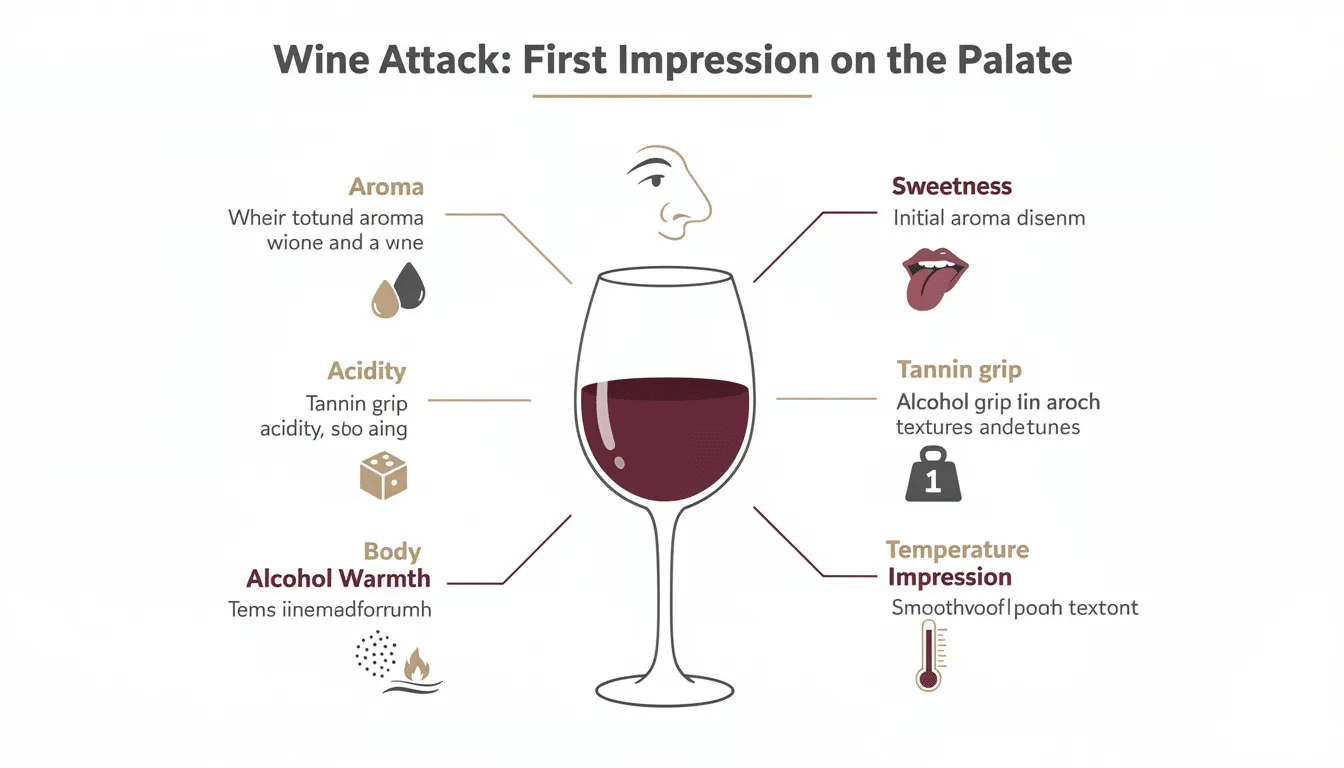
When you drink alcohol, the wine attack (or “l’attaque” in French) refers to the initial impression a wine makes on the palate in the first few seconds after the wine enters your mouth. It’s the immediate sensory impact before the mid-palate and finish develop. The attack encompasses the first wave of flavors, textures, and sensations you encounter, setting the tone for the rest of the tasting.
The first flavor detected in wine tasting is sweetness, known as the wine’s attack, which comes from natural grape sugars and alcohol. When tasting, it is important to hold the wine in your mouth for a few seconds to fully perceive the wine and the initial wave of flavors.
Different Types
Wine can present various styles of attack:
Soft/Gentle – The wine enters the palate smoothly with subtle, rounded flavors and minimal intensity. This sensation is common in delicate wines like Pinot Noir or aged wines with well-integrated tannins.
Vigorous/Bold – An immediate, powerful impression with strong flavors and structure. Typical of full-bodied wines like Cabernet Sauvignon or concentrated Syrah.
Fresh/Lively – Characterized by bright acidity and refreshing qualities. Found in wines like Sauvignon Blanc, Riesling, or young, crisp whites.
Rich/Opulent – A sensation of fullness and generosity, often with ripe fruit flavors. Common in wines from warm climates or those with residual sugar.
Austere/Tight – Reserved, with restrained fruit and prominent structure (acidity or tannin). Often seen in young wines that have been made for long-term aging.
Taste Sensation Characteristics to Notice
When evaluating the attack, pay attention to several different taste sensation characteristics:
- Intensity: How strong is the initial impression?
- Texture: Is it smooth, creamy, sharp, or astringent?
- Flavor dominance: What flavors appear first (fruit, oak, minerality)?
- Acidity level: Is there immediate brightness or tartness?
- Tannin presence (reds): Are tannins noticeable right away?
- Alcohol warmth: Do you sense heat immediately?
- Sweetness: Any perception of sugar or glycerol?
How to Identify the Wine Attack
To properly assess the attack, take a moderate sip and let the wine spread slowly across your tongue. Focus on those first 2-3 seconds. Ask yourself several questions about what you are experiencing: What’s my immediate impression? Is it welcoming or challenging? Fruit-forward or structure-driven? Are there any faults?
The attack is distinct from the mid-palate (the wine’s development after initial contact) and the finish (the lingering aftertaste). It is best to isolate that initial moment of contact to enjoy the full effect of the wine.
Is It an Indication of Quality?
The attack itself isn’t a direct quality indicator—both exceptional and mediocre wines can have various types of attacks. However, there are certain qualities that matter:
Harmony and balance in the attack suggest a well-made wine and indicate quality. A wine that’s immediately harsh, disjointed, or unpleasant may indicate wine flaws or poor winemaking techniques.
Complexity, even in the attack, can signal a well-made wine, though some great wines reveal themselves slowly, so patience is key.
Context matters: A gentle attack isn’t inferior to a bold one; it depends on the wine’s style and purpose. A delicate Pinot Noir from Burgundy should have a refined attack, while a robust Barolo might appropriately show power.
Conclusion
The attack of a wine is your first encounter with the wine’s personality and is an essential component of the tasting experience. Whether soft or bold, fresh or rich, a well-executed attack should be clean, balanced, and appropriate to the wine’s style. While not a standalone quality measure, it sets expectations and provides important clues about the wine’s structure, origin, and winemaking approach. Understanding the attack helps you appreciate wine more fully and communicate your impressions more precisely.