
Corsica
Corsican viticultural history dates back over 2,500 years to the 6th century BC, when the Phoenician Greeks founded colonies along…
definition
Corsican viticultural history dates back over 2,500 years to the 6th century BC, when the Phoenician Greeks founded colonies along the Mediterranean coast around 570 BCE. They introduced grapevines and winemaking techniques that laid the foundation for the island’s wine tradition.
Under Roman rule, Corsican wine production flourished and became an important trade commodity. The Romans expanded the existing vineyards and improved the cultivation methods, with wines from the island gaining recognition throughout the empire. However, the fall of Rome brought centuries of decline as the island faced invasions, political instability, and economic hardship.
In the 18th century, the island came under French rule after the Genoese ceded control to Louis XV in 1768. French rule introduced new grape varieties and winemaking traditions, further shaping Corsica’s viticultural identity. In the late 19th century, the phylloxera epidemic dealt a crippling blow to the Corsican wine industry, leading to mass emigration.
The modern era of Corsican winemaking began in the 1960s when Algeria gained independence from French rule. Many French settlers (pieds-noirs) relocated to Corsica, bringing the capital and expertise needed for a massive vineyard expansion that expanded fourfold between 1960 and 1976. Unfortunately, this period prioritized quantity over quality, with much of the production going toward bulk wine for blending in mainland France.
The turning point came in the 1980s and 1990s when vignerons began focusing on indigenous grape varieties and quality production. In 1968, Patrimonio was established as Corsica’s first Appellation d’origine contrôlée (AOC), marking a significant milestone. This renaissance was supported by the establishment of appellations and a commitment to expressing Corsica’s unique terroir. Today, Corsican wine represents a compelling story of rediscovery and regional identity.
Why It Is Famous
Corsican wine has gained recognition for several distinctive qualities. The island’s collection of indigenous grape varieties—particularly Niellucciu, Sciaccarellu, and Vermentinu—is found almost nowhere else in the world, making Corsican wines genuinely unique expressions that cannot be replicated elsewhere. Corsican wines are often characterized by their vibrant acidity and unique flavors, reflecting the island’s rugged beauty.
The island’s dramatic geography creates wines with exceptional aromatic complexity. Many vineyards overlook the Mediterranean, and the island’s maquis (dense Mediterranean scrubland of herbs, flowers, and shrubs) imparts distinctive herbal and floral notes to the wines—often described as “the scent of the island in a glass.” The island’s unique terroir contributes to the production of wines with vibrant acidity and distinct flavors.
Corsica has also become known for its quality-driven producers who emphasize organic and sustainable viticulture. The island’s relative isolation and low population density have helped preserve traditional methods while allowing innovative winemakers to craft wines that genuinely reflect their place of origin. Corsican winemakers are producing wines that showcase the island’s unique terroir, and these wines serve as a showcase of Corsica’s winemaking heritage. Corsican wines are often characterized by their vibrant acidity and unique flavors, which complement local cuisine.
How Large Is The Region?
Corsica’s wine region covers approximately 7,000 hectares of vineyards, making it one of France’s smaller wine regions—comparable in size to Chablis in Northern Burgundy. As the most mountainous island in the Mediterranean, Corsica’s rugged terrain plays a significant role in shaping vineyard locations, with many vineyards situated on slopes and hillsides. Corsica’s vineyards are often located at an average elevation of 300 meters (1,000 ft) above sea level. This represents a dramatic reduction from the peak of 32,000 hectares in the 1970s, when quantity rather than quality was the focus.
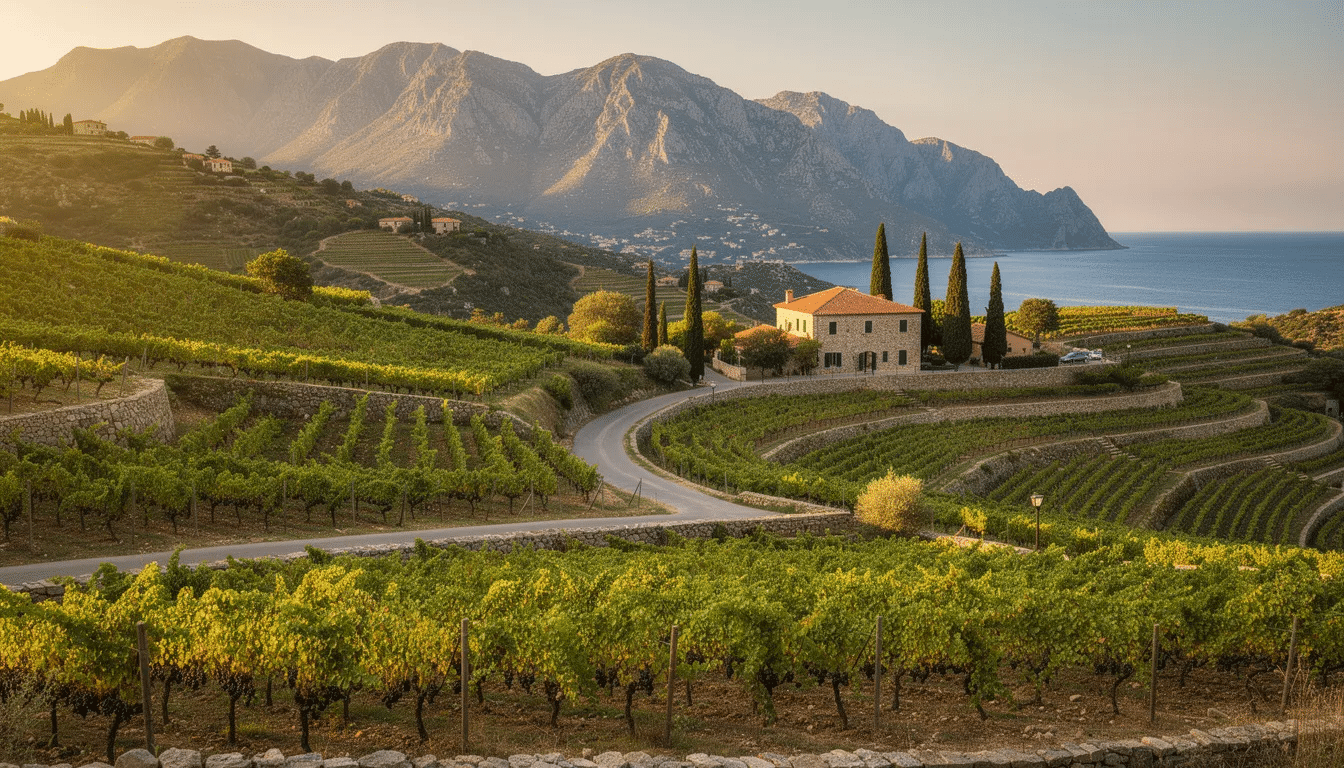
The vineyards are distributed around the island’s perimeter, as the Corsican mountainous interior is unsuitable for viticulture. Producing wine on this mountainous island presents both challenges and opportunities, as the varied topography creates diverse microclimates and soil types that contribute to the unique character of Corsican wines. The main wine-producing areas include Patrimonio in the north, Cap Corse, the eastern coastal plains, the area around Ajaccio on the west coast, and the southern regions of Sartène and Figari.
Despite its modest size, Corsica produces approximately 400,000 hectoliters of wine annually, with roughly 60% red and rosé wines and 40% white wines.
Geography and Climate
Corsica is the fourth-largest Mediterranean island, located 170 kilometers southeast of mainland France and just 80 kilometers from Italy. Unlike mainland France, Corsica is surrounded by the Mediterranean Sea, which gives it a distinct climate and geography. The island’s landscape is dominated by a mountainous spine running north to south, with over 120 peaks exceeding 2,000 meters—Monte Cinto reaches 2,706 meters. This dramatic topography means vineyards are primarily located in coastal areas and hillside sites, with important wine-producing regions along the north coast, east coast, and at the southern tip near Bonifacio.
The island enjoys a classic Mediterranean climate, with warm, dry summers and mild, wet winters that provide excellent conditions for grape growing. The average annual rainfall for most of Corsica’s wine-growing regions is about 29 inches (740 mm). The region receives abundant sunshine—over 2,700 hours annually in many areas—which ensures excellent grape ripening. However, the mountains create significant microclimates, with elevation, aspect, and proximity to the sea all influencing growing conditions.
Coastal vineyards benefit from the sea’s cooling effect, which helps maintain grape quality, and from maritime influences that moderate temperatures and provide cooling breezes, particularly important during hot summer months. Powerful winds from Provence and Gibraltar sweep across the island, helping to prevent fungal diseases and supporting Corsica’s reputation for sustainable winemaking by reducing the risk of mildew.
Rainfall varies considerably, from 500mm in some coastal areas to over 900mm in higher elevations. Most precipitation falls in autumn and winter, with summers typically very dry, necessitating careful water management in some vineyards.
Corsican Terroir
Corsican terroir is remarkably diverse for such a relatively small region. The island’s soils reflect its complex geological history, with granite dominating in the south and west (particularly around Ajaccio and Sartène), schist in the Cap Corse peninsula and parts of Patrimonio, and limestone and clay in the eastern regions. Corsica’s diverse soils—including granite, clay, and limestone—contribute to the unique characteristics of its wines, enhancing their complexity and sense of place.
Granite soils, which break down into sandy, well-draining earth, tend to produce elegant, aromatic wines with distinctive mineral qualities. These soils are particularly well-suited to Sciaccarellu, which thrives on the western granite slopes.
Schist and clay-limestone soils in the north, especially in Patrimonio, provide excellent conditions for Niellucciu, contributing structure and aging potential to red wines. The diversity of soil types allows different grape varieties to find their ideal expressions across the island.
The island’s unique terroir is characterized by a combination of diverse soils and varying elevations, which enhances wine quality. The proximity of vineyards to the sea and mountains creates exceptional complexity. Many vineyards are planted at elevations ranging from sea level to 400 meters, with some sites even higher. This altitude provides crucial diurnal temperature variation—warm days and cool nights—that preserves acidity and develops aromatics while allowing full phenolic ripeness.
Maquis is a wild Mediterranean vegetation that covers much of the island and includes rosemary, thyme, juniper, cistus, myrtle, and countless other aromatic plants that are believed to influence the vineyards, contributing to the characteristic herbal and floral notes in Corsican wines. The unique terroir of Corsica produces wines with vibrant acidity and distinct flavors.
Number of Appellations
Corsica is home to nine Appellation d’Origine Contrôlée (AOC) regions, including the island-wide Vin de Corse AOC, which together account for a significant portion of its wine production. The Vin de Corse AOC covers wines from across the island that meet these standards, and includes five geographic sub-zones that can be added to the label: Vin de Corse Calvi (in the northwest, where the AOC requires red and rosé wines to contain at least 50% Grenache, Nielluccio, and Sciacarello), Vin de Corse Figari (situated around the southwestern town of Figari, between Sartène and Porto Vecchio), Vin de Corse Porto Vecchio (on the southeastern coast around the city of Porto Vecchio), as well as Sartène and Coteaux du Cap Corse.
Beyond these, three village-level appellations have their own distinct AOC status: the Patrimonio wine region (1968, Corsica’s first AOC), renowned for high-quality wines, where white wines are often 100% Vermentino and red and rosé must contain at least 90% Nielluccio; Ajaccio (1984); and Muscat du Cap Corse (a sweet wine appellation established in 1993).
Additionally, there are two Indication Géographique Protégée (IGP) designations: Île de Beauté, which allows for more flexibility in grape varieties and production methods, and Méditerranée.
Common Grape Varieties
Corsican wine is distinguished by its more than 40 indigenous varieties, which now account for approximately 60% of plantings following decades of efforts to promote local grapes over international varieties. The three leading grape varieties—Nielluccio, Sciacarello, and Vermentino—define its modern winemaking reputation. Corsica also boasts over 30 traditional grape varieties and a diverse terroir, resulting in a unique wine landscape.
Niellucciu (also spelled Niellucio) is Corsica’s most widely planted red grape and is the local name for Sangiovese, a prominent red grape variety in Corsica. As one of the three leading grape varieties, it produces structured, age-worthy red wines with notes of red berries, violets, and spices, performing exceptionally well in Patrimonio on limestone-clay soils.
Sciaccarellu (also spelled Sciacarello) is Corsica’s most distinctive indigenous red variety, particularly associated with the granite soils around Ajaccio. As one of the leading grape varieties, it creates elegant, aromatic wines with pepper, herbs, and pronounced red fruit flavors, often with a distinctive almond note on the finish. Sciacarello is primarily used in red and rosé wines and is known for its light colors and soft tannins.
Vermentinu (the Vermentino grape in Italy) is the island’s signature and premier white grape, producing aromatic, mineral-driven white wines with bright acidity, citrus, white flowers, and herbal notes. As one of the three leading grape varieties, it thrives in coastal sites and is particularly successful in Patrimonio and around the island’s perimeter.
Other indigenous varieties include Biancu Gentile (a rare white grape being revived), Carcaghjolu Biancu and Carcaghjolu Neru, Barbarossa, and Codivarta. Ugni Blanc is also a typical white variety grown in Corsica, often blended with Vermentino to produce expressive white wines. International grape varieties such as Cabernet Sauvignon, Pinot Noir, Grenache, Syrah, Mourvèdre, and Cinsault are also grown and are often blended with indigenous grapes. Some producers make varietal wines from Chardonnay, Viognier, and other international grapes under the IGP designation. These international grape varieties complement Corsica’s traditional offerings and contribute to the diversity and quality of Corsican wines.
Cap Corse and its Wines
Jutting out from the northern tip of Corsica, Cap Corse is a peninsula celebrated for its absolutely breathtaking natural beauty and centuries-old winemaking traditions. The vineyards cling dramatically to steep slopes and rugged coastlines, overlooking the sparkling Mediterranean Sea. The unique geography and maritime climate of Cap Corse create ideal conditions for crafting wines with remarkable freshness and complexity.
One of the region’s most iconic offerings is Muscat du Cap Corse, a luscious, golden-hued vin doux naturel made from the Muscat Blanc à Petits Grains grape variety. This sweet, fortified wine is renowned for its intense aromatics—such as orange blossom, honey, and exotic fruits—making it a standout among Mediterranean dessert wines. The influence of the sea and the maquis, combined with traditional winemaking methods, gives Muscat du Cap Corse its distinctive character and enduring appeal.
Beyond its famous Muscat, Cap Corse produces a diverse range of red, white, and rosé wines that showcase the peninsula’s unique terroir. The vineyards are often small and family-run, with generations of winemakers preserving the island’s heritage while embracing modern techniques.
Wine Style, Rosé Wines, Characteristics, and Food Pairing
Approximately 55% of Corsican wine production is rosé, 35% is red, and 10% is white.
Red Wines from Corsica range from elegant and aromatic to structured and age-worthy. Wines based on Niellucciu tend toward medium to full body with firm tannins, bright acidity, and flavors of red cherries, herbs, and violets—similar in structure to Chianti but with distinctive Corsican aromatics. Sciaccarellu produces lighter, more delicate reds with peppery, herbal notes and a silky texture. Many reds are blends combining the structure of Niellucciu with the aromatics of Sciaccarellu.
Corsican red wines, particularly those made from Niellucciu and Sciaccarellu, exhibit a delightful combination of elegance and intensity, making them excellent companions for hearty meat dishes. Oak barrels are increasingly used for aging certain reds, adding complexity and depth, while some producers are also experimenting with concrete eggs as an innovative method to enhance wine purity and aromatic expression.
These red wines pair beautifully with Corsican cuisine, including wild boar stew (civet de sanglier), lamb with herbs, cured meats like prisuttu and coppa, and aged sheep’s milk cheeses like brocciu.
Rosé Wines represent a significant portion of production and range from pale, delicate styles to more substantial, gastronomic rosés. Corsican rosé wines are very pleasant, fruity, and fresh with some spicy and mineral wine notes, making them ideal for pairing with local cuisine. The best showcase Sciaccarellu’s aromatic complexity with notes of red berries, citrus, and herbs. They pair excellently with the island’s seafood, including grilled fish, bouillabaisse, and lobster.
White Wines dominated by Vermentinu are typically fresh, aromatic, and mineral-driven with citrus, white peach, and herbal notes, often with a distinctive saline quality from maritime influence. The white wines of Corsica, often made from Vermentino, are known for their bright acidity and refreshing character, making them perfect for seafood dishes.
They show considerable variation based on terroir—granite sites produce more aromatic, delicate wines while limestone soils create wines with more body and structure. They perfect with Mediterranean seafood, grilled fish with herbs, vegetable dishes, and fresh goat cheese. Some whites also benefit from barrel fermentation in oak barrels, which can add texture and complexity.
Sweet Wines, particularly Muscat du Cap Corse, are traditional fortified wines made from Muscat Blanc à Petits Grains. These golden wines offer intense aromatics of orange blossom, honey, and dried fruits, excellent as aperitifs or with desserts and blue cheese.
Corsican wines pair beautifully with the region’s cuisine, which includes dishes like charcuterie, lamb, grilled seafood, and flavorful cheeses like Brocciu. The vibrant acidity and unique flavors of Corsican wines complement the local flavors.
A common thread across all Corsican wine styles is the influence of the maquis—that distinctive herbal, floral complexity that makes the wines immediately recognizable and deeply connected to their island origin.
Conclusion
Corsican wine represents one of the Mediterranean’s most compelling and distinctive wine regions. After decades focused on quantity, the island has successfully repositioned itself as a quality wine destination, emphasizing indigenous varieties and unique terroir expressions not found anywhere else.
The combination of ancient viticultural heritage, dramatic geography, diverse soils, and the aromatic influence of the maquis creates wines with a genuine sense of place.
For wine enthusiasts, Corsican wines offer discovery and distinction—the opportunity to experience grape varieties found almost nowhere else, shaped by a truly unique island terroir. As more producers embrace organic viticulture and traditional varieties, and as international recognition grows, Corsican wine continues its renaissance as one of the Mediterranean’s most exciting wine regions.