
Crop Thinning
KROP THIN-ing
Crop thinning, also called “green harvesting” or “crop reduction,” is a viticultural practice where viticulturists deliberately remove a portion of…
definition
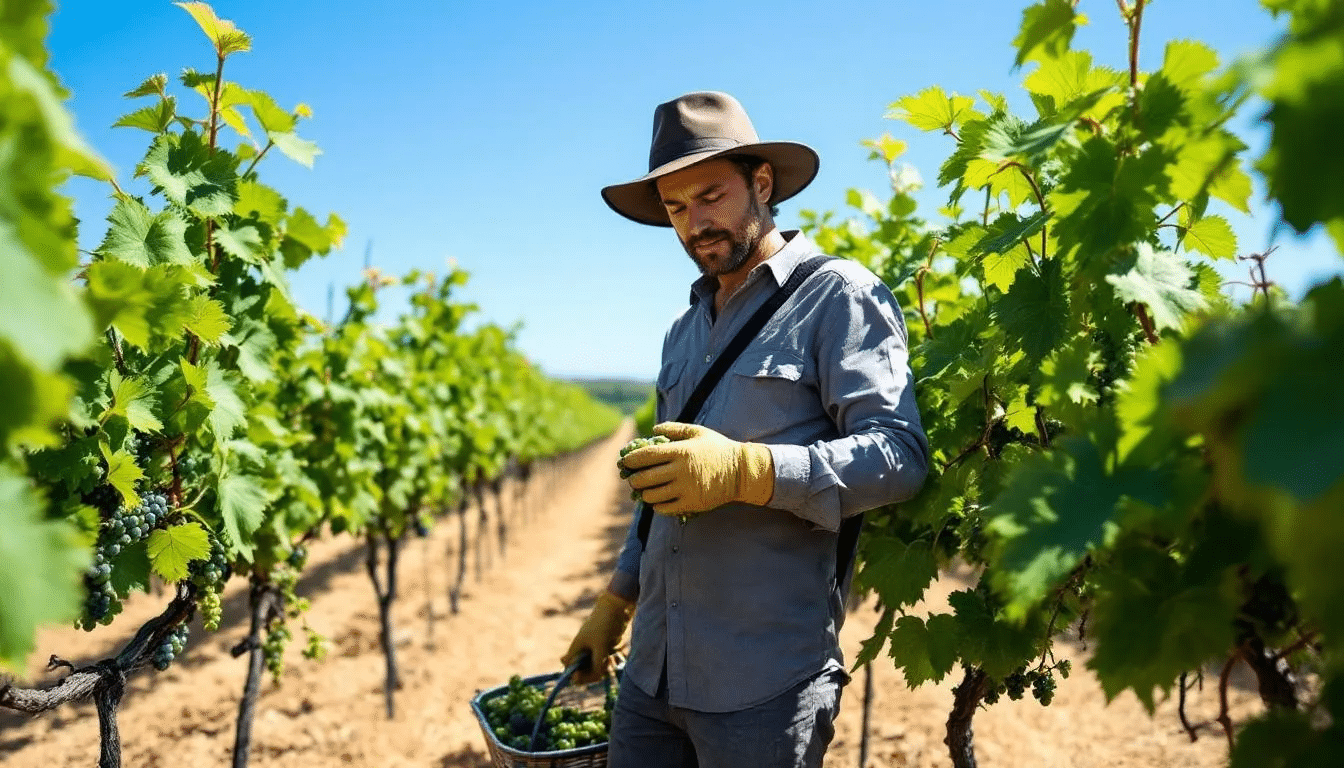
Crop thinning, also called “green harvesting” or “crop reduction,” is a viticultural practice where viticulturists deliberately remove a portion of grape clusters from the vines before harvest. Crop thinning is often used in conjunction with other crop management techniques, such as pruning and cluster thinning, and shoot thinning, to optimize grape quality.
The process typically involves cutting off and dropping entire fruit clusters of immature grapes onto the vineyard floor during the growing season, usually when the grapes are still green and weeks or months away from ripeness. By thinning heavy yields, these crop management strategies are used to balance vine growth and improve fruit quality, impacting the quality of the final wine.
How is Cluster Thinning Used
Crop thinning is performed during the summer months, typically between veraison (when grapes begin to change color and ripen) and a few weeks before harvest. Vineyard workers walk through the rows and selectively remove grape clusters using scissors or shears.
The process can be approached in several ways:
Selective thinning – Workers remove specific clusters that are underdeveloped, damaged, diseased, or in shaded positions that won’t ripen properly. This ensures the remaining clusters of fruit have optimal sun exposure and air circulation, improving phenolic development and fruit quality.
Systematic reduction – A predetermined percentage of clusters is removed across the entire vineyard, often targeting a specific yield per vine or per hectare. Cluster halving is a common method, and can impact grape quality by improving anthocyanin levels and sensory attributes, especially when timed appropriately.
Zone-based removal – Clusters in certain positions on the vine are removed, such as those closest to the ground or those on the shaded side of the canopy. Shoulder-thinned fruit is another technique that can be used to further refine fruit quality and influence wine sensory characteristics.
After thinning, vineyard managers often collect fruit samples and analyze grape juice indicators such as Brix, pH, and anthocyanin concentration to monitor the effects of thinning on wine composition and ensure optimal grape maturity.
The amount removed varies considerably depending on the winemaker’s goals, but can range from 10-50% of the total crop, with premium wine producers sometimes removing even more.
Why is Crop Thinning Important for Wine Quality?
Crop thinning serves several critical purposes in quality winemaking:
Concentration of flavors – By reducing the number of grape clusters, the vine can direct more nutrients and energy into the remaining fruit, resulting in more concentrated flavors, deeper colors, and more complex aromatics.
Improved ripening – Fewer clusters mean each grape receives more resources from the vine, promoting more even and complete ripening. This is particularly important in cooler climates or challenging vintages where full ripeness might otherwise be difficult to achieve. Research trials have shown that early fruit thinning results in more advanced ripening and improved sensory outcomes.
Disease prevention – Removing excess clusters improves air circulation through the canopy, reducing humidity and the risk of fungal diseases like botrytis rot or powdery mildew.
Balance and quality control – Crop thinning helps achieve the optimal balance between vine vigor and fruit production. Overcropped vines produce dilute, underripe grapes, creating an inferior wine. Studies comparing early and late thinned fruit have found that early thinning often leads to significantly higher sensory scores and better fruit concentration.
Vintage adaptation – In years with exceptionally high yields, thinning prevents the vine from being overwhelmed and ensures quality standards are maintained. Lower yield correlated with higher potential wine quality, and landmark crop load studies have challenged traditional yield quality standards.
Crop thinning practices are also used to optimize anthocyanin and tannin concentrations, which are key in the production of producing quality red wine and varietal wines, such as Cabernet Sauvignon wines, and reducing the premium Merlot crop.
Wine sensory ratings and wine composition are used to assess the impact of these practices. Some studies have found very similar sensory scores between different treatments, highlighting the complexity of the relationship between crop load and wine quality.
Crop Load Management
Crop load management directly affects crop yield and the type of wine produced. At its heart, crop thinning (also called cluster thinning) is an effective method to control the grape yield of each vine, thus influencing the quality of the fruit and final wine.
In vineyards with rich soils or vigorous vines, too many grapes can mean less concentration, which can create inferior wine. Cutting back a premium Merlot crop from 4.5 to 3 tons per acre may be expensive, but in the long run, this reduction produces premium wines.
The timing and method of crop thinning are critical. Early fruit thinning (done right after fruit set) lets the remaining clusters get more sunlight and better access to water and nutrients. Studies show that early thinned fruit often creates higher wine quality scores and better fruit chemistry, with more anthocyanins and tannins.
Cluster thinning techniques are designed to fit specific vineyard layouts as well as the ambitions of the winemaker. Closely spaced vines often require frequent thinning to maintain vine balance and prevent too much shading. Green harvesting (which means removing entire clusters) is another great strategy to manage crop load and make fruit character even better!
For varieties like Pinot Noir and Cabernet Sauvignon, thinning means the difference between good and exceptional wines. Economic considerations are always part of the equation, and a cost-effective management strategy weighs these losses against the gains in wine quality and market value.
When Crop Thinning is Not Used
Crop thinning isn’t appropriate or necessary in several situations:
High-volume wine production – Producers making large quantities of everyday, value-priced wines typically maximize yields to maintain profitability and don’t thin crops. Producers aiming to produce production scale wine avoid crop thinning to ensure maximum output and economic efficiency.
Naturally low-yielding vintages – In years when weather conditions (frost, poor flowering, drought) have already reduced the crop, additional thinning would be unnecessary and economically damaging.
Young vines – Newly planted vines naturally produce smaller crops and don’t require thinning. In fact, many growers don’t even harvest from vines in their first few years.
Certain grape varieties and regions – Some varieties naturally produce balanced crops, and some terroirs or vineyard sites achieve quality without intervention. Old vines, in particular, often self-regulate their yields.
Economic constraints – Thinning represents lost income, as the dropped fruit could have been sold. Growers operating on tight margins may not be able to afford this practice.
When vine balance is already optimal, Well-managed vineyards with appropriate pruning, irrigation, and canopy management may achieve quality targets without needing to thin during the growing season.
Conclusion
Crop thinning represents a significant quality-over-quantity decision in winemaking. While it requires sacrificing potential revenue, it’s a powerful tool for producers committed to making premium wines. The practice exemplifies the winemaker’s philosophy that great wine begins in the vineyard, not the cellar. By allowing vines to focus their energy on fewer clusters, winemakers can achieve the concentration, balance, and complexity that distinguish exceptional wines from ordinary ones.
However, crop thinning isn’t a universal solution—when used thoughtfully based on the vintage conditions, vineyard characteristics, and intended wine style. It’s an essential technique in the pursuit of excellence, demonstrating that sometimes less truly is more.