
Fiasco
A wine fiasco is a traditional Italian wine bottle with a distinctive bulbous shape and a woven straw basket wrapped…
definition
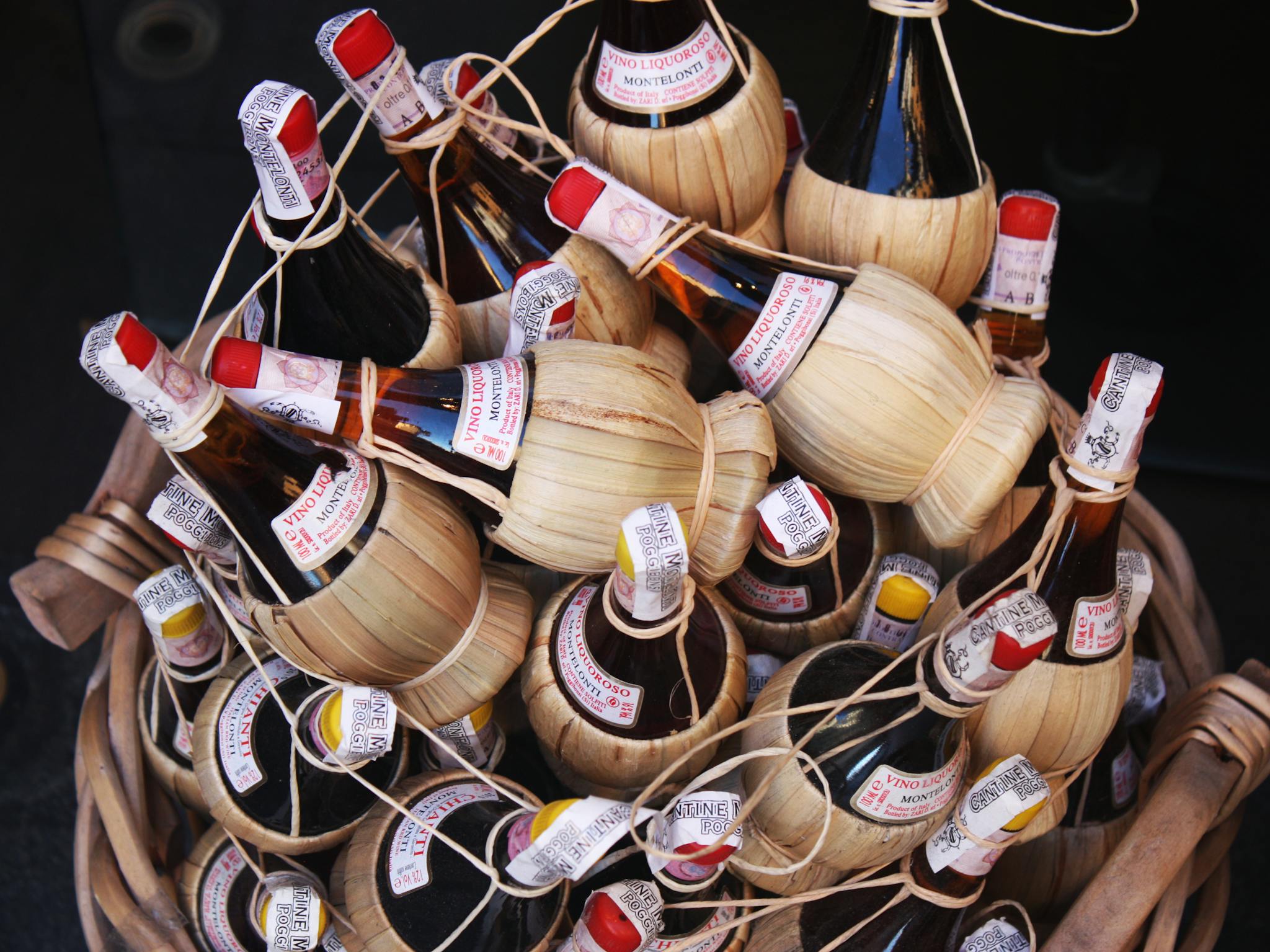
A wine fiasco is a traditional Italian wine bottle with a distinctive bulbous shape and a woven straw basket wrapped around its base and lower body. The term “fiasco” literally means “flask” or “bottle” in Italian, and the bottle is a recognizable part of Italy’s rich winemaking heritage.
These bottles are most closely associated with Chianti wine from Tuscany and became iconic symbols of Italian wine culture, particularly during the mid-20th century. Traditional Chianti wines are typically a blend dominated by the Sangiovese grape, often sourced from specific estates in the region, which contributes to the unique expression of terroir. The Chianti region, with its deep historical and cultural ties to Firenze (Florence), played a crucial role in the development and enduring legacy of the wine fiasco.
characteristics
The fiasco has several distinctive features that make it instantly recognizable:
Shape and structure: The bottle has a round, bulbous bottom that tapers into a long neck. This squat, rounded shape made the bottles inherently unstable, which is why the straw basket was necessary, as it provided a flat base for the bottle to stand upright.
Straw wrapping: The woven straw basket (traditionally made from dried swamp grass or reed) covers the bottom portion of the bottle. This wrapping was originally functional, protecting the thin glass during transport and providing insulation. It was hand-woven, making each fiasco unique. Traditional labels affixed to the fiasco bottle indicated the wine’s origin and classification, such as DOC status, helping consumers identify authenticity and regional quality.
Glass quality: Historically, fiaschi were made from inexpensive, thin glass because they were meant to be disposable, everyday wine containers rather than premium packaging.
Cultural symbolism: The fiasco became strongly associated with Italian restaurants and casual, rustic Italian dining, particularly in the 1950s-1970s. They were often repurposed as candle holders in trattorias, with wax dripping down the sides. Many wineries in the region used the fiasco to showcase wines aged in large oak casks, reflecting traditional winemaking methods and emphasizing the connection to regional terroir.
Traditional capacity: Classic fiaschi typically held around two liters of wine; there were smaller sizes. The unique climate and soil of Tuscany contributed to the distinctiveness of the wines traditionally bottled in fiaschi, highlighting the importance of terroir in the region’s winemaking heritage.
Traditional Packaging
The traditional packaging of Chianti wine is instantly recognizable and has been used by the Tuscans for centuries. The classic Chianti fiasco, a round-bodied bottle with a round bottom, completely covered in a hand-woven straw basket—has become an enduring symbol of Italian red wine around the world. This iconic straw basket, or “fiasco,” isn’t just for show; it was originally designed to protect the delicate glass bottle during transportation. The straw covering also provided insulation, helping to maintain the wine’s quality by shielding it from light and temperature swings.
While the Chianti fiasco is sometimes associated with cheap wine, this is a misconception rooted in the mass production era of the mid-20th century. Many of the finest quality Chianti Classico and Chianti Riserva wines have been, and in some cases, still are bottled in these traditional straw-covered flasks. For reputable wine producers and winemakers in the Chianti region, the focus has always been on the quality of the grapes, the unique terroir of Tuscany, and the careful balance achieved in every bottle, regardless of the packaging.
The manufacture of the straw basket is a craft in itself, passed down through generations. Artisans use a special type of grass, known as “sala,” which is harvested, dried, and skillfully woven to create the basket that hugs the round glass bottle. This process is labor-intensive and requires a keen eye for detail, ensuring that each basket fits snugly and provides the necessary protection for the wine inside.
The round bottom of the Chianti fiasco isn’t just a quirky design choice; it allows for efficient stacking and storage, making it easier to transport bottles from the vineyards of Tuscany to wine lovers worldwide. This practical design, combined with the rustic charm of the straw basket, has made the Chianti fiasco a favorite among tourists and collectors seeking a taste of authentic Italian wine culture.
Although many modern wine producers have shifted to sleek, Bordeaux-style bottles to signal excellent quality and appeal to international markets, other producers in the Chianti Classico region proudly continue the tradition of the straw-covered bottle. The fiasco remains a beloved symbol of Italian wine, often sought after by those looking to experience the true character of Chianti and its storied vineyards.
It’s not just Chianti that has embraced this style—other Italian wines, such as Valpolicella, have also been produced in straw-covered bottles. However, the Chianti fiasco stands out as the most iconic example, representing both the history and the enduring appeal of Italian red wine.
Conclusion
While the straw-wrapped fiasco was once the standard bottle for Chianti and other Tuscan wines, it has largely disappeared from serious wine production. By the 1980s and 1990s, most quality Chianti producers moved to standard Bordeaux-style bottles to shed the fiasco’s association with cheap, low-quality wine. The fiasco had become a symbol of mass-produced, inferior wine rather than the quality product many Tuscan winemakers were creating.
Today, fiaschi are rare and primarily exist as nostalgic decorative items or are used by a handful of traditional producers. The shift away from the fiasco marked an important turning point in Italian wine’s global reputation, as producers focused on quality over rustic charm.
As consumers became more knowledgeable and willing to spend more money for higher quality wines, prices for premium Chianti increased, and the perception of value shifted toward aged and terroir-driven bottles. Wine companies responded by adapting their offerings to meet these evolving consumer expectations, both within Italy and across the broader international wine country, further elevating the status of Italian wines in the global market.