
Filtered
Filtered wine has been passed through various filtering systems to remove solid particles, sediment, floating yeastWine yeast is a microorganism…
definition
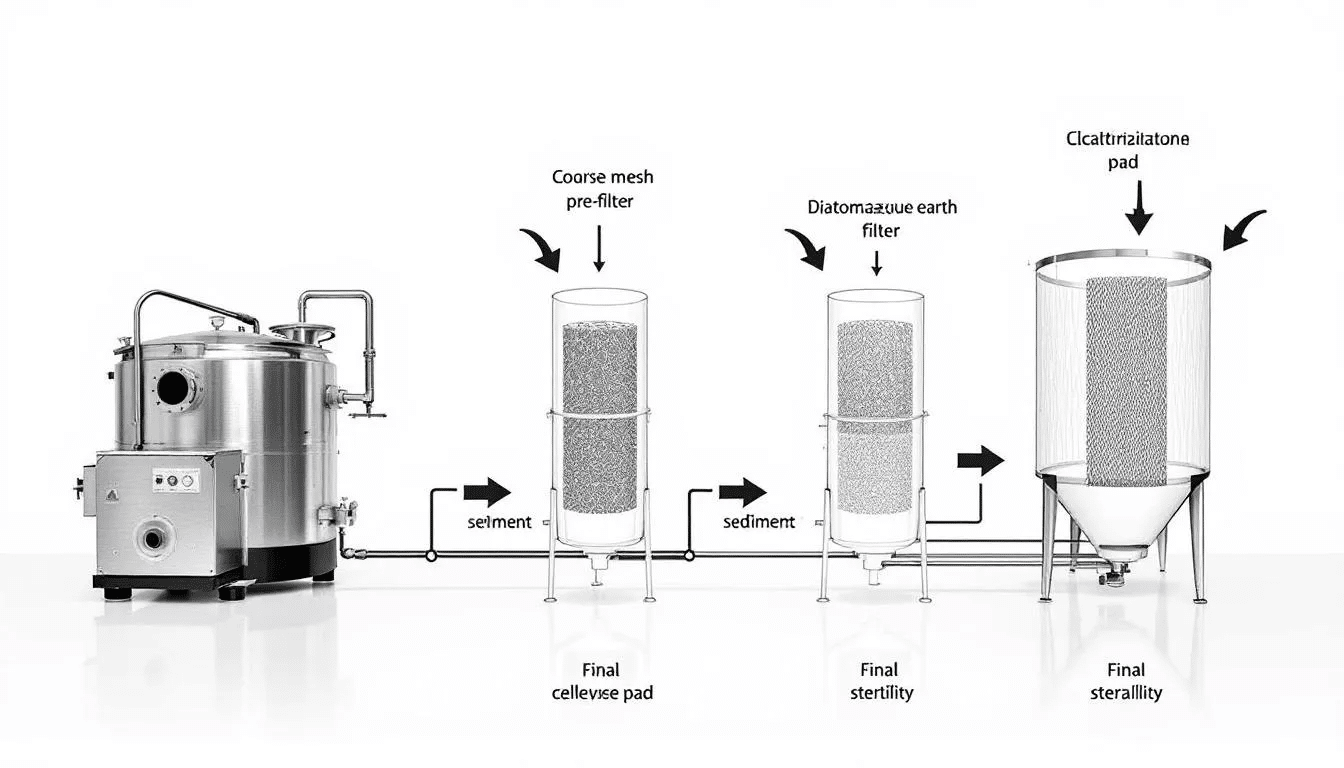
Filtered wine has been passed through various filtering systems to remove solid particles, sediment, floating yeast, microbes, and bacteria before bottling. The filtration process can range from coarse filtration (removing large particles such as grape skins and seeds) to fine filtration (removing yeast cells, bacteria, and tiny protein molecules).
Common filtration methods include:
- Pad filtration is when the wine passes through cellulose or paper pads.
- Membrane or cartridge filtration uses synthetic membranes with specific pore sizes.
- Crossflow filtration is a gentler method where wine flows parallel to the filter surface.
- Sterile filtration removes nearly all microorganisms using very fine filters (0.45 microns or smaller).
Tanks are used for settling wine, where gravity helps separate lees and remaining particles before filtration. This process allows the liquid to clarify naturally before further filtration steps.
The alternative is unfiltered wine, where wines rely on natural settling, gravity, and racking, and may use egg whites as a fining agent, but are not mechanically filtered. Cloudy wine is often the result of unfiltered processes, and a bit of sediment is normal in such wines.
Filtration is often performed just before wine is bottled, resulting in bottled wine that is clear and stable. During the transformation from grape juice to wine, the fermentation process brings the liquid to a biochemical point where wine is in a constant state of change.
The difference between filtered and unfiltered wine lies in these processes, which can impact the flavour and freshness of the wine. Some winemakers use a higher dosage of sulfites to stabilize unfiltered wines, but this can be a risky business.
Current trends in the wine industry include a rise in unfiltered and natural wines, reflecting changing consumer preferences.
Introduction to Wine Filtration
Wine filtration is important; it’s designed to make the wine clearer, more stable, and many consumers believe that it tastes better. As the wine world continues to expand and change, winemakers and wine lovers debate whether to filter wine. Some winemakers swear by the traditional filtration method because it gives them a crystal-clear wine that’s free from tiny particles and harmful bacteria that could spoil the taste.
The Filtration Process
The filtration process in winemaking involves two main stages: first, the removal of yeast particles and sediment, and second, the elimination of bacteria that could compromise the wine’s stability. By filtering out these elements, winemakers help prevent unwanted fermentation in the bottle, ensuring the wine remains crystal clear and appealing when served. The traditional winemaking process, which has served wine aficionados perfectly for generations, often includes this filtration step to guarantee consistent and reliable wines.
Why is it important?
Filtration serves several practical purposes in winemaking:
Stability and shelf life – Filtration removes yeast, microbes, and bacteria that could cause unwanted fermentation or spoilage in the bottle, especially important for wines with residual sugar or lower alcohol content. Without proper filtration and stabilization, wine can spoil and turn into vinegar due to microbial activity. Wine is in a constant state of biochemical change, undergoing an evolution of the grape must.
Clarity and appearance – Consumers generally expect wine to be clear and bright. Filtration processes remove remaining particles, haze-causing solids, and sediment, resulting in visually appealing bottled wine.
Consistency – For commercial producers, filtration processes help ensure that each bottle looks, tastes, and maintains the same flavor and freshness, which is important for a brand’s reputation.
Safety – Filtration helps remove bacteria and microbes, making the drink safer for consumption by reducing the risk of wine faults and spoilage during storage and shipping.
Current trends in the wine industry influence consumer expectations for clarity, safety, and the overall quality of bottled wine.
Is it necessary?
This is a contentious debate in the wine world, with valid arguments on both sides. The subject of wine filtration is shaped by both long-standing history and evolving trends in the industry, as well as personal drinking preferences.
Arguments for filtration:
- Essential for certain wine styles, particularly lighter whites and wines with residual sugar.
- Provides insurance against spoilage, especially for wines that will be shipped long distances or stored in variable conditions.
- Reduces the need for high sulfite levels to prevent microbial activity.
Arguments against filtration:
- Can potentially strip wine of flavour compounds, aromatics, texture, and body, so the wine loses some of its original freshness and complexity.
- Removes beneficial colloids that contribute to mouthfeel and complexity.
- Unfiltered wines may retain more flavour and freshness, but can result in cloudy wine with a bit of sediment.
- Unnecessary for robust, high-alcohol, or well-made wines that will be consumed relatively young.
- Many acclaimed producers make stable, age-worthy wines without filtration.
The necessity often depends on the wine style, production methods, and intended market. While the history of filtration is long-standing, current trends are shifting towards minimal intervention and more authentic expressions of wine. Ultimately, the best approach depends on the style of wine and the intended drinking experience.
Conclusion
Wine filtration is a tool, not a requirement. While it offers practical benefits for stability, clarity, and commercial consistency, it’s not necessary for all wines. Winemakers make decisions based on the type of wine they wish to produce.
Filtered wines offer clarity and reliability but may sacrifice some of the character. Neither approach is inherently superior—it’s all about what the winemaker is trying to achieve.
The trend in quality winemaking has moved toward minimal filtration or the use of gentler methods, preserving as much of the wine’s natural character as possible while still ensuring stability. This balanced approach represents perhaps the best of both worlds.