
Grafting
Vine grafting involves joining two plant parts together—a rootstock and a scion—to create a single plant that combines desirable traits…
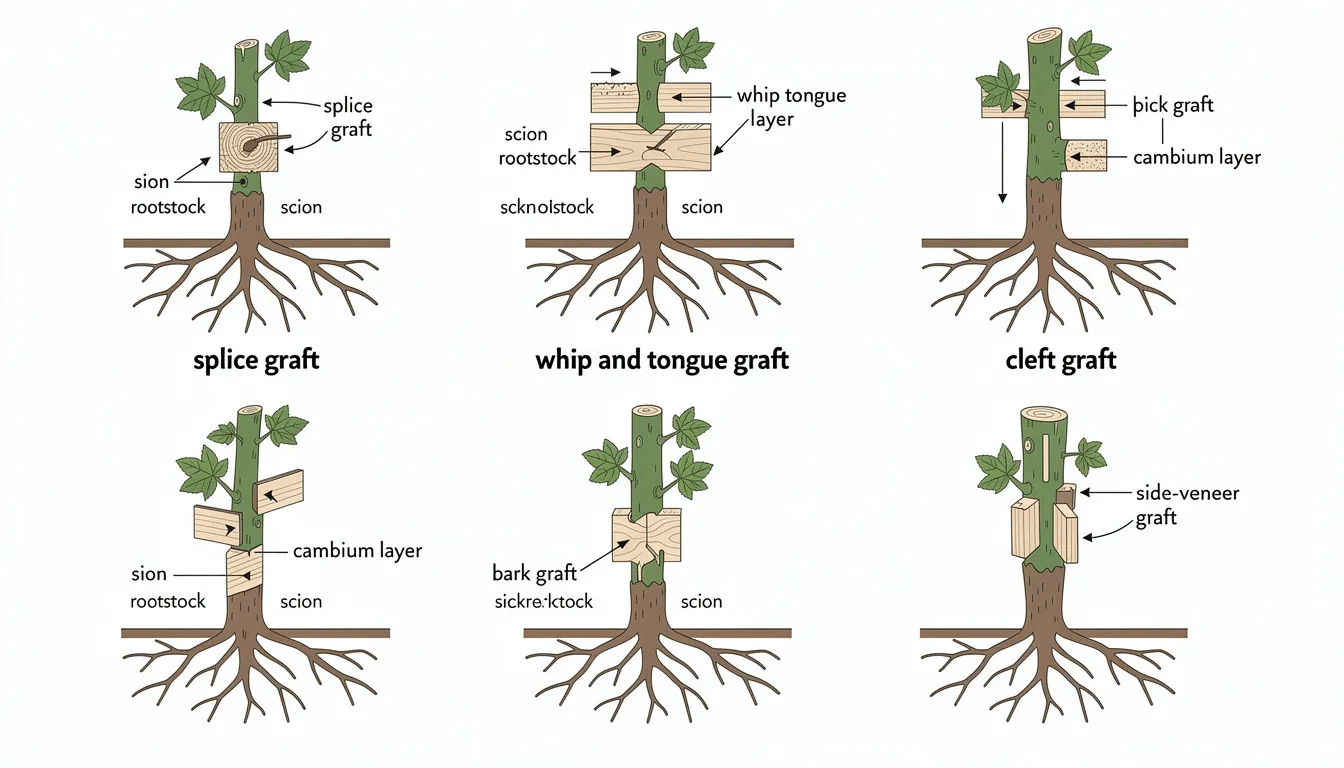
definition
Vine grafting involves joining two plant parts together—a rootstock and a scion—to create a single plant that combines desirable traits from both. Several methods are used in viticulture:
Bench Grafting is performed indoors during winter dormancy. Canes are selected during dormancy to provide healthy scion wood. The most common technique is omega grafting, where matching omega-shaped cuts are made in both rootstock and scion, and then they are joined together. Whip-and-tongue grafting creates interlocking cuts, providing more contact surface area between the two pieces. After grafting, growers may cover the graft union with soil or protective material to promote healing and protect the graft site.
Field Grafting takes place in the vineyard on established vines. Cleft grafting involves splitting the rootstock and inserting a wedge-shaped scion into the cleft. Bark grafting is done when the bark separates easily from the wood, allowing scions to be slipped between bark and wood. Chip budding transfers a single bud (one scion) with a small shield of bark and wood onto the rootstock; the shoot is the source of the scion material. Successful budding requires the alignment of a single layer of cambium cells for proper graft union. T-budding is another common budding technique used in viticulture.
Green Grafting uses actively growing, herbaceous tissue rather than dormant wood, typically performed in spring or early summer when both parts are in active growth.
Why Is Grafting Important?
Vine grafting serves multiple critical purposes in modern viticulture. The primary use emerged in the late 19th century as a response to phylloxera, a root-feeding pest that devastated European vineyards. By grafting susceptible Vitis vinifera varieties onto resistant American rootstocks, growers preserved their wine grape varieties while gaining protection against this pest.
Rootstocks also provide adaptation to different soil conditions. Certain rootstocks offer drought resistance or vigor control, allowing growers to match plants to their specific environmental conditions and management goals.
Grafting enables vineyard conversion without replanting. Field grafting is often performed on existing vines to change grape varieties by quickly grafting new scions onto established rootstocks, preserving the established root system and reducing the time before the first harvest.
The practice also facilitates rapid propagation of new or rare varieties, allowing nurseries to produce commercial quantities of desirable cultivars more quickly than growing them on their own roots. Grafting is used to produce a new grapevine by joining a scion to a rootstock, and careful management is required for grafted vines to develop into healthy, fruit-bearing plants. In addition to grafting, propagation methods such as layering involve bending a cane from a parent vine into the ground to encourage root development, resulting in two vines—one remaining attached to the parent and the other eventually becoming independent.
Greenhouses provide controlled conditions for grafting and rooting young grapevines before transplanting, thereby optimizing temperature, humidity, and light for successful growth. When storing grafting materials, scion wood is often wrapped in moist newspaper to maintain humidity and promote successful grafting. A seedling is a young plant that develops from a grafted vine or from seeds, though grapevines are rarely propagated from seeds due to genetic variability; instead, cuttings and grafting are preferred for consistency. Hybrids, created through the cross-pollination of different Vitis species, have historically played a significant role in developing disease-resistant grapevines, particularly in American viticulture.
Phylloxera and Grafting
Phylloxera, a tiny and devastating pest, poses one of the greatest threats to grape vines, particularly the Vitis vinifera species that dominates global wine production. When phylloxera was accidentally introduced to Europe in the 19th century, it led to the widespread destruction of vineyards, threatening the very foundation of the wine industry. The solution that saved countless grapevines was grafting—specifically, joining the upper part of a desired grape variety, such as Cabernet Sauvignon or Chardonnay, to the root system of a phylloxera-resistant American rootstock.
This process relies on the careful union of the scion, which determines the grape variety and fruit characteristics, and the rootstock, which provides essential disease resistance and adaptability to different soil types. The graft union, where these two parts meet, is a critical point that must be protected and sealed, often using grafting compound and grafting tape, to ensure a successful bond and healthy growth.
Grafting techniques such as cleft, bark, whip, and bud grafting are commonly used in viticulture to produce robust grapevines. Each method is chosen based on the vine age, the time of year, and the specific needs of the vineyard. Bark grafts are ideal when the bark separates easily from the wood, while whip grafting provides a large contact area for the cambium layers to join, promoting a strong graft union.
By utilizing grafted grapevines, growers can combine the best characteristics of different grape varieties with the disease resistance and vigor provided by the rootstock. This not only helps vines thrive in a range of climates and soils but also ensures consistent, high-quality grape production. The use of grafted vines has become standard practice in modern wine production, allowing vineyards to resist deadly pests like phylloxera and adapt quickly to changing market demands or environmental conditions.
Resources such as the Oxford Companion to Wine offer in-depth information on grafting methods, grape varieties, and the science behind successful wine production. Understanding the relationship between phylloxera and grafting highlights the importance of this process. Grafted vines are essential for producing healthy, disease-resistant grapevines that yield exceptional grapes and, ultimately, outstanding wines!
Conclusion
Vine grafting represents one of viticulture’s most important techniques, transforming winemaking by allowing the preservation of traditional grape varieties while providing disease resistance and environmental adaptability. The various grafting methods—from bench grafting in nurseries to field grafting in established vineyards—give growers flexibility in managing their vineyards.
Today, the vast majority of commercial wine grapes worldwide are grafted plants, demonstrating how this horticultural practice became fundamental to modern grape production. As viticulture faces new challenges from climate change and emerging pests, grafting is vital for creating resilient and productive vineyards.