
Legs
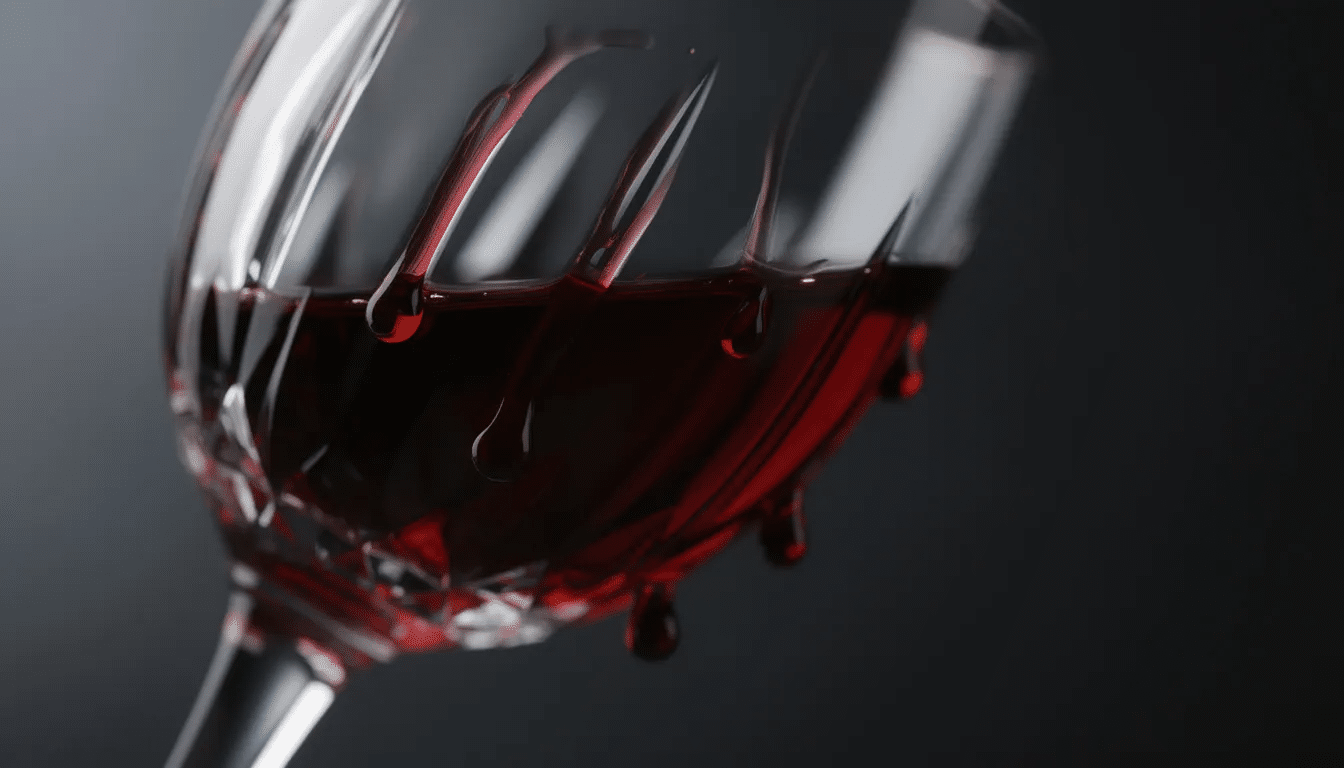
Wine legs (also called “tears”) are the droplets that form and stream down the inside of a glass after you…
definition
Wine legs (also called “tears”) are the droplets that form and stream down the inside of a glass after you swirl wine. They’re caused by a phenomenon called the Gibbs-Marangoni effect, which involves the interaction between alcohol and water. When wine is swirled, a thin film coats the glass.
Alcohol evaporates faster than water because it’s more volatile. As the alcohol evaporates from this film, the remaining liquid has a higher water content and higher surface tension that pulls the liquid upward along the glass, creating a rim. Eventually, gravity overcomes the surface tension, and the liquid streams back down as “legs” or “tears.” The process is purely physical—it has nothing to do with residual sugars or glycerol.
Characteristics of Wine Legs
What they indicate:
Alcohol content: More pronounced, slower-moving legs typically indicate higher alcohol content. Higher alcohol means more evaporation and a stronger effect. Higher ABV (alcohol by volume) wines often show more prominent legs.
Viscosity & sugar: Thicker, slower legs can suggest higher viscosity, which relates to the wine’s body. High sugar content will make wine legs more viscous, causing them to move down the sides of the glass more slowly. Sweet wines may create slower-moving legs due to their viscosity, but this isn’t always the case. More wine legs or droplets can indicate either high alcohol content and/or high sugar content in wine. The speed at which the droplets descend can provide information about the sugar content.
How to access wine legs: Hold the wine glass at an angle to let the wine flow up one side, then swirl the wine gently. Place the glass on a flat surface and observe how the wine flows and the development of the wine legs in the form of streaks or droplets as they move down the inside of the glass. For example, if the legs move slowly and are thick, it may indicate a sweeter or higher alcohol wine.
What they don’t indicate:
Quality: Note that wine legs do not necessarily indicate a higher quality wine; they are not a reliable measure of wine’s quality.
Sweetness: Sweet wines may show prominent legs due to higher alcohol from fermentation, the legs are not a measure of sugar content.
Tannins: Sometimes thought to influence wine legs, but there is no evidence to support this.
Visual characteristics:
- They appear as streaks or rivulets running down the glass.
- Can be thin and fast-moving or thick and slow.
- More visible in wines with 12-15%+ alcohol content.
- Light-bodied wines (light wines) tend to have thinner, faster-moving legs compared to fuller-bodied wines.
Physical Properties of Wine
The display of wine legs—sometimes called wine tears, tears of wine, church windows, or even cathedral arches are the result of the complex relationship of the attributes of the wine and the Gibbs-Marangoni effect.
Fluid surface tension is the force that keeps liquid droplets stuck together. In wine, surface tension depends on the mix of water, alcohol, and sugar content. Alcohol has lower surface tension than water. After pouring wine into the glass, swirl it, and the alcohol starts to evaporate faster than the water, especially at the surface. This alcohol evaporation leaves behind a thin film of liquid—a mixture of alcohol and water—with more water and a higher surface tension.
This difference in surface tension across the wine’s surface triggers the Gibbs-Marangoni effect. Surface tension gradients, created by the varying evaporation rates of alcohol and water, drive the movement of wine up the sides of the glass. As the alcohol evaporates, the wine moves up the sides of the glass, forming droplets that eventually fall back down as streaks or legs.
The number and thickness of these legs can give an indication of the wine’s alcohol content—higher alcohol wines tend to show off more pronounced, faster-forming legs. Sweeter wines, with their higher sugar content, often show slower-moving legs because they’re thicker. The appearance of wine legs can also change with the age of the wine, as older wines may show different leg characteristics.
Temperature and humidity can also change how wine legs form. Warmer temperatures and higher humidity often make the legs way more noticeable.
Observing Wine Legs
Pour a small amount of wine (about 30-40ml) into a clean wine glass. Gently swirl that wine so it coats the inside surface of the glass, creating a thin film of liquid along the entire surface. The wine flows back down forming wine legs.
In higher alcohol wines (usually above 13-14% ABV), you’ll often see much more pronounced and faster-forming legs, thanks to the quicker evaporation rate of that alcohol content. Sweeter wines, with their elevated sugar content, tend to produce slower-moving, more viscous legs because that liquid is naturally thicker and more syrupy.
The number, thickness, and speed of these tears can give you incredible clues about the wine’s alcohol percentage and residual sugar levels, though there’s a fun fact—they’re not actually a direct measure of quality. Next time you pour, swirl, and observe those magnificent legs, you’ll be able to appreciate the subtle differences in how they form and flow.
Common Misconceptions
Wine legs have inspired plenty of myths, but it’s really important to separate fact from fiction! One of the most common misconceptions is that more legs or thicker legs mean you’re sipping a higher quality wine. In reality, the legs are simply the result of the Gibbs-Marangoni effect, which occurs when liquids with different surface tensions interact.
The way the legs form is influenced by the wine’s alcohol content, sugar content, temperature, and even the surface tension of the glass itself—not by the wine’s quality or taste!
While it’s true that higher alcohol or sweeter wines can produce more noticeable legs, this is just a reflection of how alcohol and sugar affect the wine’s viscosity and evaporation—not an indication of a higher quality wine.
Conclusion
Wine legs are an interesting physical phenomenon but shouldn’t be over-interpreted. While they can give you a rough sense of a wine’s alcohol level and body, they’re not a quality indicator. The best way to evaluate wine remains tasting it—the legs are just an entertaining bit of science in your glass.