
Mourvèdre
Mourvèdre is a grape variety that wine lovers enjoy because it produces richRich wine refers to wines that deliver a……
definition
Mourvèdre is a grape variety that wine lovers enjoy because it produces rich, full-bodied wines with an amazing blend of ripe fruit flavors and earthy, savory notes that make your mouth water. This grape is most famous for being part of blends (especially in the Rhône Valley), where it teams up with Syrah and Grenache to create something truly special. When you put these three grapes together, you get wines that are incredibly complex and well-structured.
Mourvèdre grows all over Southern France, Spain (where they call it Mataro), and California, particularly in places like Contra Costa County, where it really thrives. Since this grape ripens late in the season, it absolutely loves warm, dry weather, which explains why it does so well in spots like Australia’s Barossa Valley! Whether winemakers use it on its own or mix it with other grapes, Mourvèdre’s ability to adapt to different regions and its distinctive character (that earthy, meaty flavor profile that’s hard to forget!) have made it one of the most valued grapes in the wine world.
Origins Of Mourvèdre
Mourvèdre is an ancient grape variety with deep Mediterranean roots, believed to have originated in Spain, where it’s known as Monastrell. The grape’s name derives from the Spanish town of Murviedro (modern-day Sagunto) in the Valencia region. From Spain, Mourvèdre spread throughout the Mediterranean basin, finding particular success in southern France, where it became one of the key varieties in the Rhône Valley and Provence regions.
Historical and current plantings of Mourvèdre are significant in both Spain and France, shaping the styles and prominence of wines from these regions. In Spain, Garnacha is often blended with Monastrell, and this partnership has historical significance in producing robust, flavorful red wines.
Historical records suggest that Mourvèdre has been cultivated for over 500 years, with some evidence pointing to even earlier origins. The grape thrived in the warm, dry climates of the Mediterranean, where its late-ripening characteristics and drought tolerance made it particularly well-suited to the region’s growing conditions. Today, Mourvèdre is gaining increasing recognition among wine enthusiasts and within the global wine community.
What Makes Mourvèdre Unique
Mourvèdre stands out among red wine grapes with several distinctive characteristics:
Climate Requirements: Mourvèdre is exceptionally heat-loving and requires long, warm growing seasons to fully ripen. It’s one of the last grapes to be harvested, often not reaching maturity until late October or November. Mourvèdre tends to thrive in hot, dry climates, which is why it is so successful in regions like Southern France, Spain, and parts of Australia and California.
Terroir Expression: The grape is highly sensitive to its growing environment, producing dramatically different wines depending on soil type, climate, and vineyard management. This terroir sensitivity makes it a favorite among winemakers seeking to express specific vineyard characteristics.
Tannin Structure: Mourvèdre produces wines with firm, structured tannins that provide excellent aging potential. These tannins are typically well-integrated and become more refined with time.
Aromatic Complexity: The variety is known for developing complex aromatic profiles that can include everything from dark fruits to leather, spice, and earthy notes. Mourvèdre wines tend to show rich, dark fruit flavors, along with spicy and sometimes gamey undertones. Notably, Mourvèdre plays a key role in the wines of Bandol, where its depth and complexity are highly prized.
Where Mourvèdre Grows In The World
France: The grape’s most famous expressions come from the southern Rhône Valley, particularly in Châteauneuf-du-Pape and Gigondas, where it’s blended with Grenache and Syrah. In Bandol, Provence, Mourvèdre must comprise at least 50% of the blend and often reaches 95%, producing some of the world’s most age-worthy reds. These wines are known for their deep color, rich flavors, and bold structure, especially in their youth, when they display vibrant fruit and firm tannins.
Spain: As Monastrell, the grape covers vast acreage in regions like Jumilla, Yecla, and Alicante. Spanish Mourvèdre ranges from powerful, concentrated single varietal reds to elegant blends.
Australia: Particularly successful in South Australia’s warm regions like Barossa Valley and McLaren Vale, where it produces both varietal wines and GSM (Grenache-Syrah-Mourvèdre) blends. Australian Mourvèdre reds are noted for their intensity and, in their youth, show lively fruit and robust tannins.
United States: California’s Central Coast, particularly Paso Robles and Santa Barbara County, along with Washington State’s Columbia Valley, have shown excellent potential for Mourvèdre cultivation. Washington State is gaining recognition for producing high-quality Mourvèdre, with modern producers crafting bold, full-bodied reds that highlight the grape’s versatility.
Other Regions: The grape is also found in South Africa (where it’s sometimes called Esparte), parts of South America, and emerging wine regions with suitable warm climates.
Growing Conditions and Cultivation
Mourvèdre
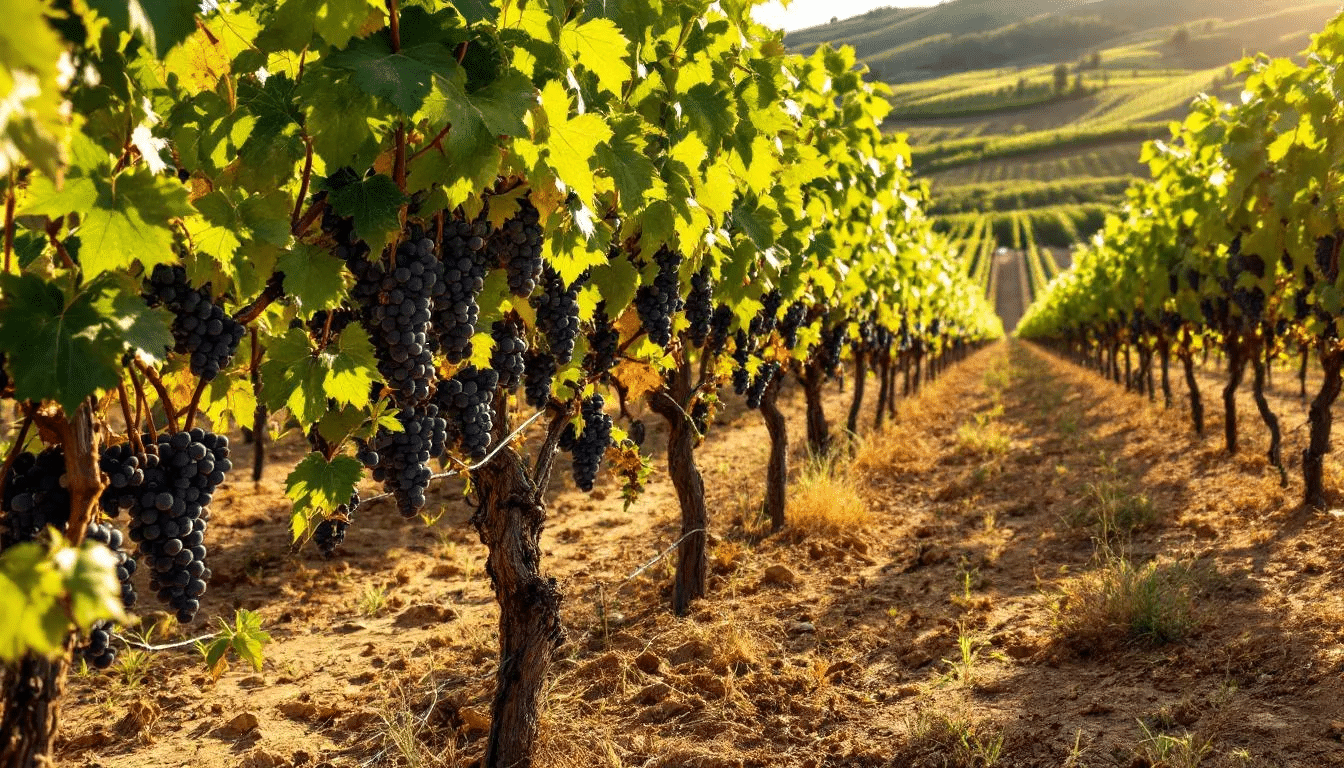
Mourvèdre is a grape variety that exhibits remarkable resilience and can adapt to various environments, but it particularly thrives in warm, sunny areas with minimal rainfall. This grape is a late bloomer, which means it needs a really long growing season to get fully ripe, making it perfect for the hot climates of Châteauneuf du Pape, Provence, and other Mediterranean spots. Growers usually plant Mourvèdre in soils that drain well, which helps stop the roots from getting too wet and keeps the vines growing strong and healthy.
The vines are typically head-trained, a method that helps them grow straight up and catch as much sunlight as possible, making sure all the grapes ripen at the same time! In famous regions like Châteauneuf-du-Pape and Provence, skilled producers use careful grafting and smart pruning to get the best amount of grapes while keeping the quality top-notch. These growing tricks, mixed with the grape’s natural strength, let Mourvèdre make consistently excellent fruit that becomes the foundation of some of the world’s most amazing wines!
How Winemakers Use Mourvèdre
Winemakers appreciate Mourvèdre for its versatility and blending capabilities. After the phylloxera invasion, Mourvèdre was considered difficult to graft onto resistant rootstocks, and many growers opted for varieties like Grenache that were easier to graft and manage in the vineyard.
Blending Component: Most commonly used in Mediterranean-style blends, particularly GSM combinations, where Mourvèdre provides structure, color, and aging potential while Grenache contributes fruit and warmth, and Syrah adds spice and complexity.
Varietal Wines: When grown in ideal conditions, Mourvèdre produces exceptional single-variety wines that showcase the grape’s full potential and terroir expression.
Rosé Production: Mourvèdre creates elegant, structured rosé wines, particularly in Provence, where its thick skins contribute to beautiful color and complex flavors.
Late Harvest Styles: Some producers experiment with late-harvest Mourvèdre, creating concentrated, dessert-style wines.
During winemaking, Mourvèdre is known for its tendency toward reduction, which can result in sulfur-like aromas if not managed properly. Winemakers often use aeration or copper fining to address reduction and ensure the wine develops clean, expressive flavors.
Tasting Notes and Wine Specifications
Color:
Deep ruby to dark purple, often with garnet hues that develop with age. Young Mourvèdre typically shows intense, almost opaque coloration due to the grape’s thick skin.
Aroma:
Primary aromas: Dark berries (blackberry, mulberry), plums, violets.
Secondary aromas: Black pepper, herbs (thyme, rosemary), Mediterranean scrubland.
Tertiary aromas: (with aging): Leather, tobacco, earth, game, tar, and chocolate
Flavor:
Rich and complex flavor profile featuring dark fruit flavors balanced by savory elements. Common descriptors include blackberry, plum, olive tapenade, herbs, spice, and mineral notes. The palate often shows excellent fruit-acid balance with distinctive earthy undertones.
Structure:
- Tannins: Firm and well-structured, providing an excellent aging framework
- Acidity: Moderate to high, contributing to food-friendliness and aging potential
- Alcohol: Typically 13.5-15.5%, varying by region and style
- Body: Medium to full-bodied with substantial weight and presence
Aging:
Mourvèdre has exceptional aging potential, often improving for 10-20 years or more. The grape’s natural tannin structure and acidity allow the wines to develop complex tertiary aromas while maintaining freshness. Premium examples from regions like Bandol are known to age gracefully for decades.
Food Pairing:
The wine’s structure and complexity make it excellent with:
- Red meats: Lamb, beef, game meats
- Mediterranean cuisine: Ratatouille, herb-crusted meats, olive-based dishes
- Aged cheeses: Particularly hard cheeses like aged Gouda or Manchego
- Barbecue: The wine’s robust character complements grilled and smoked meats
- Spicy dishes: Can handle moderate spice levels well
Mourvèdre Today
Modern Mourvèdre is experiencing a renaissance as wine drinkers increasingly seek authentic, terroir-driven wines. Climate change has made the variety more viable in previously marginal regions, while traditional areas continue to refine their approaches.
Contemporary winemakers are exploring different techniques with Mourvèdre, including whole-cluster fermentation, extended maceration, and various aging vessels from traditional oak to concrete and clay amphorae. These innovations are revealing new dimensions of the grape’s potential while respecting its Mediterranean heritage.
The variety’s natural affinity for organic and biodynamic viticulture has also contributed to its popularity among producers focused on sustainable winemaking practices.
Should You Try Mourvèdre?
Mourvèdre deserves consideration from wine enthusiasts for several compelling reasons:
For Rhône Valley Lovers: If you enjoy wines from Châteauneuf-du-Pape or other southern Rhône appellations, exploring pure Mourvèdre expressions will deepen your understanding of these blends.
For Age-Worthy Wine Seekers: Those building cellars will find Mourvèdre’s aging potential rewarding, as the wines develop remarkable complexity over time.
For Food Wine Enthusiasts: The grape’s natural acidity and tannin structure make it one of the most food-friendly red varieties available.
For Terroir Explorers: Mourvèdre’s sensitivity to place means each region offers distinctly different expressions worth comparing.
Conclusion
Mourvèdre represents one of the Mediterranean’s greatest viticultural treasures, offering wine lovers a combination of history, complexity, and aging potential that few varieties can match. Whether encountered as a component in classic Rhône blends or as a powerful varietal wine from Bandol or Australia, Mourvèdre provides a window into the sun-soaked terroirs where it thrives.
The grape’s revival in modern winemaking reflects a broader appreciation for authentic, place-driven wines that speak to their origins. For those willing to explore beyond mainstream varieties, Mourvèdre offers rewards that deepen with every bottle and every year of patience.
As global warming continues to shift viable grape-growing regions, Mourvèdre’s heat tolerance and late-ripening characteristics may make it increasingly important for the future of quality wine production. Now is an excellent time to discover this remarkable variety and understand why it has captivated winemakers and wine lovers for centuries.