
Oak Chips in Wine
Oak chips in wine have become a significant tool in modern winemaking, offering an accessible alternative to traditional barrel aging….
definition
Oak chips in wine have become a significant tool in modern winemaking, offering an accessible alternative to traditional barrel aging. They provide winemakers, particularly those working with smaller budgets or experimental batches, the ability to impart oak characteristics to wine without the substantial investment required for oak barrels. Winemakers choose to use oak chips based on the quality of grapes and the style of wine they wish to create, allowing them to fine-tune the wine’s flavor and character. This democratization of oak influence has made complex, oak-aged flavors achievable for wineries of all sizes. Wineries can use oak chips to tailor their wines depending on the grapes they source and the market they serve.
How Oak Chips in Wine Are Used in Winemaking
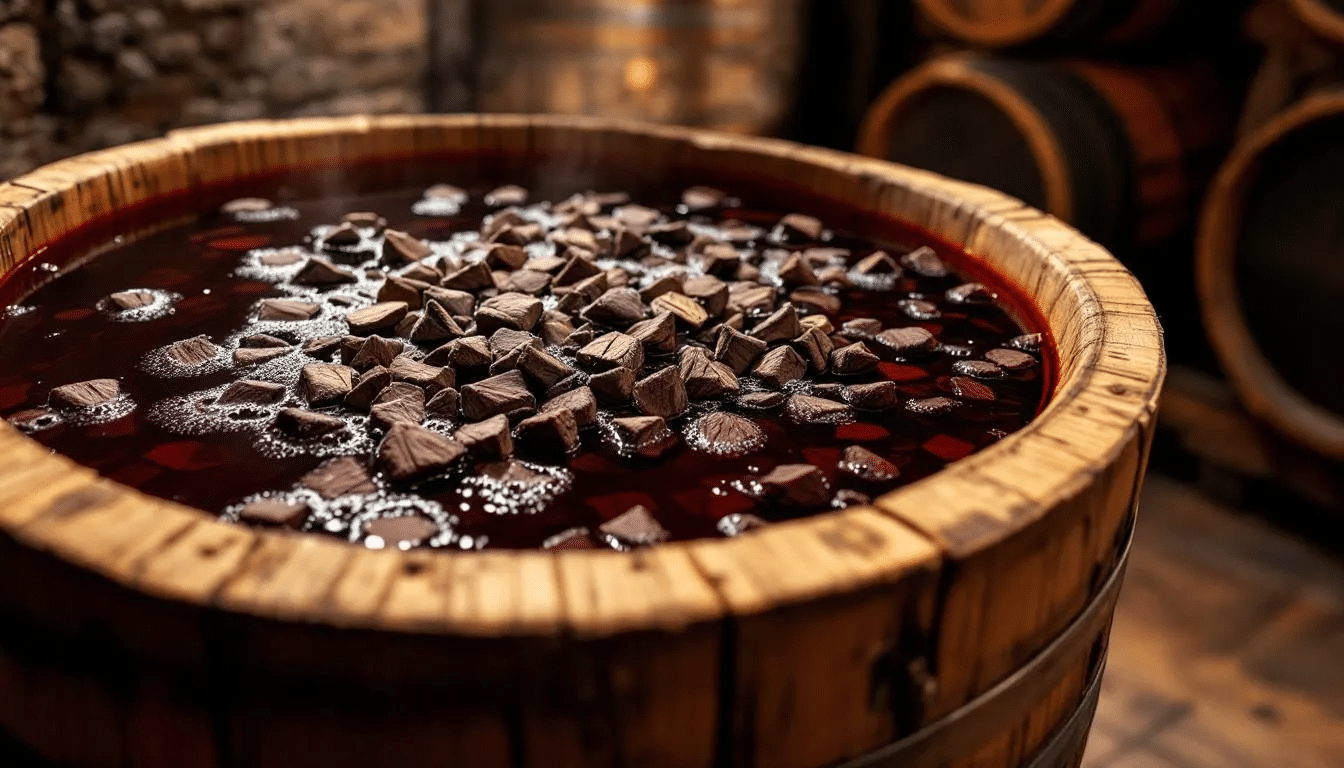
Oak chips are added directly to wine during fermentation or aging, typically in stainless steel tanks, carboys, or neutral containers. After selecting the appropriate stage, winemakers can add oak chips by simply throwing them into the fermenter or placing them in a hop bag (as used in beer making) to control their float and extraction.
Before adding, chips should be prepared by simply boiling them in water to sterilize and remove bacteria, then draining them before use. It is also important to use a sanitized mix of water and sodium bisulfite to further reduce bacteria risk. Oak chips can be added during fermenting, after secondary fermentation, or during aging in a carboy, depending on the wine recipe and desired effect.
The process is carefully monitored through regular tastings to assess the effect of the oak chips on flavor, color, and weight, adjusting contact time based on the wine’s age and the lot size. The size of the chips and the vessel, such as a carboy, can influence the extraction rate and the overall weight and complexity of the wine. Some winemakers use liquid oak extractives as an alternative, or opt for kits or brands that include oak powder for convenience and consistency.
Oak chips are especially beneficial for fruit wines, such as elderberry, and different wine recipes may require specific oak treatments. It is important to keep barrels filled to prevent oxidation, as controlled oxygen exposure during oak aging can enhance wine quality. Over the long term, oak aging can lead to a reduction of green notes, stabilization of the wine’s color, and requires monitoring for lack of integration or over-extraction. Once the target flavor profile is tasted and reached, the wine is racked off the chips or they’re removed through filtration.
Pros
Cost-effectiveness stands as the primary advantage; oak chips cost a fraction of what new barrels demand, making oak aging economically viable for larger production volumes. The benefits of using oak chips include improved flavor, enhanced color stability, and increased antioxidant properties, all of which contribute to better wine quality and maturation. They offer precise control over oak intensity, as winemakers can adjust the amount and contact time with greater flexibility than barrel aging allows.
Consistency is another benefit; chips from the same supplier provide uniform characteristics across batches. They also enable experimentation, allowing winemakers to trial different oak types (French, American, Hungarian) and toast levels without committing to expensive barrels. For wines meant for earlier consumption, chips can achieve desirable oak notes in less time than traditional barrel aging.
Cons
The most significant drawback to oak chips in wine is the limited complexity compared to barrel aging. Barrels allow micro-oxygenation through the wood staves, contributing to wine evolution and texture development that chips cannot replicate. The oak flavors from chips can sometimes feel less integrated, coming across as applied rather than woven into the wine’s structure. Wines aged with chips may also show a lack of certain filling elements or concentration in the mid-palate, which barrels typically provide, resulting in wines lacking some of the silky texture that micro-oxygenation provides.
There’s also a quality perception issue; many consumers and critics view chip-aged wines as inferior to barrel-aged counterparts. Over-extraction risk is real; chips have a greater surface area relative to their volume, making it easier to introduce excessive oak character if not carefully monitored. Finally, oak chips in wine don’t offer the prestige factor that barrel aging brings to premium wine marketing.
Characteristics
Oak chips in wine impart woody, vanilla-forward characteristics with varying intensity based on toast level and origin. Light toast chips contribute more subtle, sweet spice notes, while medium toast brings caramelization and toasted bread qualities. Heavy toast creates bolder smoke, char, and coffee-like attributes.
American oak chips typically deliver more aggressive vanilla and coconut flavors with softer tannins, while French oak offers more restrained spice notes with refined tannin structure. Oak chips can also be used to enhance the complexity of white wine, imparting notes like vanilla, caramel, and spice. The characteristics develop more quickly than in barrels but with less textural transformation.
Aromas
The aromatic profile includes vanilla and vanillin as dominant notes, alongside sweet baking spices like cinnamon, clove, and nutmeg. Toasted bread and caramel emerge from medium toast levels, while smoke, char, and roasted coffee characterize heavily toasted chips.
Coconut appears prominently with American oak, and subtle cedar and woodshop notes provide background complexity. These aromas tend to be more straightforward and less nuanced than those developed through barrel aging.
Additionally, tannins released from oak chips can help stabilize the wine’s color and clarity, contributing to the wine’s overall appearance.
Taste
On the palate, oak chips in wine contribute sweet vanilla and butterscotch flavors, complemented by warm baking spice notes. The influence of oak chips can be best tasted by sampling the wine at intervals during the aging process to determine the optimal level of oak integration. The tannin structure added is typically softer and less refined than barrel tannins, though it still provides grip and structure.
Toasted and caramelized flavors appear in the mid-palate, with smoky or charred notes on the finish when heavily toasted chips are used. American oak imparts a creamy, coconut sweetness, while French oak offers more subtle spice and structure. The mouthfeel enhancement is present but less pronounced than traditional barrel aging, lacking some of the silky texture that micro-oxygenation provides.
Red Wine and Oak Pairing
Pairing red wine with oak is both an art and a science, giving winemakers an amazing chance to craft their wines with more complexity and depth. Not all wines get the same boost from oak aging, but for many red wines, adding oak chips or letting them rest in an oak barrel can really bring out the wine’s best character and make those flavors shine. The choice between French oak chips and American oak chips is a big decision that can make or break a wine – each type brings its own special flavors and aromas to the party.
French oak chips are loved by winemakers for their ability to add gentle, layered notes of vanilla and spice that make the wine’s natural fruit flavors pop without taking over the show. This makes them a go-to choice for winemakers who want elegance and finesse in their red wines. On the flip side, American oak chips are known for their bold, in-your-face flavors that bring hints of coconut, caramel, and a touch of sweetness that can really complement those robust red wines. The wood from American oak tends to make a bigger statement, making it perfect for wines that can handle a stronger oak punch!
The level of toast on the oak chips also plays a huge role in shaping the wine’s personality! Medium toast chips are often the perfect match for varietals like Cabernet Sauvignon, where they add depth, structure, and just the right amount of spice. Meanwhile, light toast chips work beautifully with delicate reds like Pinot Noir, letting those subtle grape flavors take center stage. Adding oak chips during the aging process requires careful watching of the wine’s color and flavor development – because nobody wants an over-oaked wine that tastes more like chewing on a plank than sipping something delicious!
Conclusion
Oak chips in wine represent a practical solution for winemakers seeking to add oak character without the financial burden of barrel programs. While they successfully impart recognizable oak flavors and aromas, they cannot fully replicate the complexity, textural evolution, and prestige associated with traditional barrel aging.
For everyday wines and value-oriented production, oak chips in wine serve their purpose admirably, delivering consumer-pleasing oak notes at accessible price points. However, for premium wines where nuance, aging potential, and authenticity matter most, barrel aging remains the gold standard. The choice between chips and barrels ultimately depends on the winemaker’s goals, target market, and the story they wish their wine to tell.