
Refractometer
The refractometer is an essential tool for home winemakers and professional vintners. This remarkable instrument is a fast and reliable…
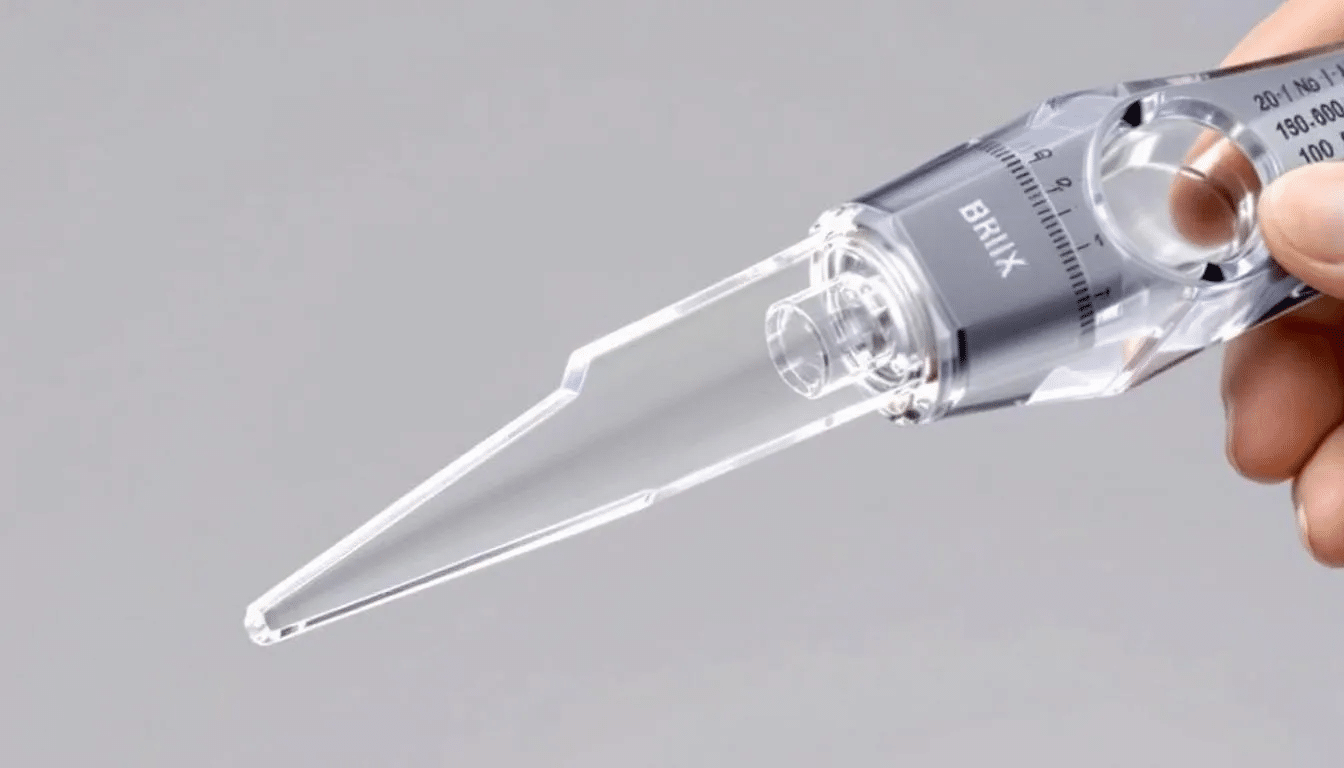
definition
The refractometer is an essential tool for home winemakers and professional vintners. This remarkable instrument is a fast and reliable way to measure sugar concentration in grape juice, must, and finished wine. Unlike hydrometers, which rely on measuring the density of a liquid to provide readings, refractometers work by analyzing how light bends as it passes through a sample. This method delivers highly accurate readings of sugar level, even during active fermentation when hydrometers can be completely thrown off by bubbles or the presence of alcohol.
One of the most impressive advantages of using a refractometer is its ability to provide precise measurements in sweeter wines, where sugar concentration is higher and traditional hydrometers may struggle to deliver consistent results. For home winemakers looking to monitor fermentation progress or determine the final gravity of their wine, a refractometer is truly an ideal choice. It requires only a drop or two of juice or wine for testing, making it both incredibly efficient and convenient for any serious wine enthusiast.
To ensure the utmost accuracy, it’s essential to calibrate your refractometer with distilled water before use. Many modern refractometers come equipped with automatic temperature compensation (ATC), which helps maintain accurate readings regardless of temperature fluctuations.
For the most complete picture of your wine’s health and progress, it’s highly recommended to use a refractometer in conjunction with a hydrometer. This winning combination allows you to track specific gravity, sugar level, and final gravity throughout the entire winemaking journey.
Refractometers aren’t limited to wine production; they’re also widely used when brewing beer to measure sugar levels in wort and to help determine the final gravity of finished beer. Whether you’re working with a wine kit (perfect for beginners) or crafting your own recipe from fresh grapes, a refractometer can help you adjust sugar levels, monitor fermentation like a pro, and achieve that perfect balance in your finished product that makes all the difference.
Refractometers are an essential addition to any winemaker or brewer’s toolkit as their remarkable accuracy, ease of use, and incredible versatility make them absolutely invaluable for anyone looking to improve their craft and produce consistently outstanding wines and beers.
Whether you’re just getting started on your winemaking adventure or have years of experience under your belt, a refractometer will help you achieve better results and take all the guesswork out of measuring sugar concentration and monitoring fermentation – now that’s what we call smart winemaking!
What is it used for: hydrometer readings
Many people wonder if a wine refractometer can measure alcohol directly. The answer is that a refractometer is designed to test and read sugar content, not alcohol; it measures sugar (Brix or SG), and alcohol must be calculated indirectly.
A wine refractometer is a specialized optical instrument used primarily in winemaking to measure the sugar content in grape juice and must (crushed grapes before fermentation). Here are its main applications:
Measuring Sugar Levels (°Brix)
- Refractometers are used to test sugar content and read Brix or SG values; the number or point shown on the scale helps determine grape ripeness.
- Determines grape ripeness by measuring dissolved sugars in juice
- Helps winemakers decide the optimal harvest time
- Predicts potential alcohol content of the finished wine (roughly 0.55-0.6% alcohol per °Brix)
- For example, if you read 22°Brix, you can estimate the potential alcohol, but the effect of alcohol during fermentation makes direct readings more complicated and requires correction.
- Some models offer both Brix and SG scales, making it simpler to monitor fermentation.
Quality Control
- Monitors fermentation progress by tracking sugar consumption
- Ensures consistency across different batches
- Helps achieve desired sweetness levels in the final product
- Recommendation: Clarify the sample before testing to improve accuracy and reduce interference.
- At the end of fermentation, refractometer readings are less reliable due to the effect of alcohol; using a spreadsheet or correction formula is recommended for more accurate results.
- The longer process of correcting readings for finished wines makes it beneficial to continue monitoring fermentation with both refractometers and hydrometers.
They are convenient for quick tests, but calculating alcohol (abv) from sugar readings can be complicated and may require a spreadsheet. Compared to hydrometers, refractometers offer a simpler and faster way to test sugar concentration, but hydrometers are often used to calculate alcohol content more directly.
How it works: Place a few drops of grape juice on the prism, close the cover, and look through the eyepiece. The instrument bends (refracts) light differently based on sugar concentration, showing a reading on an internal scale—typically measured in °Brix (grams of sugar per 100g of solution).
Conclusion: finished wine
A wine refractometer is an essential, quick, and accurate tool for winemakers that takes the guesswork out of timing the harvest and monitoring fermentation. Unlike hydrometers, which require larger samples and temperature corrections, refractometers need just a drop or two and provide instant readings. For both commercial vintners and home winemakers, it’s an invaluable investment that helps produce consistently high-quality wine by ensuring grapes are harvested at peak ripeness and fermentation proceeds as planned.