
Residual Sugar
Residual sugar (often abbreviated as RS) is the natural grape sugar that remains in wine after fermentation is complete. The…
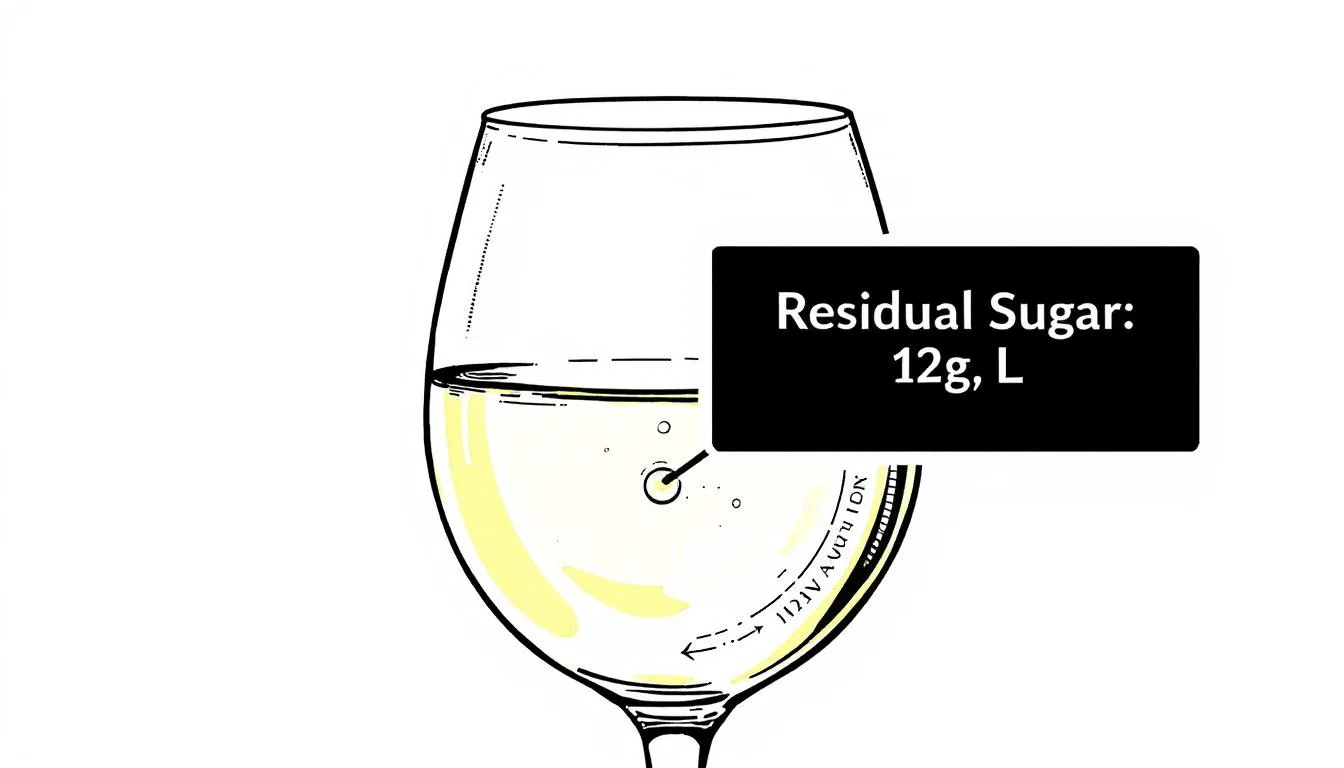
definition
Residual sugar (often abbreviated as RS) is the natural grape sugar that remains in wine after fermentation is complete. The sugar in grapes is a blend of glucose and fructose. Residual sugar is measured in grams of sugar per liter (g/L), sometimes referred to as ‘liter sugar’ or ‘residual sugar or RS, and is one of the key factors that determines whether a wine tastes dry, off-dry, medium sweet, or sweet.
During winemaking, yeast consumes the blend of glucose and fructose present in grape juice and converts them into alcohol and carbon dioxide. Alcoholic fermentation finishes when most of these natural grape sugars are gone. The amount of sugar left over when this process stops—whether naturally or through winemaker intervention becomes the wine’s residual sugar.
Wineries control sugar level and wine’s sweetness by managing fermentation and sugar additions, and may add sugar (chaptalization) to increase the total alcohol level, especially in cool climates; this practice is regulated in most countries. The alcohol level in wine is influenced by how much sugar is fermented, so stopping fermentation at a certain point can leave more residual sugar and less alcohol.
Even a dry wine typically has a residual sugar level between 0.3 and 2 g/L, though this level is usually imperceptible to most palates due to the wine’s acidity and other components. Medium-sweet wines fall between dry and sweet, typically with 12-35 g/L of sugar. Sweet wines such as German Riesling can contain much higher levels of residual sugar and less alcohol. Sweet dessert wines can contain 100+ g/L of residual sugar.
Residual sugar content can be adjusted before bottling, and the amount of sugar in a bottle affects both the wine’s sweetness and its caloric content. Red wines and Champagne also have varying residual sugar levels. Most countries do not require wine labels to show actual sweetness levels, and labelling terms like ‘dry’, ‘medium sweet’, and ‘sweet’ are based on residual sugar level.
What Causes it?
Several factors determine how much residual sugar remains in a finished wine:
Incomplete fermentation is the primary cause. This can happen intentionally or naturally when:
- The winemaker stops fermentation deliberately by chilling the wine, filtering out yeast, adding sulfur dioxide, or fortifying with spirits (as in Port).
- Yeast runs out of nutrients before consuming all available sugar.
- Alcohol levels become too high for the yeast to survive (typically around 15-16% ABV
 What Does A.B.V. Mean in Wine? What does… More).
 - The temperature drops too low for the yeast to remain active.

Grape ripeness plays a crucial role—riper grapes contain higher sugar concentrations. In cool climates or early harvests, grapes may have lower sugar levels; late-harvest or botrytized grapes (affected by noble rot) can contain extraordinary amounts of sugar that yeast cannot fully ferment.
Winemaker decisions when making wines such as Rieslings, Gewürztraminers, and Moscatos are crafted specifically to retain sweetness that balances their natural acidity and enhances their aromatic profiles.
Types of Wine and Residual Sugar
Residual sugar levels vary widely across different wine styles, shaping everything from a wine’s taste to its mouthfeel. In dry wines—whether red, white, rosé, or sparkling wine—the residual sugar content is typically quite low, usually between 1 and 11 grams per liter. These dry-tasting wines have had nearly all the sugar consumed during fermentation, resulting in a crisp, dry profile that wine lovers absolutely adore.
Off-dry wines include certain styles of Riesling and Chenin Blanc, and fall right in the middle of the spectrum. These wines generally contain between 12 and 35 g/L of residual sugar, offering a subtle sweetness that balances acidity without being overtly sugary.
Sweet wines, such as many German Rieslings or dessert wines, can have much higher residual sugar levels—often exceeding 35 g/L and sometimes reaching well over 100 g/L. In these wines, the winemaking process is carefully managed so that not all the sugar is fermented, leaving more residual sugar in the finished wine. For example, winemakers may halt fermentation early or use grapes with naturally high sugar levels to achieve a sweeter style.
Sparkling wine also showcases an amazing range of residual sugar levels, from bone-dry Brut Nature styles to sweeter Demi-Sec and Doux. The decision to leave more or less sugar in the wine is a key part of the winemaker’s craft, allowing for a diverse array of wines to suit every palate.
Measuring Sugar in Wine
Accurately measuring residual sugar in wine is essential for both winemakers and consumers. Residual sugar is most commonly measured in grams per liter (g/L), providing a measurement of how much sugar remains in the finished wine.
Winemakers use several methods to determine the sugar content in wine. One particularly clever approach is to measure the density of the wine, which changes dramatically as sugar is converted to alcohol during fermentation. Tools like the EasyDens Digital Density Meter allow for incredibly precise measurement of residual sugar levels, while amazing digital resources such as the Wine Meister app offer both simple and advanced calculators for determining sugar content. These sophisticated calculators may require inputs like density, temperature, and total acid value to provide an accurate reading.
By carefully measuring and controlling residual sugar levels, winemakers can craft wines with a truly wide range of sweetness—from bone-dry to lusciously sweet. This not only affects the wine’s taste but also its alcohol content, as the amount of fermentable sugar left in the wine determines exactly how much alcohol is produced. Understanding how much sugar is present in a wine helps both producers and drinkers appreciate the incredible diversity of wine styles available, ensuring that the finished wine matches the intended sweetness level.
Conclusion
Residual sugar is a fundamental component of wine that exists on a spectrum from bone-dry to lusciously sweet. Far from being simply about sweetness, RS interacts with acidity, alcohol, tannins, and flavor compounds to create balance and complexity. Understanding residual sugar helps wine drinkers make informed choices and appreciate the winemaker’s craft—whether that’s achieving a crisp, dry finish or preserving the natural sweetness that makes certain wine styles so compelling.