
sciaccarellu
Sciaccarellu is an important grape varietal in CorsicaCorsican viticultural history dates back… More, France’s sun-drenched Mediterranean island. First and foremost,…
definition
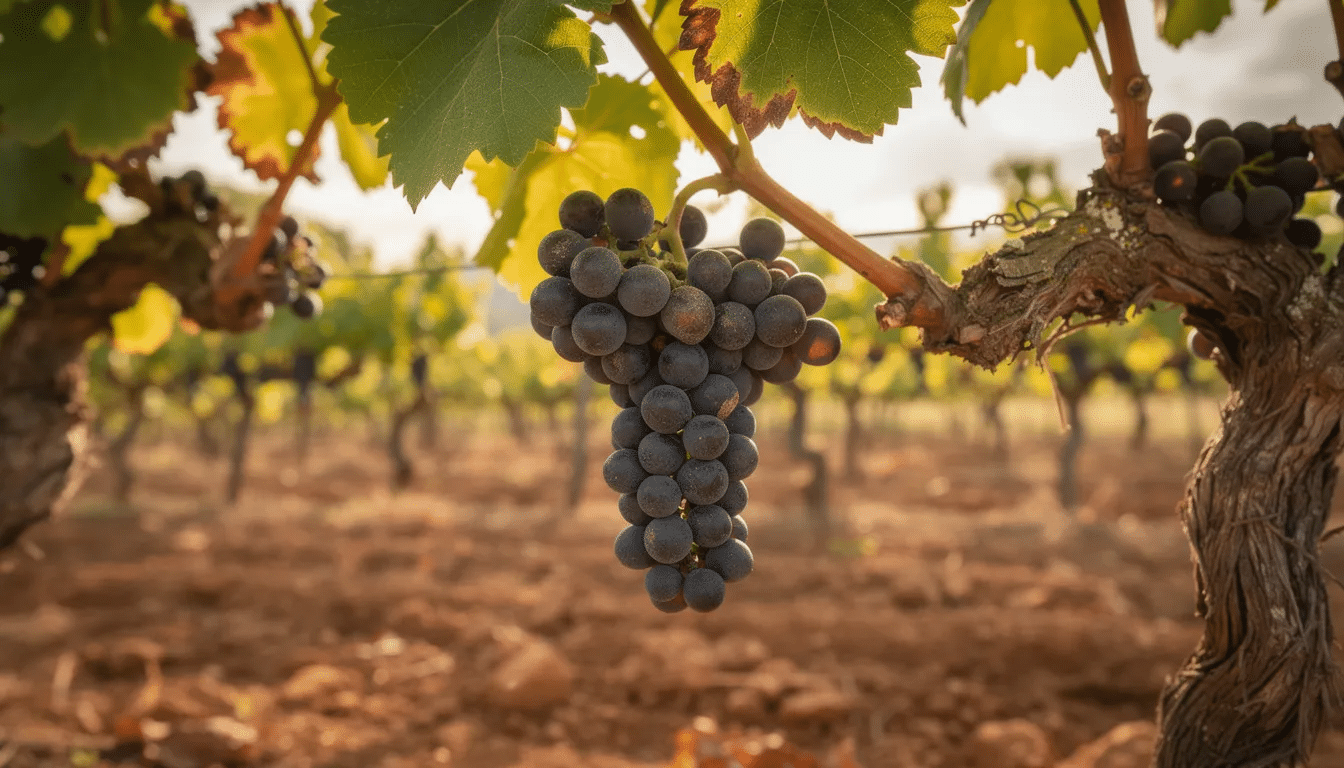
Sciaccarellu is an important grape varietal in Corsica, France’s sun-drenched Mediterranean island. First and foremost, consider the remarkable indigenous grape varieties that thrive here: Sciaccarellu, Niellucciu, Carcaghjolu Neru, and Minustellu. You might be surprised by how these unique varietals flourish in Corsica’s incredibly diverse vineyard settings, shaped by everything from rugged mountain terrain to gentle coastal breezes, with soils ranging from granite to limestone and clay.
What makes Corsican winemaking particularly fascinating is the producers’ commitment to organic, traditional, and low-intervention viticulture, which creates wines with exceptional authenticity and character. When you visit these vineyards, don’t hesitate to ask about their specific techniques. The passion these producers have for their craft often leads to fascinating conversations about how they’re preserving centuries-old traditions while embracing modern understanding of their unique terroir.
Consider exploring Corsica’s wine diversity; whether you’re drawn to vibrant rosés that capture the island’s sunlit personality, elegant reds, or crisp whites that refresh after a day of Mediterranean adventures. You might be surprised to learn that many of these vineyards, perched on dramatic hillsides or nestled close to the sea, create wines that tell the story of their environment in every glass.
Origin
Sciaccarellu (also spelled Sciacarello) is an ancient red grape variety indigenous to Corsica, the Mediterranean island that politically belongs to France but maintains a distinct cultural identity. Originally, Sciaccarellu is a grape variety native to Corsica, where wine grapes have been cultivated since the 6th Century BC. The name derives from the Corsican word “sciacca,” meaning “to crush,” likely referring either to the crisp texture of the fresh grapes or the crunchy sound the vine makes underfoot when walked upon in the vineyard.
Corsica is located in the north of the Mediterranean, near Italy, and in proximity to Tuscany, which has influenced the region’s winemaking traditions and grape varieties. DNA profiling has revealed that Sciaccarellu is a natural crossing between two other Corsican varieties, linking it deeply to the island’s viticultural heritage. The grape has been cultivated on Corsica for centuries, thriving particularly in the granite soils along the western coast. It’s considered one of the island’s signature varieties alongside Nielluccio (Sangiovese) and represents an essential part of Corsican wine identity.
Viticulture on Corsica was significantly impacted by the phylloxera epidemic in the 1880s and the devastation of two World Wars, which disrupted wine production and threatened indigenous grape varieties. In the 1960s, Algerian colonists moved to Corsica, revitalizing the winemaking industry by introducing new techniques and grape varieties.
What Makes Sciaccarellu Unique
Sciaccarellu stands out among red varieties for several distinctive characteristics. A detailed description of its ampelographic traits reveals that the adult leaves typically have three or five lobes, often with slightly overlapping lobes, and the shoot tips or lower sides of the leaves display an erect orientation.
The foliage and grape clusters are known for their high density, which can contribute to vine vitality and effective canopy management. These morphological features are consistent with international ampelographic reference standards, such as those outlined by the OIV (International Organisation of Vine and Wine).
The grape has notably thin skins, which contribute to its typically lighter color and more delicate tannin structure compared to many red wines. This thin-skinned nature makes it somewhat vulnerable in the vineyard but produces wines with exceptional aromatic complexity.
Sciaccarellu thrives in hot, dry climates and requires no irrigation due to its proximity to the sea, which helps prevent dehydration and reduces plant stress. The vines are not particularly susceptible to diseases, making them easier to cultivate than most other varieties. However, Sciaccarellu must be planted in relatively dry terroirs and requires moderate pruning and limited yields for quality production. Careful vineyard management is essential to minimize stress on the vines and ensure optimal fruit quality.
The variety is remarkably expressive of its terroir, particularly showing affinity for granite-based soils where it develops its most distinctive pepper and spice notes. Sciaccarellu produces wines with an unusual combination of attributes: light body paired with intense aromatics, fresh acidity alongside warm spice notes, and a texture that can be simultaneously delicate and characterful.
The grape ripens relatively early and is sensitive to its growing conditions, requiring careful vineyard management. These factors, along with its specific cultivation requirements, partly explain why it remains largely confined to Corsica and why plantings have historically been limited.
Where Sciaccarellu Grows In The World
Sciaccarellu is an emblematic black grape variety from Corsica, celebrated for its originality and elegance. It is overwhelmingly concentrated in Corsica, where it accounts for approximately 15% of the island’s total vineyard plantings. The variety performs best along Corsica’s western coast, particularly in the Ajaccio appellation (AOC), where it is the principal grape variety and must comprise at least 60% of red wines.
Other Corsican appellations include Vin de Corse Sartène and Vin de Corse Figari in the south. The Île de Beaute appellation is also notable for Sciaccarellu, especially for its significant production of rose wines that showcase the grape’s fresh and aromatic character.
Sciaccarellu thrives in sunny conditions and granite soils, particularly around Ajaccio and Sartène, and is best suited to hot southern areas where it must be planted in relatively dry terroirs. The grape benefits from the warm Mediterranean climate combined with coastal influences that moderate temperatures and provide cooling breezes. Granite soils are particularly favorable, imparting distinctive mineral and peppery characteristics to the wines. Some plantings also exist on schist and limestone.
Outside Corsica, Sciaccarellu is virtually nonexistent. There are minimal plantings in mainland France and perhaps a handful of experimental vineyards elsewhere, but the variety remains intrinsically linked to its island home. Total global plantings are estimated at only around 800-900 hectares, making it a relatively rare variety on the world stage.
How Winemakers Use Sciaccarellu
Winemakers use Sciaccarellu in several ways taking advantage of its versatility and aromatic character. The variety can be vinified as a single-varietal wine, though it’s more commonly blended with other Corsican varieties like Nielluccio, Grenache, or Cinsault to add aromatic complexity and freshness.
Given its thin skins and delicate nature, Sciaccarellu typically undergoes relatively gentle extraction during winemaking. Fermentation temperatures are carefully controlled to preserve the variety’s signature aromatics.
To further protect the grape’s delicate aromas and prevent oxidation, some winemakers harvest Sciaccarellu grapes at night, when cooler temperatures help maintain freshness. Many producers use traditional cement or concrete tanks, though stainless steel and oak barrels are also employed, depending on the desired style.
Sciaccarellu is presented in a range of winemaking styles, with its characteristics—such as leaf shape, berry size, and aromatic profile—often showcased in both scientific descriptions and by winemakers seeking to highlight its unique attributes. The grape has a good sugar accumulation potential while maintaining fairly good acidity, a balance that influences decisions on harvest timing and vinification methods.
The variety is increasingly used for rosé production, where its natural freshness, aromatic intensity, and lighter color profile are particularly well-suited. Corsican rosés made from Sciaccarellu have gained recognition for their distinctive character and quality. Some winemakers also experiment with minimal intervention techniques, producing natural wines that showcase the grape’s inherent personality.
Aging regimes vary based on style goals. While some wines see brief oak aging to add structure and complexity, many producers prefer minimal oak influence to preserve the variety’s delicate fruit and aromatic profile. The best examples balance fruit purity with subtle complexity.
Tasting Notes and Wine Specifications
Color: Sciaccarellu is a light, fruity Corsican red wine with Mediterranean flavors, typically light to medium-bodied and displaying a cherry red to ruby color with a light structure. The color is often slightly translucent due to the grape’s thin skin. The color can show garnet or brick-orange hues even in younger wines.
Aroma: On the nose, Sciaccarellu offers an exceptional aromatic palette, including notes of pepper, blackcurrant, cherry, and licorice. The bouquet is distinctively aromatic, with primary aromas of red berries (strawberry, raspberry, red cherry), black pepper, and warm spices (cinnamon, clove). Floral notes of violets and dried flowers are common, and there is a signature peppery, almost herbaceous quality with hints of wild herbs, garrigue (Mediterranean scrubland), and sometimes a subtle almond note. Granite-grown examples show pronounced minerality.
Flavor: In the mouth, Sciaccarellu is soft and approachable, with a mouth-filling yet light texture. The palate is interesting, echoing the aromatic profile with bright red fruit flavors, a spicy bit of pepper, and herbal nuances. There is often a bit of citrus or orange rind, adding complexity. The wine’s fresh acidity provides lift and energy, while a savory, almost umami quality appears alongside the fruit. The tannins are soft, and the wine is known for its smooth, spicy, and fresh palate. A characteristic, slight bitterness on the finish, reminiscent of almond skin, is common.
Structure: Light to medium-bodied with relatively gentle, soft tannins due to the thin skins. The structure is more about freshness and acidity than power or weight. Tannins are typically fine-grained and well-integrated rather than robust. The wines often have an appealing juiciness and drinkability while maintaining good structure.
Aging: Most Sciaccarellu wines are best enjoyed young to appreciate their fresh fruit and aromatic intensity, typically within 3-5 years of vintage. However, well-made examples from quality producers and good vintages can age gracefully for 5-10 years, developing more complex tertiary notes of leather, earth, and dried fruit while maintaining their characteristic spice and freshness. The best examples gain complexity without losing their essential character.
Food Pairing: Sciaccarellu’s combination of freshness, moderate body, and aromatic complexity makes it highly food-friendly. It pairs beautifully with Corsican cuisine, including charcuterie (coppa, lonzu, figatellu), and is exceptional when paired with cheeses—fresh goat cheese or Parmesan are especially recommended, as they enhance both the nose and mouth experience of the wine. The wine also pairs well with herb-crusted lamb, grilled fish, bouillabaisse, and tomato-based dishes.
Its spicy and soft palate complements dishes with warm spices, while its bright acidity cuts through rich dishes like cassoulet or slow-cooked stews, balancing heavy qualities. Lighter red and rosé versions are an interesting match for roasted or grilled chicken, particularly with herbal preparations. Sciaccarellu also works well with Mediterranean vegetables, pasta with meat ragù, and even moderately spiced Asian cuisine.
Today
Sciaccarellu is experiencing a renaissance as part of the broader interest in indigenous grape varieties and distinctive regional wines. Corsican producers are increasingly focusing on quality over quantity, with improved viticulture and winemaking techniques showcasing what it can achieve. The grape has become a point of pride for the island’s wine identity.
Climate change presents both challenges and opportunities. Warmer temperatures can help ripen the grape more consistently, but excessive heat can compromise the freshness and aromatic character that define quality Sciaccarellu. Progressive growers are adapting by using careful site selection, canopy management, and harvest timing.
The variety is gaining recognition among wine enthusiasts and sommeliers seeking distinctive, terroir-driven wines that offer an alternative to mainstream varieties. However, production remains limited, and many examples are primarily consumed locally or in France, with limited international distribution.
Should You Try It?
Sciaccarellu offers a unique window into Corsican terroir and Mediterranean winemaking traditions. If you appreciate aromatic, food-friendly red wines with personality and sense of place, Sciaccarellu deserves your attention. It’s particularly appealing if you enjoy lighter-styled reds like Pinot Noir or Gamay but want something with a distinctively different aromatic profile.
The variety offers excellent value, as many examples remain reasonably priced despite their quality and distinctiveness. It’s an ideal wine for adventurous drinkers looking to expand beyond familiar varieties and for those who appreciate wines that express a strong regional identity.
Conclusion
Sciaccarellu represents a distinctive voice in the world of wine—a variety so intimately connected to its place of origin that it seems almost inseparable from Corsica itself. Its aromatic complexity, peppery character, and fresh elegance offer something genuinely different from mainstream red varieties. While it may never achieve global ubiquity due to its cultivation challenges and limited plantings, this rarity only enhances its appeal.
In an era when wine lovers increasingly seek authenticity and regional character, Sciaccarellu stands as a compelling example of how indigenous varieties can offer profound expressions of terroir. Whether enjoyed in a bistro overlooking the Mediterranean or at home paired with appropriate cuisine, Sciaccarellu provides a liquid journey to Corsica’s rugged coastlines and granite hillsides—a taste of an island’s soul captured in a glass.