
Stellenbosch
Stellenbosch in the Western Cape’s Coastal Region of South Africa, is a key area in the country’s wine landscape, located…
definition
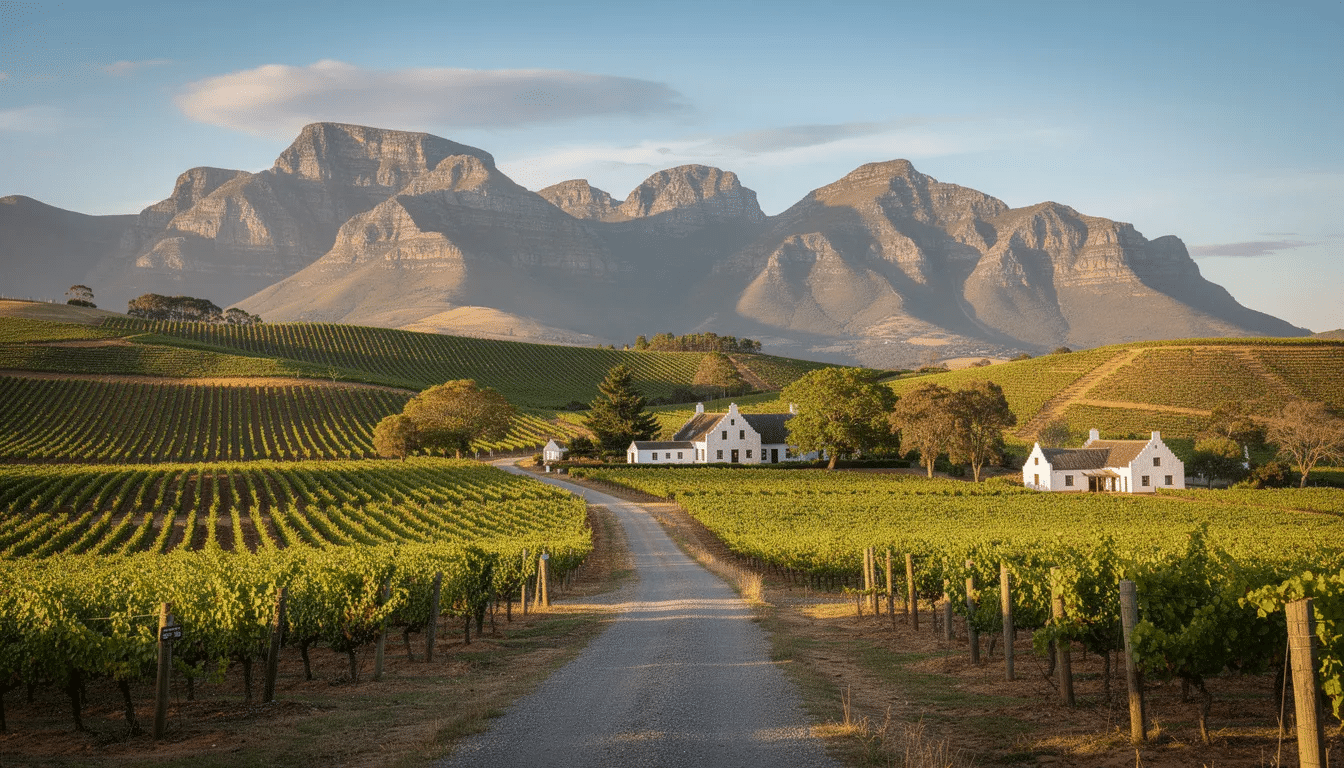
Stellenbosch in the Western Cape’s Coastal Region of South Africa, is a key area in the country’s wine landscape, located approximately 50 kilometers (30 miles) east of Cape Town. The wine region surrounds the historic university town of Stellenbosch and is nestled between the mountain ranges of one of South Africa’s most scenic valleys.
Stellenbosch is South Africa’s second-oldest settlement and was established on the banks of the Eerste River in 1679. It was named for the then-Governor, Simon van der Stel, who also established the Constantia wine estate in Cape Town. The region’s founding is closely tied to the era when the Cape was founded by early European explorers and settlers, marking a pivotal moment in South African history.
Stellenbosch is located just 25 miles (40km) east of Cape Town. The region is separated from Paarl by the Simonsberg Mountain in the north, which acts as a natural boundary, and Stellenbosch is separated from neighboring areas by the Hottentot Holland Mountain range on the eastern side. The Hottentot Holland Mountain range on the eastern side divides it from Walker Bay.
The area is renowned for its stunning Cape Dutch architecture, gourmet restaurants, and a well-developed wine tourism industry. Stellenbosch is often compared to Napa Valley in terms of its significance to the South African wine industry.
Why Is It Famous
Stellenbosch is South Africa’s most renowned wine region and is often called the country’s wine capital. It’s famous for producing world-class red wines, particularly Cabernet Sauvignon and Bordeaux-style blends. It is the birthplace of Pinotage, South Africa’s signature grape variety, highlighting its historical significance in the development of notable wine varieties.
The Stellenbosch Wine Routes, established in 1971, are the first formal wine routes in South Africa, offering visitors a unique way to explore the area. Stellenbosch is home to more than 150 wineries that open their cellar doors to visitors, making it a vibrant destination for wine enthusiasts. The region is also celebrated for its stunning natural beauty, with magnificent mountains and vineyard-covered hills creating a picturesque landscape.
Stellenbosch is home to nearly one-fifth of all the vines planted in South Africa, underscoring its importance in the country’s wine industry. The University of Stellenbosch plays a key role in educating future winemakers and hosts South Africa’s only Viticulture and Oenology program, making it the academic and research hub of South African wine.
The winemaking history began in 1679, making it home to some of South Africa’s oldest and most prestigious wine estates. Stellenbosch pioneered quality wine production in South Africa and continues to set benchmarks for excellence, combining Old World tradition with New World innovation.
How Large Is The Region?
The Stellenbosch Wine of Origin district covers approximately 17,000 hectares of vineyards, making it one of South Africa’s larger wine regions. The area includes over 150 wine estates with around two-hundred wine producers. The region produces roughly 15-17% of South Africa’s total wine output.
Geography and Climate
Stellenbosch benefits from a diverse geography, including exposed hills and sheltered valleys, with vineyards planted at elevations ranging from 100 to 600 meters above sea level. The region is flanked by several mountain ranges, including the Simonsberg, Stellenbosch, Helderberg, and Drakenstein mountains, which, along with the exposed hills, create varied mesoclimates and exposures. The region’s dramatic topography, ancient soils, and variations in rainfall contribute to its diverse terroir.
The region’s climate has hot, dry summers and cool, wet winters. The region’s climate is strongly influenced by maritime breezes from False Bay, which cool the vineyards and create unique microclimates. After the morning’s hot sun, cooling southeasterly ocean breezes from False Bay refresh the grapes, helping to preserve acidity and balance in the wines.
Sufficient winter rainfall reduces the need for irrigation and supports optimal vine growth. Summer daytime temperatures typically range from 25-30°C (77-86°F), while the ocean influence and elevation provide crucial nighttime cooling that preserves acidity in the grapes. The combination of diverse soil types and the region’s climate allows vintners to create wines that reflect the unique characteristics of Stellenbosch.
Terroir
Stellenbosch’s terroir is remarkably diverse, with over 50 different soil types identified across the region. The most significant soils include decomposed granite on mountain slopes, Table Mountain sandstone, weathered shale, and alluvial soils in valley floors. Stellenbosch’s terroir is further defined by granite, shale, and sandstone-based soils that are among the oldest on earth; the granite mountains are approximately 600 million years old.
The soils also have high clay content, providing excellent water retention while remaining free-draining. Vineyards are often found on the lower slopes of Simonsberg Mountain, where the terrain influences microclimates and wine styles. White wine varieties are frequently planted closer to the ocean to benefit from cooling maritime influences, which help regulate temperature and enhance grape quality. Grape varieties such as Cabernet Sauvignon and Chenin Blanc are widely planted throughout the region, showcasing Stellenbosch’s adaptability and prominence for different wine styles.
In addition to officially recognized wards, many unofficial areas within Stellenbosch have unique microclimates and wine styles, adding to the region’s diversity. The region’s terroir includes wards like Simonsberg-Stellenbosch, known for deep clay soils, and the cooler Banghoek ward, which produces whites with higher acidity. This soil diversity, combined with varying elevations, aspects, and microclimates, allows vintners to match specific varieties to ideal sites.
The interplay between warm days and cool nights creates ideal ripening conditions, allowing grapes to develop concentrated flavors while maintaining balanced acidity. The longer growing season contributes to wine complexity and structure.
Number of Appellations
Stellenbosch is divided into multiple wards (sub-regions), each with distinctive characteristics. Key wards include Banghoek, Bottelary, Devon Valley, Jonkershoek Valley, Papegaaiberg, Polkadraai Hills, Simonsberg-Stellenbosch, and Helderberg. The Helderberg ward, closest to False Bay, is particularly prized for red wines.
Common Grape Varietals
The French Huguenots were the first to plant vines in the Stellenbosch region in the 1690s, laying the foundation for the area’s winemaking tradition.
Red varieties dominate Stellenbosch and include Cabernet Sauvignon (the flagship variety and the most widely planted grape), Merlot, Shiraz/Syrah, Pinotage (South Africa’s signature grape that is a crossing of Pinot Noir and Cinsaut, for which Stellenbosch is notable as the birthplace), Cabernet Franc, and Petit Verdot. Pinot Noir is also an important grape variety in the region. Shiraz, Petit Verdot, and Merlot are planted in quantity. These account for approximately 60% of plantings.
White varieties are dominated by Chenin Blanc, widely planted throughout Stellenbosch and produced in a full spectrum of wine styles, as well as Sauvignon Blanc, Chardonnay, Riesling, and Sémillon, representing about 40% of the vineyard area.
Wine Style, Characteristics, and Food Pairing
Stellenbosch wines are known for their concentration, structure, and aging potential. The region’s unique terroir and climate help create wines with distinctive profiles, and the decomposed granite soils often impart subtle mineral notes into the wines. The signature style is elegant yet powerful, with ripe fruit balanced by good acidity and firm tannins.
Cabernet Sauvignon and Bordeaux blends show blackcurrant, cassis, and cedar notes with structured tannins and excellent cellaring potential. Cabernet-based wines from Somerset West have great potential to age and often have nuances of tobacco and smoke. Many years of cellaring are required to soften the tannins of Bordeaux blends and Syrahs from the Simonsberg-Stellenbosch region. These pair beautifully with grilled steak, lamb, game meats, and aged cheeses.
Shiraz offers ripe dark fruit, spice, and peppery notes with a fuller body. Perfect with braised meats, barbecue, and hearty stews.
Pinotage displays unique smoky, earthy characteristics with red and black fruit. It complements traditional South African dishes like bobotie and grilled meats.
White wines, particularly from the Banghoek area, are outstanding—especially Chardonnay and Chenin Blanc, which are known for their bright acidity. These range from crisp and mineral to rich and oak-aged, pairing well with seafood, poultry, creamy pasta dishes, and South African curries.
Conclusion
Stellenbosch stands as South Africa’s premier wine region, combining centuries of winemaking tradition with modern innovation and exceptional terroir. Its diverse landscapes, Mediterranean climate, and commitment to quality have established it as a world-class wine destination producing sophisticated wines that compete on the international stage. Whether you’re seeking age-worthy Cabernet Sauvignon, distinctive Pinotage, or elegant white wines, Stellenbosch offers remarkable quality and variety that reflects the region’s unique character and winemaking excellence.