
Tempranillo
Tempranillo is Spain’s main grape and one of the country’s most distinguished and widely planted red grape varieties, creating wines…

definition
Tempranillo is Spain’s main grape and one of the country’s most distinguished and widely planted red grape varieties, creating wines that range from everyday table wines to some of the world’s most prestigious and age-worthy bottles.
As Spain’s main grape, Tempranillo plays a central role in Spain’s wine identity and is the foundation of renowned wines from regions like Rioja and Ribera del Duero.
Origins of Tempranillo
Tempranillo has deep roots in Spanish winemaking history, dating back over 2,000 years. The grape is indigenous to the Iberian Peninsula, with evidence suggesting it was cultivated as early as the Phoenician settlements in Spain around 1100 BCE. Tempranillo is considered one of the most important grapes, playing a key role in the tradition and identity of Spanish red grapes.
The name “Tempranillo” comes from the Spanish word “temprano,” and is often referred to as ‘Spanish temprano’, meaning “early,” referring to the grape’s tendency to ripen early. Tempranillo ripens early, often several weeks earlier than most Spanish red grapes, which allows it to be harvested before the autumn rains. This trait distinguishes it from most Spanish red grapes, which typically ripen weeks later.
Tempranillo has been genetically linked to Albillo Mayor, another Spanish grape variety, which is believed to be one of its parent grapes. However, genetic studies have shown that Tempranillo does not have a direct genetic connection to other major grape varieties, such as Pinot Noir, despite historical legends suggesting it may have originated from pinot noir cuttings. Its genetic profile is distinctly Spanish, confirming its indigenous origins.
Where Tempranillo Grows in the World
While Tempranillo is quintessentially Spanish, it has found success in several wine regions around the world:
Spain: Tempranillo’s homeland, where it is especially prominent in north central Spain, particularly in the two regions of Rioja and Ribera del Duero, which are the most famous for Tempranillo production. It dominates in regions such as:
- Rioja Region (where it’s the dominant red grape in their famous red blends; Rioja wines are traditionally made primarily from Tempranillo grapes
- Ribera del Duero (known as “Tinto Fino” or “Tinta del País” here)
- Toro (called “Tinto de Toro”)
- Navarra
- La Mancha (often used in younger wines
Tempranillo is also called ‘ull de llebre’ and ‘de llebre’ in Catalonia, which are regional synonyms. The prefix ‘tinta de’ is commonly used for Tempranillo’s regional names in Spain and Portugal, such as ‘Tinta de Toro’ and ‘Tinta Roriz’.
Portugal: In Portugal, it is known as Tinta Roriz (and also as Aragonez), and is a key grape in Portugal. Tinta Roriz is especially important in the Douro region, where it is a key component in Port wine and Douro valley table wines.
United States: Growing in popularity in warmer regions of California, Oregon, Washington, and especially Texas, where it performs well in the hot climate.
Australia: Increasingly planted, particularly in warmer regions like McLaren Vale and the Barossa Valley.
Argentina: Finding success in higher elevation vineyards.
Mexico: Growing in popularity in regions like Baja California.
How Winemakers Work with Tempranillo
Tempranillo is a versatile grape that responds well to various winemaking techniques:
Cultivation: The Tempranillo vines thrive in chalky or clay-limestone soils with good drainage. It performs best in continental climates with moderate rainfall, appreciating warm days and cool nights that help develop complex flavors while maintaining acidity. Climate and temperature variations significantly influence the acidity and sugar content of Tempranillo grapes, which in turn affect the wine’s flavor, color Wine color refers to the visual appearan… More, and overall quality. Managing sugar content is crucial for determining the optimal harvest time and achieving the desired wine style.
Vinification: Tempranillo can be vinified in multiple styles:
- Traditional: Extended maceration with the skins to extract color and tannin
- Modern: Temperature-controlled fermentation to preserve fresh fruit characteristics
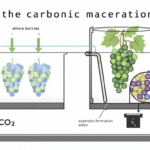
- Carbonic maceration
 Carbonic maceration is a distinctive win… More: For young, fruity wines meant for early consumption
Aging: Tempranillo wine has an exceptional affinity for oak aging, which is a signature element of its traditional production, especially in Rioja:
- American oakAmerican oak plays a significant role in… More: Traditionally used in Rioja, imparting vanilla, coconut, and dill notes
- French oak: Increasingly popular, adding more subtle spice and structural elements
- Mixed approaches: Many producers now use both types of oak

Blending: Tempranillo is often used in blends with other grapes. In Rioja, it is commonly blended with Garnacha (Grenache), Mazuelo (Carignan), and Graciano. In Portugal, Tempranillo serves as a key blending grape with indigenous Portuguese varieties in Port and table wines. Its versatility as a blending grape allows it to contribute structure and balance to both Spanish and Portuguese blends, while also standing alone as a varietal wine in many regions.
Styles of Tempranillo
Tempranillo wines are celebrated for their remarkable versatility, and this is reflected in the diverse styles found across Spain and beyond. In the renowned Rioja region, they are classified according to their aging process, which has a profound impact on their flavor and character. The youngest style, Joven, is bottled soon after fermentation and offers vibrant, juicy fruit flavors with minimal oak influence—perfect for those who enjoy fresh, lively wines. Moving up, Crianza wines spend at least one year aging in oak barrels, developing a balance between fruit flavors and subtle hints of vanilla and spice. Reserva wines are aged for a minimum of one year in oak and two years in the bottle, resulting in deeper complexity, with flavors evolving toward dried fruit and gentle notes of leather. The pinnacle of traditional aging, Gran Reserva, requires at least two years in oak and three years in the bottle, producing wines with layered flavors, refined tannins, and the signature leathery notes that Tempranillo is known for.
In the Ribera del Duero region, it is often referred to as Tinto Fino and shines in single varietal expressions that emphasize the grape’s depth, structure, and elegance. These wines can range from fruit-forward and approachable to powerful and age-worthy, depending on the winemaker’s approach and the length of oak aging. Outside of Spain, Tempranillo takes on new personalities, with some regions focusing on the grape’s natural acidity and fresh fruit flavors, while others use oak to build structure and complexity. Whether you prefer the youthful exuberance of a Joven or the sophisticated depth of a Gran Reserva, Tempranillo offers a style to suit every palate, making it one of the most dynamic red wines in the world.
Tasting Notes and Wine Specifications
Color:
Medium to deep ruby red when young, developing brick-orange hues with age
Aroma:
- Primary: Red fruits (cherry, strawberry, plum), black fruits (blackberry), red flowers“Flowers in wine” refers to a wine fault… More (subtle floral notes)
- Secondary: Leather, tobacco, vanilla, cedar, clove (from oak aging)
- Tertiary (with age): Dried fruits, mushrooms, earth, forest floor, tea leaves

Flavor:
A vibrant mix of juicy red fruits, with flavors of cherry, plum, and strawberry when young. The Tempranillo taste is marked by notes of dried red plum, subtle spices, and floral aromas such as violets, along with savory components of herbs and earth. As they age, the wine’s taste evolves to reveal dried fig, tobacco, and darker fruit notes, while Tempranillo’s signature leather flavors become prominent, especially in Reserva and Gran Reserva styles. Tempranillo wine taste is further shaped by oak aging, which imparts vanilla, coconut, smoke, and spice, adding complexity to the overall profile.
Structure:
- Medium to full-bodied
- Moderate to high tannins that are generally smooth and refined
- Medium acidity
- Alcohol levels are typically between 13-15%
Aging:
- Young styles: Ready to drink immediately
- Traditional Rioja classifications:
- Crianza: Minimum of 2 years aging (at least 1 in oak)
- Reserva: Minimum of 3 years aging (at least 1 in oak)
- Gran Reserva: Minimum of 5 years aging (at least 2 in oak)
- Quality Tempranillo can age gracefully for 10-20+ years in top vintages
Food Pairing:
Tempranillo is a versatile red wine that pairs well with a variety of dishes. Classic food pairings include:
- Spanish cuisine: Jamón ibérico, paella, chorizo, and other cured meats
- Grilled meats and roasted meats, especially lamb
- Gourmet burgers
- Roasted vegetables
- Hearty stews and casseroles
- Aged cheeses like Manchego
- Mushroom-based dishes
- Tomato-based dishes (the acidity complements Tempranillo well)
Other pairings that work well include smoked dishes, hearty pastas, and even some Mexican cuisine.
Role of Tempranillo in the Wine World
Tempranillo has established itself as one of the world’s noble grape varieties. It forms the backbone of Spain’s fine wine industry and has significantly contributed to the country’s reputation for quality wines. Tempranillo based wines are celebrated for their versatility and are gaining recognition worldwide.
Recent decades have seen Tempranillo’s profile rise considerably on the global stage, with:
- Increased international recognition for regions like Ribera del Duero
- Growing plantings in New World regions
- A trend toward single-vineyard expressions highlighting terroir differences
- Experimentation with modern winemaking techniques while respecting tradition
Tempranillo has become Spain’s ambassador to the wine world, representing both centuries of tradition and modern innovation in Spanish winemaking.
Should You Try Tempranillo?
Absolutely! It offers remarkable versatility and value across different price points:
- For beginners: Young, fruit-forward Tempranillos provide an accessible entry point with soft tannins and vibrant fruit flavors
- For enthusiasts: Traditional aged Riojas offer complex tertiary flavors at often reasonable prices
- For collectors: Top Tempranillos from famous producers in Rioja and Ribera del Duero rank among the world’s most age-worthy and collectable wines
Tempranillo rewards exploration, with significant regional differences and a range of styles from vibrant and fruity to sophisticated and complex.
Conclusion
Tempranillo stands as Spain’s viticultural treasure—a grape that beautifully expresses its terroir while maintaining its distinctive character across different regions and winemaking styles. Its ability to create wines that are approachable when young yet capable of developing remarkable complexity with age has cemented its place among the world’s great wine grapes.
As a key grape in both Spain and Portugal, Tempranillo holds deep cultural and winemaking significance, shaping the identity of wines from these countries.
Whether enjoyed as a simple Joven (young) wine with tapas or savored as a decades-old Gran Reserva, Tempranillo offers a fascinating window into Spanish winemaking heritage while continuing to evolve and find new expressions around the world. For wine lovers seeking balance, food-friendliness, and a sense of history in their glass, it delivers on all counts.