
tirage
Tirage is a French term (“drawing” or “pulling”) that describes a critical step in sparkling wine production, also known as…
definition
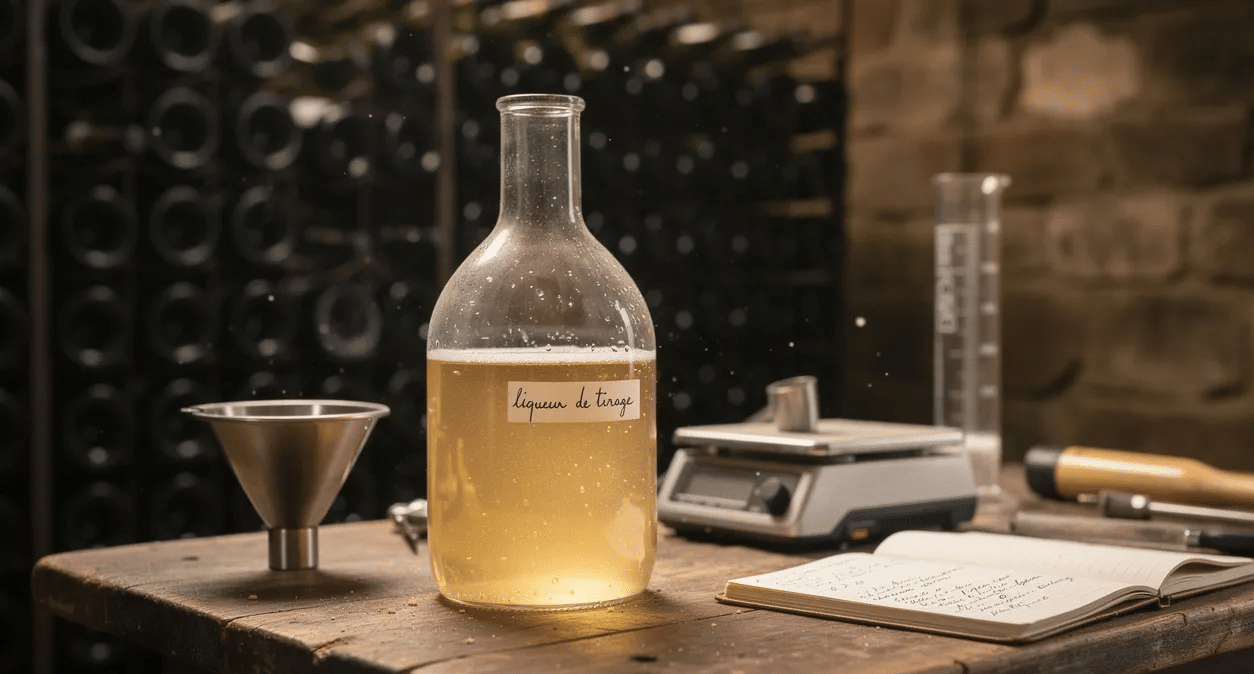
Tirage is a French term (“drawing” or “pulling”) that describes a critical step in sparkling wine production, also known as méthode champenoise or méthode traditionnelle. In sparkling winemaking, tirage refers to the process of bottling still base wine along with a liquid mixture of sugar and yeasts (called liqueur de tirage) to initiate a second fermentation inside the bottle. This secondary fermentation is what creates the characteristic bubbles in Champagne and other traditional method sparkling wines.
It is important to understand words like ‘tirage’ and ‘dosage’ in sparkling winemaking. These terms describe essential processes and help clarify the classification and production of sparkling wines.
The liqueur de tirage is a liquor that typically contains:
- Sugar (usually around 24 grams per liter).
- Active yeast cultures (such as Saccharomyces cerevisiae).
- Yeast nutrients.
- Sometimes, fining
 Wine fining is a clarification process u… More agents or clarifying substances.

This liquor is a liquid mixture that provides the necessary sugars and yeasts for fermentation. The yeasts play a vital role in converting sugar into alcohol and carbon dioxide, which form the bubbles.
During the bottling step, bottles are filled with the liqueur de tirage mixture, and wine is bottled to begin the secondary fermentation. The use of glass bottles and the design of the neck are crucial for maintaining pressure and ensuring proper aging and bubble formation.
The preparation and blending of the base wine for tirage require a combination of skills, techniques, and ingredients to ensure a successful secondary fermentation. The processes involved in tirage and secondary fermentation are essential for producing high-quality sparkling wines.
As an example, Champagne and Cava are both sparkling wines produced using the tirage process. These examples illustrate the importance of tirage in creating world-renowned sparkling wines.
Base Wine Preparation
Base Wine Preparation is crucial for sparkling wine production, setting the stage for the entire winemaking process. The quality, balance, and character of the base wine are essential (they directly influence the final style and finesse of the sparkling wine). In the traditional method—also known as méthode champenoise—this step involves transforming carefully selected grapes, such as Chardonnay, Pinot Noir, and Pinot Meunier, into a still wine that will later undergo secondary fermentation.
The process begins in the vineyard, where grapes are harvested to preserve high acidity and fresh aromas. Once in the winery, the grapes are gently pressed, and the juice is fermented into a dry, still wine. This base wine is then clarified and stabilized, ensuring it is completely free from faults and ready for blending. Winemakers often blend different base wines to achieve a consistent house style or to create a unique expression for each vintage.
After blending, the base wine is typically aged for several weeks or even months. This aging period allows the flavors and aromas to integrate beautifully, resulting in a harmonious wine with just the right balance of acidity and subtlety. During this time, the winemaker may make careful adjustments to ensure the base wine is ready for the next stage.
Once the base wine is ready, it is combined with the liqueur de tirage—a mixture of sugar and yeast—just before bottling. This addition is essential for initiating the prise de mousse (bubble creation) during the secondary fermentation. The wine is then bottled, sealed with a crown cap, and placed in a cool, dark cellar. Over several weeks or months, the yeast consumes the added sugar, producing carbon dioxide that is trapped in the bottle, creating the signature effervescence of sparkling wines.
The meticulous preparation of the base wine is what allows the secondary fermentation to proceed smoothly and ensures the development of fine bubbles, complex aromas, and a balanced palate. A well-prepared base wine will yield a sparkling wine with elegance and longevity. Whether using the traditional method or alternatives like the tank method, the attention to detail in base wine preparation is what sets high-quality sparkling wines apart from the rest. For winemakers, this step is not just a technical requirement—it is the essential foundation for creating exceptional bubbly that delights wine lovers around the world!
secondary fermentation
The tirage process follows a specific sequence and is central to sparkling winemaking, producing some of the most celebrated sparkling wines worldwide.
Preparation: Winemakers prepare the base wine, which has already completed its primary fermentation. Grapes for this base wine are sourced from carefully managed vineyards, ensuring quality and character. This wine is typically dry, acidic, and still (non-sparkling).
Mixing: The liqueur de tirage is carefully blended into the base wine. The sugar quantity is precisely calculated to achieve the desired pressure in the bottle (typically around 5-6 atmospheres).
Bottling: The wine mixture is bottled and sealed with a crown cap (similar to a beer bottle cap) or sometimes a cork and an agrafe (metal clasp).
Storage: Bottles are laid horizontally in cool cellars where the secondary fermentation occurs over several weeks, followed by an aging period on the lees (dead yeast cells) that can last from months to several years. Different styles of sparkling wine require different aging times, and the process can produce a range of styles, from Champagne to Cava, each with unique characteristics. Sparkling wines produced by tirage, such as Champagne, Cava, and other sparkling wines that are made using the traditional method, are renowned for their complexity and finesse.
The transfer method is commonly used for certain bottle formats or wine types, offering a different style of sparkling wine compared to the traditional method.
Why is it important in sparkling wine production
Tirage is essential for several reasons:
Carbonation: It creates the bubbles that define sparkling wine. The trapped carbon dioxide from fermentation dissolves into the wine under pressure, creating the effervescence.
Flavor complexity: Extended contact with yeast lees during aging after tirage develops complex flavors—toasty, brioche-like, nutty notes that distinguish quality sparkling wines from simple carbonated wines. The age of the wine, particularly how long it spends aging on the lees, significantly impacts its development, complexity, and tasting profile.
Quality and prestige: Traditional method sparkling wines are considered superior to those made by other methods (like tank fermentation) largely because of the complexity that tirage and subsequent lees aging provide. The diversity of sparkling wines is reflected in the different styles produced by various methods, each offering unique bubbly characteristics.
Precision control: Tirage allows winemakers to precisely control the level of carbonation and the character of the finished wine through careful management of sugar levels, yeast selection, and aging time. After aging, bottles are disgorged to remove sediment—a process called disgorging, where the neck of the bottle is frozen, and the sediment plug is expelled. The final step, known as dosage, involves adding a mixture of wine and sugar to determine the sweetness and classification of the sparkling wine.
When is it not used
Tirage is not used in several winemaking scenarios:
Still wines: Obviously, wines not intended to be sparkling don’t undergo tirage, as no secondary fermentation or carbonation is desired.
Alternative sparkling wine methods: Other production methods bypass tirage entirely. Here are some examples of wines produced by these methods:
- Charmat/Tank method: Secondary fermentation occurs in large pressurized tanks rather than individual bottles. This method is used to produce wines like Prosecco, many Cavas, and other inexpensive sparkling wines.
- Transfer method: Similar to the traditional method, but wines are transferred to tanks under pressure before final bottling. Some Australian sparkling wines are produced using this method.
- Carbonation method: CO₂ is simply injected into still wine (the least prestigious method). Some entry-level sparkling wines are produced this way.
Ancestral/Pétillant naturel method: These wines are bottled before primary fermentation completes, so there’s no separate tirage step—the original fermentation creates the bubbles. Examples include many pét-nat wines from France and other regions.
Cost considerations: Producers making budget-friendly sparkling wines typically avoid tirage and the traditional method because it’s labor-intensive, requires long aging periods, and involves significant bottle storage space—all of which increase costs.
Conclusion
Tirage represents the heart of traditional sparkling wine production, transforming still wine into the elegant, complex beverages we associate with celebration and luxury. While it demands patience, precision, and investment from winemakers, the results—Champagne and premium traditional method sparkling wines—justify the effort through their superior quality, complex flavors, and refined effervescence.
The process connects modern winemaking to centuries of tradition, particularly in Champagne, France, where the technique was perfected. For wine enthusiasts, understanding tirage provides insight into why traditional method sparkling wines command premium prices and occupy a special place in wine culture worldwide.