Titratable Acidity
Titratable acidity (TA) measures the total concentration of acids in wine that can be neutralized by a base. It’s expressed…
definition
Titratable acidity (TA) measures the total concentration of acids in wine that can be neutralized by a base. It’s expressed in grams per liter (g/L) and represents the sum of all acids present—primarily tartaric, malic, and citric. Malic acid is known for its sharp, green-apple taste, while lactic acid, formed from malic acid during malolactic fermentation, is milder and contributes to a softer mouthfeel. The combination of tartaric, malic, and succinic acids significantly influences a wine’s flavor, stability, and acid level.
Succinic acid is a normal by-product during fermentation and can increase titratable acidity. The acids originate from grapes and juice; grape variety and maturity play a key role in determining acid levels. The winemaker carefully determines and manages these values to achieve the desired wine profile.
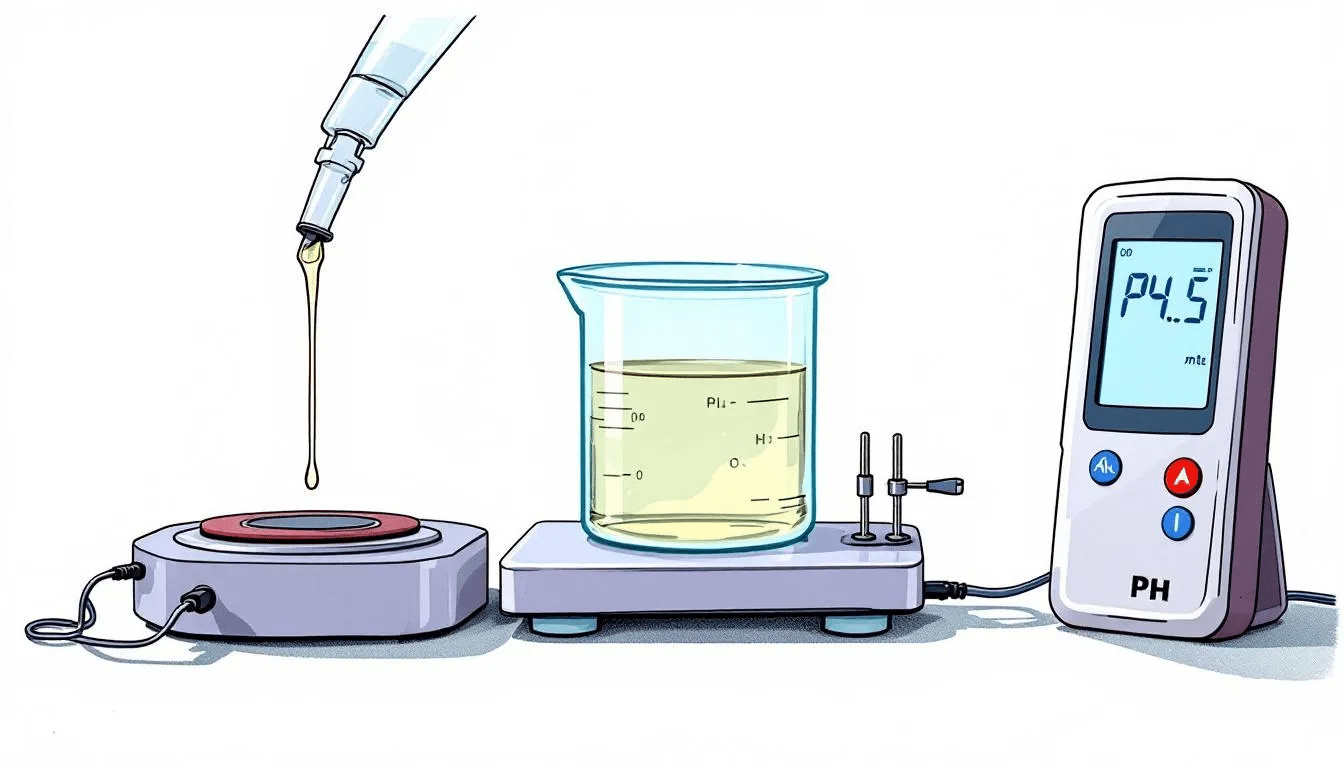
To determine titratable acidity, winemakers test samples of wine or grape juice. The value is determined by adding a base solution to the sample until a specific pH endpoint (usually 8.2) is reached, total acid content is then calculated. The test often involves using a drop of wine sample for accuracy, and temperature control is important to ensure reliable results. Most wines fall between 5.5 – 8.5 g/L TA, typically reported as tartaric acid equivalents.
There is a key difference between pH and titratable acidity: pH measures the concentration of free hydrogen ions (reflecting acid strength and stability), while titratable acidity measures the total amount of acid present (impacting taste and preservation). The pH scale is logarithmic, meaning a small change in pH represents a large change in acidity. Proper management of pH and titratable acidity is crucial for wine quality. Wine’s pH and titratable acidity do not have a direct correlation; other things, such as sulfur dioxide levels and overall acid level, also influence wine stability and preservation.
A normal range for TA varies by wine style: dry whites typically have higher TA (6-8 g/L), while reds are often lower (5-7 g/L). When adjustments are needed, smaller amounts of acid or base are added to achieve the desired acid level and maintain balance.
The combination of acids, sweetness, and higher TA can influence the mouthfeel and perceived sweetness or tartness of wine, affecting how the wine is experienced in the mouth.
How It Impacts Wine Acidity
Titratable acidity fundamentally shapes a wine’s character and stability. On the palate, it creates the crisp, tart sensation that makes wine refreshing rather than flat. Acidity is perceived in the mouth as sourness or tartness, directly impacting the sensory experience. This acidity provides structure and backbone, particularly important in white wines where tannins are minimal.
The impact extends to flavor perception—adequate TA enhances fruit flavors and makes wine taste livelier, while low acidity results in flabby, uninteresting wines. Sweetness can balance acidity; a sweet wine may taste less tart even with higher TA. Higher TA increases perceived sourness in the mouth, while lower TA can make a wine seem sweet or flabby. TA also influences color stability in red wines, helping maintain vibrant hues, and acts as a natural preservative by inhibiting microbial growth and oxidation.
Balance is crucial: TA works in conjunction with pH, alcohol, residual sugar, and tannins to create harmony. Winemakers may decrease pH to stabilize wine and improve its characteristics. A high-alcohol wine needs sufficient acidity to avoid tasting hot or unbalanced.
Measuring Titratable Acidity
The go-to method for measuring titratable acidity (TA) is by using a titration kit, which contains a pH meter, a burette, and a phenolphthalein indicator. The pH meter tracks the acidity levels of the solution as it drips into a strong base – usually sodium hydroxide – from the burette.
The phenolphthalein indicator changes color when the acids in your wine are finally neutralized. The amount of base needed to reach the endpoint indicates the total acidity in the wine, and winemakers express this as grams per liter in tartaric acid equivalents.
Titratable acidity and pH are related; each one measures different elements of a wine’s acidity. pH shows the concentration of free hydrogen ions present and how strong the acid is on the palate. TA counts up all the acid in the wine – the free-floating and bound-up forms.
Winemakers track TA at several key moments during the winemaking journey – after primary fermentation is complete, at the end of malolactic fermentation, and just before bottles are sealed. Needed adjustments are made to the TA throughout the entire winemaking process.
An average red wine has a TA of around 5.5 g/L, and whites have a TA of 7.5 g/L or even higher. These differences are exactly what give each wine style its signature mouthfeel and that fresh, lively character.
Winemakers can tweak acid levels to bump up the TA by adding additional acid or deacidify it to lower it. Wines with lower pH need less sulfur dioxide added, while higher pH wines require more.
Pros and Cons
Advantages of appropriate titratable acidity include enhanced freshness and palatability, better aging potential through natural preservation, improved microbial stability during production and storage, and balanced flavor profiles that showcase terroir and varietal characteristics. Wines with good TA structure are more food-friendly and versatile.
Disadvantages emerge when the TA is excessive or insufficient. Too much acidity creates harshness, an overly tart or sour taste, and can make wine seem thin or aggressive. Too little results in dull, flabby wines lacking definition, with increased vulnerability to spoilage and poor aging potential. Excessively low TA wines may require acidification (where legal), while high-acid wines might need deacidification, interventions that can compromise naturalness.
Conclusion
Titratable acidity serves as a cornerstone of wine quality, providing the structural framework that allows other components to shine. While the ideal TA level varies by wine style—sparkling wines thrive with higher acidity, while some full-bodied reds prefer moderate levels—maintaining appropriate acidity remains essential for producing wines with freshness, balance, and longevity. Understanding and managing TA allows winemakers to craft wines that are both stable and expressive, demonstrating why this seemingly technical measurement matters profoundly to what ends up in your glass.