
Trockenbeerenauslese
Trockenbeerenauslese (often abbreviated as TBA) is a wine that is predominantly made in Germany and Austria. In Germany, it’s produced…
definition
Trockenbeerenauslese (often abbreviated as TBA) is a wine that is predominantly made in Germany and Austria. In Germany, it’s produced in all major wine regions, particularly in the Mosel, Rheingau, Rheinhessen, and Pfalz. Austria produces similar wines in regions like Burgenland (especially around the Neusiedlersee) and Wachau.
The term literally means “dry berry selection” in German, referring to grapes that have shrivelled to near-raisin status on the vine. These shrivelled grapes are individually picked at the optimal moment to select the best berries affected by noble.
Winemaking with Noble Rot
TBA represents the highest quality level in the German classification and Austrian wine classification systems (Prädikatswein). It is the richest and sweetest style of German wine, with a unique production method that is extraordinarily labor-intensive and weather-dependent, which sets it apart from other dessert wines:
Noble Rot (Botrytis cinerea): The grapes need to be affected by this beneficial fungus, which concentrates sugars by dehydrating the berries while adding complex flavors. Noble rot can also add unique honeyed and apricot-like flavors to the wine.
Selective Harvesting: Shriveled berries are individually picked by hand, often requiring multiple passes through the vineyard. Pickers may collect just a few berries per vine.
Extreme Ripeness: Producers ensure that grapes reach a specific point of minimum must weight of 150-154° Oechsle (depending on region and grape variety), indicating extraordinary sugar concentration.
Late Harvest: Grapes are typically harvested in late autumn or even early winter, sometimes into November or December.
Minimal Yield: A single vine might produce only a glass or two of wine, making TBA extremely rare and expensive. Each lot of Trockenbeerenauslese is extremely limited due to the small quantities produced.
Slow Fermentation: The high sugar content creates a slow fermentation that often stops naturally, leaving significant residual sugar and relatively low alcohol (typically 5-8% ABV).
Deep Golden Color
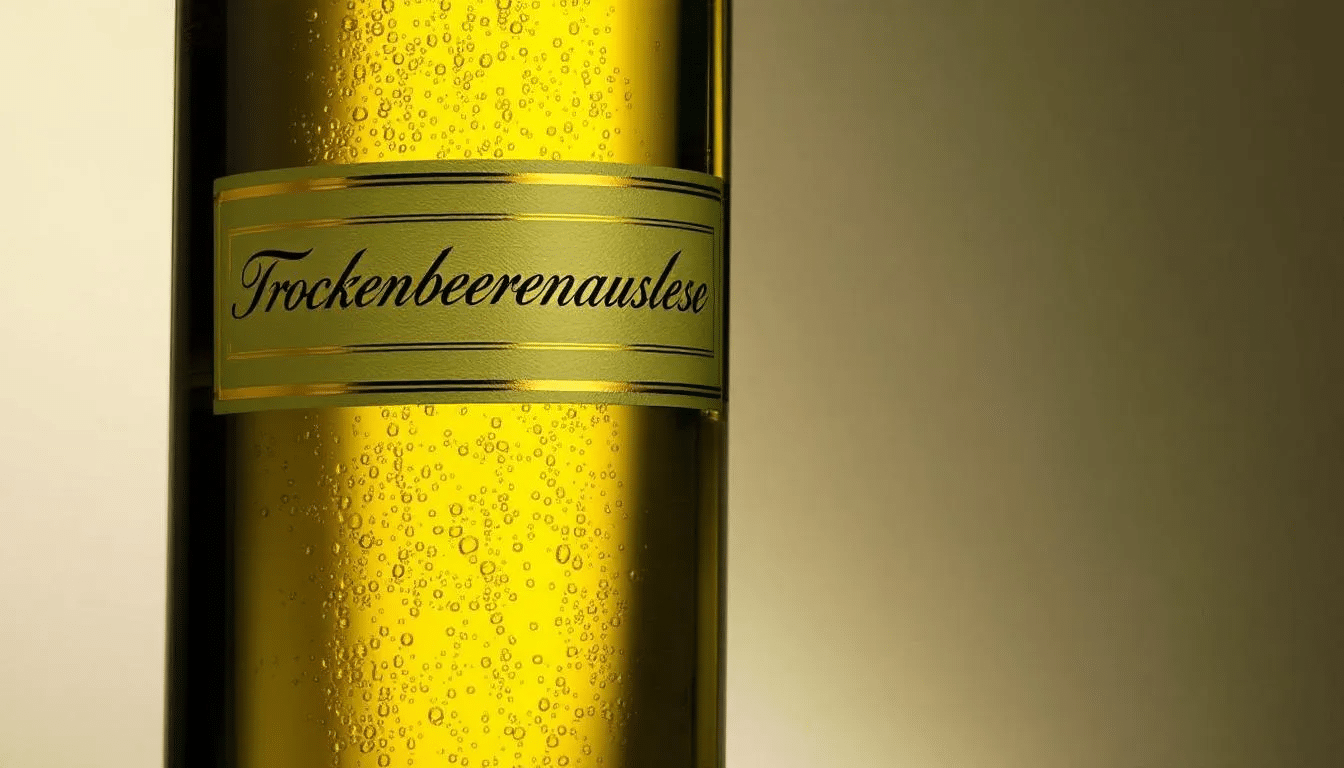
Trockenbeerenauslese displays a deep golden to amber hue, often with orange or bronze highlights and remarkable viscosity, coating the glass with thick, slow-moving “legs” due to its high sugar and glycerol content. As it ages, the color deepens to rich amber, copper, or even mahogany tones.
Aroma
The bouquet of Trockenbeerenauslese is intensely complex and concentrated, and is one of the finest examples of sweet wines:
- Honeyed sweetness: Acacia honey, beeswax, honeycomb
- Dried and candied fruits: Apricot, peach, mango, pineapple, candied citrus peel
- Botrytis character: Saffron, ginger, mushroom, hay
- Floral notes: Orange blossom, jasmine, elderflower
- Spice: Clove, cinnamon, vanilla (especially with age)
- Aged complexity: Caramel, toffee, marmalade, petrol (in Riesling)
Flavor
On the palate, it is remarkably intense yet balanced:
The sweetness is luscious and syrupy but never cloying when well-made. Flavors mirror the aromatics: ripe tropical fruits, stone fruits, honey, and candied citrus. The botrytis adds a fascinating savory complexity—think saffron, tea, and umami notes that provide incredible depth.
Despite the intense sweetness, there is plenty of acidity (especially in Riesling-based TBAs), which provides lift and prevents the wine from feeling heavy. The finish is extremely long, often lasting minutes, with evolving layers of fruit, spice, and mineral notes.
Structure
Sweetness: Exceptionally high residual sugar, typically 150-300+ g/L; Trockenbeerenauslese is considered one of the sweetest wines in the world.
Acidity: High to very high, particularly in cool-climate examples, which is essential for balance.
Alcohol: Low, usually 5-8% ABV due to arrested fermentation.
Body: Full and viscous, with an unctuous, syrupy texture.
Tannin: Virtually none (white wines)
The magic lies in the tension between extreme sweetness and razor-sharp acidity, creating a wine that’s both decadent and refreshing.
Aging
Trockenbeerenauslese has extraordinary aging potential:
Young (0-10 years): Vibrant fruit, pronounced floral notes, fresh acidity, primary botrytis character
Medium age (10-30 years): Developing complexity, honeyed notes intensify, dried fruit character, integrated acidity
Mature (30+ years): Deep amber color, complex tertiary aromas (caramel, nuts, dried fruits, spice), remarkable depth, yet often retaining freshness
Great examples can arguably age gracefully for 50-100+ years. The high sugar and acidity act as natural preservatives. Store bottles lying down in cool (50-55°F), dark, humid conditions.
Market Presence
Trockenbeerenauslese holds an amazing and top-notch spot in the sweet wine world. It’s famous for being rare. The Riesling grape makes the best wines; sometimes other grape varieties, such as Chardonnay, are used to create these incredible wines. The magic ingredient is noble rot (botrytis cinerea) – this special fungus is essential and gives the wine its unique smell and taste that includes notes of apricot, honey, and sometimes even rich dark caramel flavors, all packed into a thick, syrupy body.
What makes TBA so appealing isn’t just its gorgeous, deep golden to dark caramel color and its almost honey-thick texture, it is also their ability to age decades or even a century due to the blend of high sugar levels and strong acidity working together. They are rare and expensive and a treasured find for any serious wine collector, as the German wine classification system puts TBA right at the very top of the quality pyramid.
They are hard to find and can only be sourced from high-end wine shops and the cellars of top-notch restaurants in places like Germany and Austria. The winemakers who create these wines take enormous pride in the production process, knowing that every single bottle represents months of careful vineyard attention and perfect weather conditions coming together, resulting in the ultimate dessert wine experience that is filled with sweet, concentrated flavors that create an unforgettable tasting experience.
Food Pairing
It requires careful pairing:
Classic Pairings:
- Foie gras: The traditional pairing—rich, fatty texture meets sweet intensity
- Blue cheese: Roquefort, Stilton, or Gorgonzola creates a sweet-salty harmony
- Fruit-based desserts: Poached pears, apricot tart, fruit compotes
- Nut desserts: Almond tart, hazelnut cake, walnut pastries
Avoid: Chocolate-based desserts (too rich), very sweet desserts (competing sweetness), or overly acidic foods.
Best Approach: Serve as dessert itself, perhaps with a simple biscotti or shortbread. Serve well-chilled (45-50°F) in small portions (2-3 oz).
Should You Try Trockenbeerenauslese Wine?
Yes, if you:
- Appreciate sweet wines such as Sauternes from Bordeaux

- Curious about the magic of noble rot, botrytized grapes, and extreme winemaking
- Want to invest in an age-worthy wine with decades of potential
- Look for a special bottle for celebrations or gifts.
Consider carefully if:
- You prefer dry wines (though the acidity might surprise you).
- Budget is a concern—these bottles are expensive and rare, a bottle typically costs $100-$500+ for a 375ml bottle, with rare examples reaching thousands.
- You want immediate gratification—these wines benefit from age
Conclusion
Trockenbeerenauslese represents winemaking at its most patient and artisanal. These golden nectars require perfect weather conditions, meticulous hand-harvesting, and years to reach their full potential. The result is a wine of stunning complexity, balance, and longevity—a liquid testament to the intersection of nature, skill, and time. It is much sweeter than Kabinett, which represents the entry-level classification in the German Prädikatswein system, offering lighter, crisper wines with lower alcohol and a range of sweetness levels.