
Vibrant
A vibrant wine is a tasting descriptor for wines that feel alive on the palate with high natural acidity, fresh…
definition
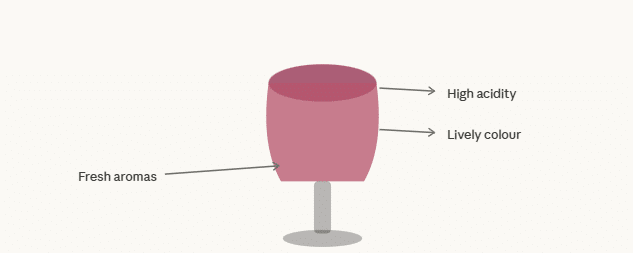
A vibrant wine is a tasting descriptor for wines that feel alive on the palate with high natural acidity, fresh fruit, a lively colour, and plenty of energy. Vibrant wines are characterized by high acidity, refreshing citrus or red fruit flavors, and light-to-medium bodies. It’s the opposite of a flat, heavy, or oxidised wine.
Vibrant wines are often associated with cooler climates, where grapes naturally retain higher acidity. Younger vintages generally exhibit primary fruit and higher acidity, which develop into more complex notes with age. Mouth-watering acidity should trigger immediate salivation, especially along the sides of the tongue and cheeks, and high acidity creates a tart, zesty, or refreshing sensation. Fresh, primary fruit aromas in vibrant wines include citrus, green apple, and crisp red berries, rather than cooked or dried fruit notes.
It is commonly used as a descriptor for wine, such as Chablis, Pinot Noir from Burgundy, Sauvignon Blanc, Grüner Veltliner, and many natural or pétillant naturel styles. Other classic examples of vibrant wines include Pinot Grigio, Sauvignon Blanc, Riesling, and Beaujolais. Sauvignon Blanc is known for its high acidity, herbaceousness, and tangy notes of grapefruit or lime. Pinot Noir is a light-bodied red with bright cherry, cranberry, and floral notes, offering high acidity and low tannins.
In the glass, vibrant wines often appear bright, reflecting light well, with vivid colors indicating high acidity and freshness.
How Is Vibrant Wine Made?
Vibrancy is shaped by four main factors: cool growing climates (like Champagne, Mosel, or Central Otago) that slow ripening and lock in acidity; early harvesting before sugars peak; winemaking decisions such as ageing in neutral stainless steel rather than oak; and skipping or limiting malolactic fermentation (MLF), the process that converts sharp malic acid into softer lactic acid.
Pros and cons of vibrant wines
On the upside, vibrant wines are wonderfully food-friendly, their acidity slices through butter, cream, and fat — and their structure allows them to age gracefully for years or even decades. On the downside, high acidity can feel harsh in a very young wine, and a lighter body isn’t to everyone’s taste, particularly if you prefer a richer, rounder style.
Conclusion
Vibrancy is generally considered a hallmark of quality in the wine world, signalling freshness, balance, and terroir expression. Whether you find it electric or too sharp largely comes down to personal preference and context; a razor-edged Muscadet with oysters is a revelation, but the same wine alongside a spicy curry might feel jarring. Understanding vibrancy helps you match wine to the right occasion and palate.