
Methoxypyrazines Revealed: 5 Essential Wine Flavor Secrets
🔊 Pronunciation: meth-OX-ee-PEER-ah-zeens Methoxypyrazines are naturally occurring aromatic compounds in wine grapes that create distinctive “green” flavors and aromas, including…
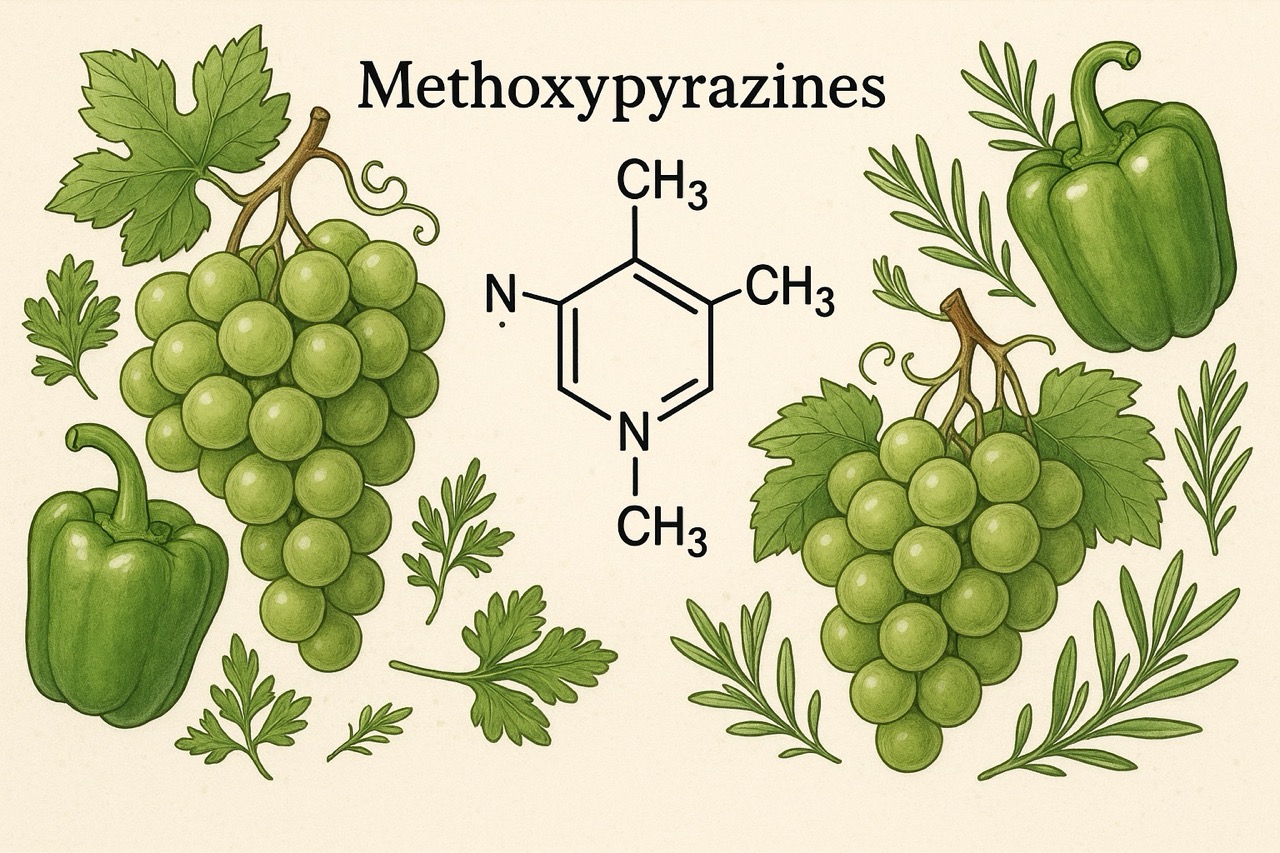
definition
🔊 Pronunciation: meth-OX-ee-PEER-ah-zeens
Methoxypyrazines are naturally occurring aromatic compounds in wine grapes that create distinctive “green” flavors and aromas, including bell pepper, fresh grass, jalapeño, and herbaceous notes. These compounds are most prominent in Bordeaux grape varieties and are responsible for the characteristic vegetal character that defines many premium wines.
Quick Sip: What Are Methoxypyrazines?
Methoxypyrazines are organic compounds found naturally in grape skins that produce herbaceous, vegetal aromas in wine. They’re particularly concentrated in Sauvignon Blanc, Cabernet Sauvignon, and Merlot, creating the signature “green” character that ranges from pleasant grassiness to intense bell pepper notes depending on concentration and winemaking techniques.
Key Statistics:
- Detection threshold: 2-16 nanograms per liter (extremely potent)
- Primary types: IBMP, IPMP, SBMP (scientific abbreviations)
- Peak concentration: Véraison
 Véraison is arguably one of the most imp… More (grape colorWhat role do Anthocyanins play in wine? … More change) period
- Most affected varieties: Sauvignon Blanc, Cabernet Sauvignon, Merlot, Carmenère
- Reduction methods: Sunlight exposure, canopy management, harvest timing

TL;DR: Methoxypyrazines are potent aromatic compounds that create the herbaceous, “green” character in wines like Sauvignon Blanc and Cabernet Sauvignon, ranging from pleasant grassiness to intense bell pepper notes depending on viticultural practices and grape maturity.
| Compound Type | Primary Aroma | Detection Level | Most Common In | Viticultural Impact |
|---|---|---|---|---|
| IBMP | Bell pepper, green capsicum | Extremely low (2ng/L) | Cabernet Sauvignon, Merlot | Reduced by sun exposure |
| IPMP | Earthy, pea pod, green | Very low (1-2ng/L) | Sauvignon Blanc | Diminishes with maturity |
| SBMP | Green bell pepper, herbal | Low (10ng/L) | Bordeaux varieties | Lessened by leaf removal |
Primary Flavor Characteristics
Positive Expressions (balanced levels):
- Fresh grass and herbs
- Green bell pepper complexity
- Mineral-driven earthiness
- CrispCrisp wines come from several key grape … More, clean vegetal notes

Excessive Expressions (high concentrations):
- Overwhelming green pepper
- Raw jalapeño intensity
- Unripe, harsh vegetality
- Masking of fruit character
Viticultural Factors Affecting Methoxypyrazines
Increase Methoxypyrazine Concentration:
- Shaded fruit zones
- Cool, wet growing seasons
- Early harvest timing
- DenseDense refers to wines with exceptionally… More canopy coverage
- Northern exposures

Decrease Methoxypyrazine Concentration:
- Direct sunlight exposure
- Warm, dry vintages
- Extended hang time
- Strategic leaf removal
- Optimal canopy management
Wine Styles and Regional Expression
Loire Valley Sauvignon Blanc: Mineral-driven methoxypyrazines create classic “gunflint” character alongside citrus fruit
Bordeaux Cabernet Sauvignon: Balanced vegetal notes add complexity to dark fruit in premium appellations
New Zealand Sauvignon Blanc: Intense methoxypyrazine expression creates a signature tropical fruit and jalapeño character
California Cabernet: Warm climate reduces methoxypyrazines, allowing fruit character to dominate
Winemaking Considerations
Managing Methoxypyrazines:
- Harvest timing is crucial for balance
- Gentle extraction prevents over-concentration
- Blending can moderate intensity
- Oak aging may mask excessive levels
Key Takeaway: Methoxypyrazines aren't wine faults—they're natural compounds that create distinctive regional and varietal character when properly managed through viticulture and winemaking techniques.
Want to understand more wine chemistry? Explore our wine education resources to learn about tannins, acids, and other compounds that shape wine character and quality.