
Vegetal
Vegetal character in wine refers to aromas and flavors reminiscent of green plants, vegetables, or herbs. These can range from…
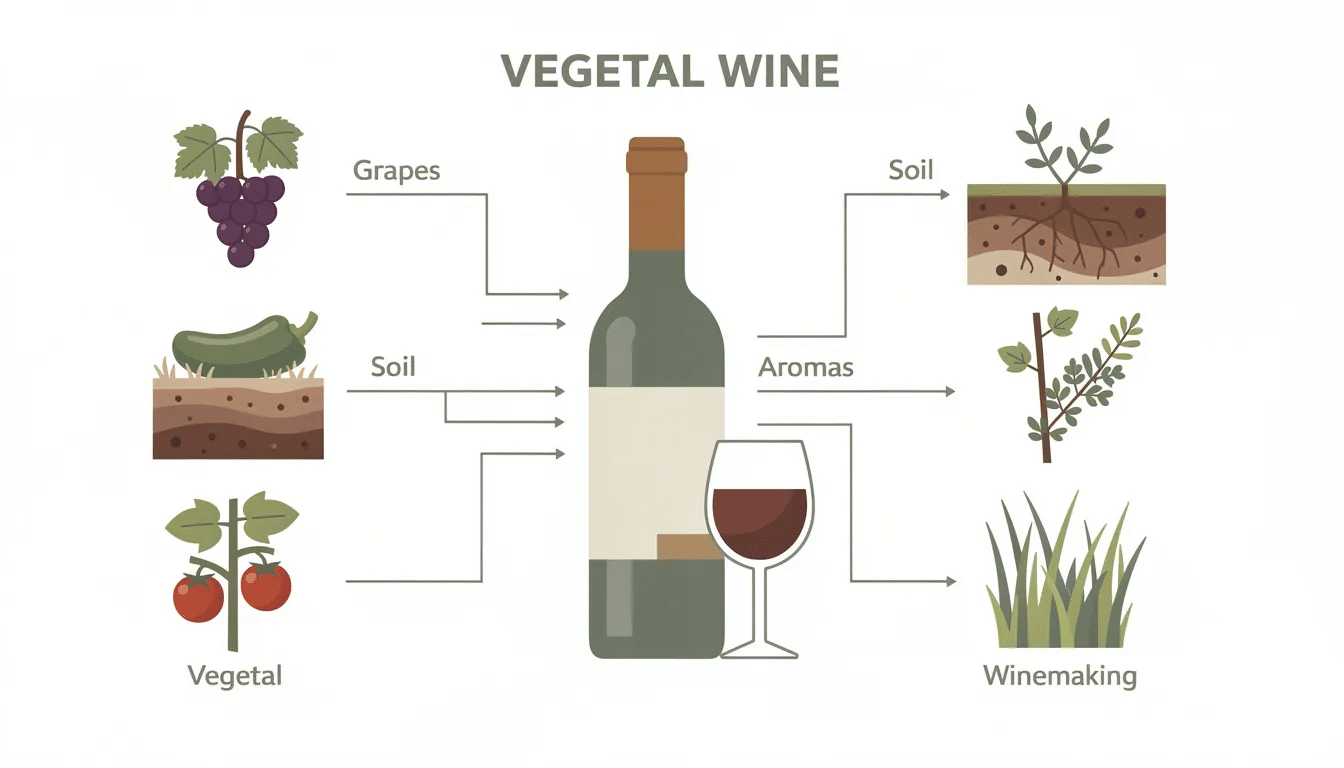
definition
Vegetal character in wine refers to aromas and flavors reminiscent of green plants, vegetables, or herbs. These can range from pleasant herbaceous notes to green pepper or other undesirable vegetable characteristics.
Common descriptors include:
- Bell pepper or green pepper (capsicum)
- Asparagus
- Green beans
- Grass or hay
- Tomato leaf or vine
- Eucalyptus or mint (in some cases)
- Fennel (noted for its spicy, herbal, and aromatic qualities, especially in certain red wines)
The vegetal character primarily comes from compounds called methoxypyrazines, which are naturally present in grape skins, particularly in varieties like Cabernet Sauvignon, Sauvignon Blanc, Cabernet Franc, and Carménère. The development of these compounds in grapes is influenced by the grapevine’s canopy structure and vineyard management practices, including the levels of heat and sunlight the grapes receive.
The ripening process is closely monitored by measuring sugar levels in the grapes to ensure optimal maturity. These aromas can be perceived through both smell and taste, with the leafy character often detected on the palate. Vineyard practices play a crucial role in controlling the intensity of vegetal notes in the finished wine. These compounds are more pronounced when grapes are grown in cooler climates or when they haven’t reached full ripeness.
Is vegetal character a fault?
This is a nuanced character that exists on a spectrum that ranges from desirable to faulty:
When it’s considered acceptable or even desirable:
- Subtle herbaceous notes in Sauvignon Blanc (grass, green bell pepper) are often part of the varietal character, especially from cooler regions like New Zealand or the Loire Valley.
- Light vegetal notes in Cabernet Franc can contribute to its complexity.
- In an appropriate balance with fruit, these characteristics can add interest and typicity.
When it’s considered a fault:
- Overly dominant green pepper or asparagus aromas that overwhelm the wine.
- Stems from underripe grapes due to poor vineyard management or unfavorable growing conditions.
- When the character is harsh, bitter, or unpleasantly green rather than fresh and herbaceous.
- When it masks desirable fruit characteristics.
Excessive vegetal character is often noted as a negative attribute in tasting notes, especially when it dominates the wine and detracts from its overall appeal. High-quality wines achieve a balance when the notes do not overpower the sweet fruit flavors, maintaining harmony and complexity.
After addressing vineyard management, winemakers may alternatively use blending techniques to reduce the impact of these aromas, such as combining different wine lots or using a blend of oak chips to mask pyrazine-related odors. Precise weight measurements of additives or interventions are important in managing vegetal character during winemaking to ensure effective controlled results.
Pairing and Aging Vegetal Wines
Pairing and aging vegetal wines opens up a fantastic world of food possibilities and amazing taste experiences. Wines with strong vegetal aromas (think freshly cut grass, asparagus, or green herbs) can be both super versatile and really exciting at the dinner table!
For example, a Sauvignon Blanc from the Loire Valley, known for its crisp bite and grassy, green notes, is a perfect match for seafood, tangy goat cheese, and fresh salads. These wines’ herbal and vegetal character can also make dishes with green vegetables taste incredible – like asparagus risotto or herbed chicken.
Red wines like Cabernet Sauvignon and Cabernet Franc, especially those from Bordeaux Bordeaux is one of France’s most famous … More or cooler regions, often show vegetal notes reminiscent of bell pepper or tomato leaf.
These savory flavors pair beautifully with grilled meats, game, and strong cheeses, where the wine’s green undertones work perfectly with the savory, umami elements in foods. Pinot Noir from New Zealand, with its subtle vegetal and earthy profile, is another fantastic choice for pairing with dishes like roasted duck, mushroom risotto, or charcuterie!
When it comes to aging, these wines can change in really fascinating ways. A Pinot Noir from a cooler region may develop much more complex flavors and aromas over time, as the initial green notes blend with fruit and earthy undertones.
Similarly, a well-made Merlot or Malbec can soften with age, allowing the vegetal character to blend smoothly with ripe fruit and subtle oak. Winemakers often use careful fermentation and blending techniques to achieve the right balance between vegetal and fruity components so the wine ages gracefully.
Different grape varieties show vegetal notes in very different ways! Chardonnay and Syrah, for instance, can show green or herbal hints depending on the vineyard and winemaking process; Grenache and Tempranillo tend to lean more toward fruity and floral profiles. The timing of the harvest, how the fruit is handled, and vineyard management all play a huge role in shaping the wine’s aromatic profile.
Conclusion
Vegetal character in wine isn’t inherently a fault – context matters. In moderate amounts and certain wine styles, herbaceous notes contribute authentic varietal expression and regional character. However, excessive vegetal flavors typically signal underripe fruit and are considered a flaw.
The key is balance: when vegetal notes complement rather than dominate the wine’s profile, they can enhance complexity. As wines are aged, vegetal notes can integrate and evolve, sometimes enhancing the wine’s overall complexity. Modern viticulture techniques such as leaf removal and canopy management, help winemakers control these characteristics, allowing them to craft wines with the desired level of vegetal expression for their style and market.