
Niagara Peninsula
The Niagara Peninsula is located in southern Ontario, Canada, and is nestled between Lake Ontario to the north and Lake…
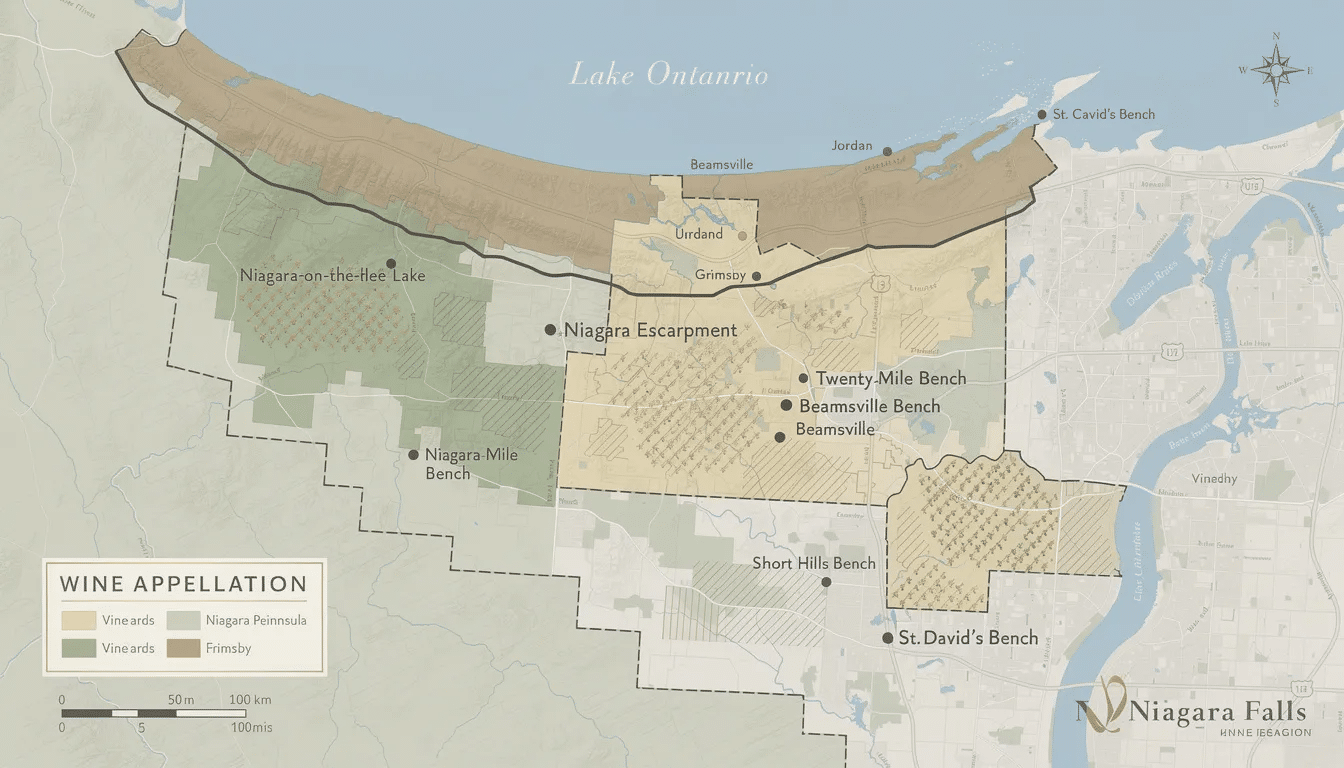
definition
The Niagara Peninsula is located in southern Ontario, Canada, and is nestled between Lake Ontario to the north and Lake Erie to the south. It is part of the Great Lakes Region, which is known for its unique climate and viticultural diversity.
It stretches from the Niagara River in the east (along the U.S. border) to Hamilton, Ontario in the west, encompassing the area around Niagara Falls. The Niagara Peninsula is the largest and most diverse viticultural area in Canada, stretching roughly 55km (35 miles). The region is approximately an hour’s drive from Toronto.
The Niagara Escarpment rises to some 177m (575ft) above sea level and passes directly through the Niagara Peninsula, shaping the area’s topography and microclimates.
Why is it famous
The Niagara Peninsula has gained international recognition for producing world-class Icewine (Eiswein), a sweet dessert wine made from grapes that are naturally frozen on the vine. The Niagara Peninsula produces 90 percent of Canada’s ice wine and is the world’s largest producer of this wine style. It consistently produces outstanding Icewine and has also earned a reputation for exceptional cool-climate wines, such as aromatic white varietals like Riesling and reds like Pinot Noir and Cabernet Franc. The region produces a wide range of wine styles, including rosé, sparkling wines, and Pét-nats.
Winemaking in the Niagara Peninsula began in the early 19th century, with European settlers focusing on native grape varieties like Concord and Niagara. The Niagara wine industry faced challenges during Prohibition but evolved significantly in the late 20th century when it began focusing on growing Vitis vinifera grapes, which now dominate the region. The region’s VQA (Vintners Quality Alliance) certification system ensures quality standards.
How big Is It?
The Niagara Peninsula wine region covers approximately 18,000 hectares (44,500 acres) with around 13,500 hectares under vine. It’s home to over 100 wineries, making it Canada’s largest wine-producing region. The wine-growing area stretches roughly 50 kilometers along the Niagara Escarpment.
Geography and Climate
The Niagara Peninsula benefits from a unique microclimate created by the moderating influence of two Great Lakes (Ontario and Erie) and the protection of the Niagara Escarpment—a UNESCO World Biosphere Reserve. The climate is further influenced by the constant circulation of offshore breezes that blow between Lake Ontario and the Niagara Escarpment, moderating seasonal temperatures across the region. Cold air from the lakes interacts with warm air, extending the growing season and protecting vines from extreme cold. The escarpment serves as both a limestone ridge and a protective one, shielding vineyards from harsh winds and contributing to the diverse mesoclimates.
The importance of slopes and sun exposure is evident, as they shape vineyard microclimates and influence grape ripening. Vineyards located inland and along the lake shore experience different climate influences, affecting viticulture practices and wine styles. The west side of the region is noted for its unique terroir and climate characteristics. The Niagara Peninsula’s cool climate is ideally situated near N43° latitude, with significant day-night temperature shifts and substantial sunshine during the summer months, which is crucial for vine health and fruit development.
The climate is cool continental, with warm summers and cold winters. Lake Ontario helps moderate temperature extremes, extending the growing season and preventing early frosts. Winter temperatures regularly drop below freezing, which is essential for Icewine production. The diversity of viticulture practices in the region is shaped by these geographic and climatic factors. The region receives adequate rainfall and benefits from good air circulation that reduces disease pressure.
Terroir in the Niagara Peninsula
The terroir is remarkably diverse. Soils include glacial deposits, limestone-rich earth from the escarpment, clay, loam, and sandy soils. The Niagara Escarpment’s ancient limestone bedrock contributes minerality to the wines. Slope orientation and elevation create multiple mesoclimates within short distances. Higher elevations along the escarpment offer cooler temperatures and better air drainage, while lower bench areas near the lake receive more warmth. This diversity allows vintners to match specific grape varieties to ideal sites.
How Many Appellations Are There
The Niagara Peninsula is divided into two regional appellations and ten sub-regions, each with unique geographical and climatic characteristics. There are 10 designated sub-appellations (also called DVAs – Designated Viticultural Areas):
- Niagara-on-the-Lake (which is further divided into four sub-regions, often referred to as the ‘four sub’, highlighting the diversity within this area)
- Niagara Escarpment
- Niagara Lakeshore
- Four Mile Creek
- St. David’s Bench
- Short Hills Bench
- Twenty Mile Bench
- Creek Shores
- Lincoln Lakeshore
- Beamsville Bench
Each sub-appellation and sub region have distinct characteristics that are based on soil composition, elevation, and proximity to the lake.
Most Common Grape Varietal
Riesling is the most widely planted and celebrated white grape varietal, thriving in the cool climate. For reds, Cabernet Franc has emerged as particularly well-suited to the region. Other significant varieties include Chardonnay, Pinot Noir, Pinot Gris, Vidal (primarily for Icewine), Gamay, and Merlot.
Wine Style
The region produces a diverse range of styles. Icewine remains the signature product—intensely sweet, concentrated, and luscious. Dry table wines have evolved significantly, with crisp, aromatic whites showing excellent acidity and minerality. The Niagara Peninsula is especially known for producing fresh wines with bright, vibrant acidity that highlight the region’s cool-climate purity. Rieslings range from bone-dry to off-dry with pronounced fruit and petrol notes. Chardonnays are often elegant and refined, both oaked and unoaked, and are noted for their ability to age well in the bottle, expressing the unique terroir of the region.
The choice of bottle closure, such as screwcap or traditional cork, can influence how Chardonnay develops over time. Sparkling wines are gaining recognition. Red wines tend toward medium-bodied expressions with bright fruit, fresh acidity, and often herbal or earthy notes, reflecting the cool-climate character.
Wine Characteristics and Food Pairing
Icewine: Intense sweetness balanced by high acidity, with flavors of apricot, honey, tropical fruits, and marmalade. Pair with blue cheese, foie gras, fruit-based desserts, or enjoy on its own.
Riesling: Crisp acidity, citrus and stone fruit flavors, sometimes with petrol or mineral notes. Excellent with Thai cuisine, seafood, pork, or soft cheeses.
Chardonnay: Ranges from lean and mineral to rich and buttery. Pairs with roasted chicken, lobster, or creamy pasta dishes.
Pinot Noir: Red berry fruit, earthy undertones, silky texture. Works beautifully with duck, salmon, mushroom dishes, or aged cheeses.
Cabernet Franc: Herbal notes (bell pepper, tobacco), red fruit, moderate tannins. Pairs with roasted vegetables, lamb, or charcuterie.
Comparison to Other Regions
While the Niagara Peninsula gets mentioned alongside legendary wine regions like Burgundy, Bordeaux Bordeaux is one of France’s most famous … More, and Tuscany, it really stands out thanks to its amazing terroir and cool climate. The calming effects of Lake Ontario and the Niagara River work together with the region’s limestone-rich soils to create ideal conditions for grape varieties like Pinot Noir, Chardonnay, Riesling, and Cabernet Franc. These natural gifts give Niagara wines a bright acidity and mineral taste that really makes them different from warmer wine regions!
When it comes to making wine, the Niagara Peninsula shares a lot in common with other cool-climate areas like the Loire Valley and Oregon’s Willamette Valley. However, the special mix of climate, soil, and geography in the Niagara Peninsula creates wines with their own signature style that’s elegant, balanced, and full of character! The region’s dedication to quality and new ideas ensures that Niagara wines keep earning praise around the world.
Should You Try It
Absolutely. The Niagara Peninsula offers exceptional value and quality, particularly if you’re interested in exploring cool-climate wines with distinct character. The Icewine is a must-try experience—unlike anything from warmer regions. The region’s Rieslings compete with excellent examples from Germany and Alsace, while the reds offer elegant, food-friendly alternatives to heavier New World styles. Wine tourism in the area is well-developed, with beautiful scenery, excellent restaurants, and proximity to Niagara Falls making it an attractive destination.
Conclusion
The Niagara Peninsula has matured from a novelty wine region to a serious player in the international wine world. While Icewine remains its calling card, the region’s cool-climate table wines—especially Riesling and Cabernet Franc—demonstrate remarkable quality and terroir expression. The diverse sub-appellations, dedicated winemakers, and unique geography combine to create wines with personality and a sense of place. Whether you’re seeking the thrilling sweetness of Icewine or exploring elegant dry wines, the Niagara Peninsula deserves attention from any curious wine enthusiast.