
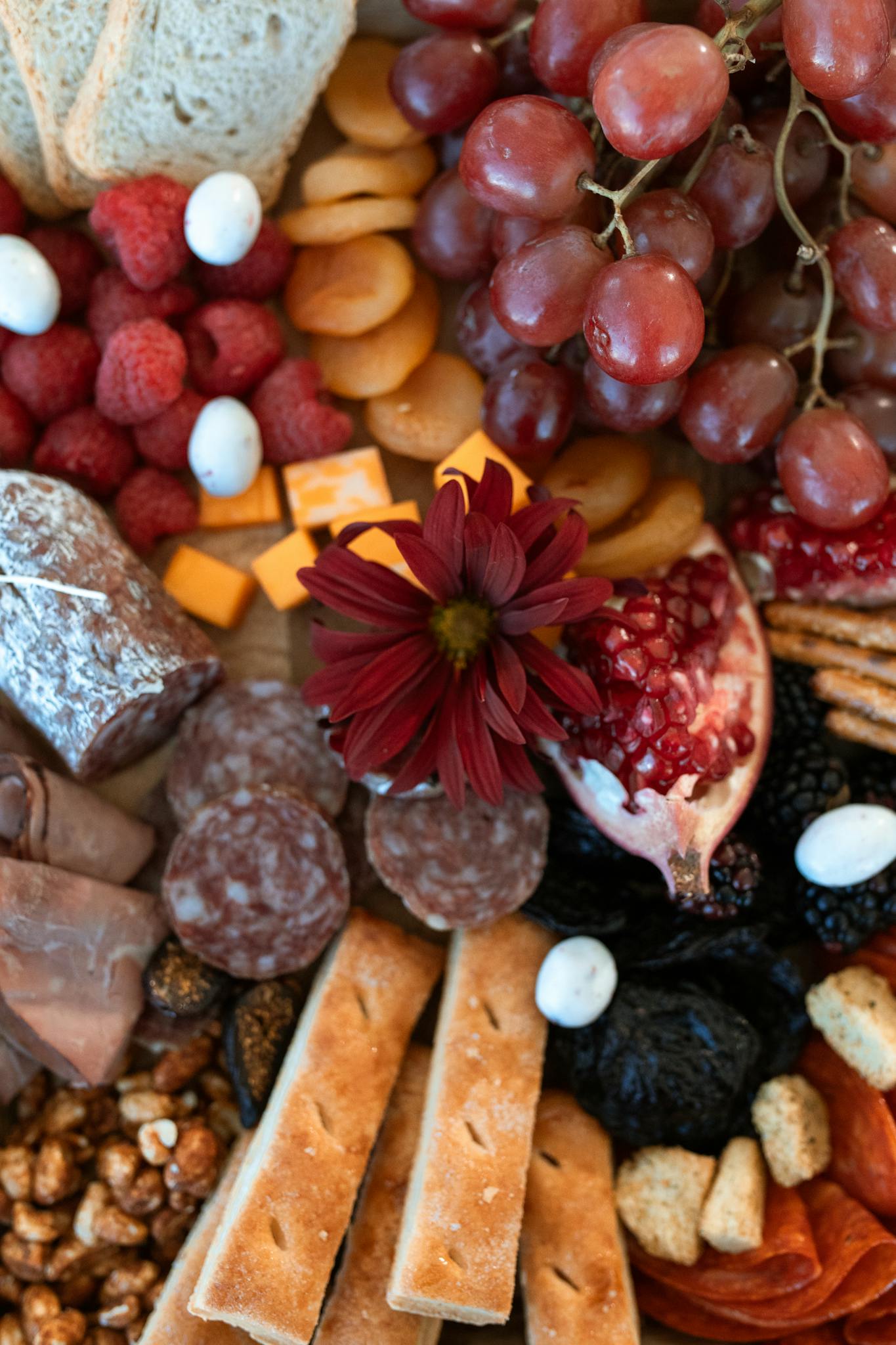
Master Charcuterie Accompaniments and elevate your spread

Creating a truly memorable charcuterie board goes beyond simply arranging cured meat and cheese. It's the careful selection of charcuterie accompaniments that elevates the experience. This transforms a snack into an exploration of flavors and textures.
This guide explores the art of choosing charcuterie accompaniments. We'll cover balancing flavor profiles and adding special touches that make your cheese board stand out. Whether you're a seasoned host or just starting, these tips will help you create a charcuterie masterpiece.
The Texture Triangle: The Foundation of Charcuterie Accompaniments
The "texture triangle" principle is key to a successful charcuterie and cheese board. Include something crunchy, something briney or pickled, and something sweet for a balanced experience.
This interplay of textures adds depth, making every bite a delightful discovery. Marcona almonds, toasted pecans, or seeded water crackers offer crunch.
Briney additions like olives, cornichons, or pickled onions provide a salty, tangy counterpoint. Fresh fruit or dried figs add a touch of sweetness. A drizzle of honey works wonders, too.
The 3:2:1 Rule: Balancing Your Charcuterie Board
This simple rule guides the ratio of charcuterie accompaniments: 3 accompaniments for every 2 cheeses and every 1 meat. You can adjust slightly, but the idea is to have ample exciting flavors to complement the cheeses and meats. Don't add too many meats and cheeses because doing so leaves less room for your star ingredients, the charcuterie accompaniments.
A Quick Guide to Pickled Vegetables
Pickled vegetables bring a tangy, acidic element to your board. Pickling preserves vegetables and enhances flavors, contrasting the richness of cured meats like salami. Pickled onions or pepperoncini add flavor and help cut through fats.
My Pickled Vegetable Quick Guide
- Choose crisp
 Crisp wines come from several key grape ... More, firm vegetables like cucumbers, carrots, red onions, or cauliflower.
 - Prepare the brine: Combine equal parts water and vinegar (white vinegar, apple cider vinegar, or rice vinegar). Add salt, sugar, and spices like peppercorns, mustard seeds, or dill.
- Tightly pack vegetables into clean glass mason jars, leaving headspace.
- Pour the brine over the vegetables, ensuring they're submerged. Seal and refrigerate.

The Magic of Mostarda
Mostarda, an Italian condiment with candied fruit and mustard, adds a unique flavor dimension. Mostarda di Cremona, a mix of candied fruits with mustard, is an easy shortcut to sophistication.
It elevates your charcuterie spread with complex sweetness and spice. This simple addition can make a big difference.
Fresh vs. Dried Fruits: A Charcuterie Guide
Both fresh and dried fruits are vital on a cheese and charcuterie board. Fresh fruit like fresh figs provides vibrant A vibrant wine is a tasting descriptor f... More flavors and textures.
Dried fruits, such as dried tart cherries, Blenheim apricots, or Calimyrna figs, offer chewy, concentrated sweetness. Choose unsulfured options like unsulfured apricots for a more natural flavor. Consider serving cheese brie alongside these delicious treats.
Organic dried apricots are great when they fit your budget. Arrange items by color What role do Anthocyanins play in wine? ... More groups, separating like colors for an appealing rainbow effect. Consider serving cheese and cold cuts with a serving of dried figs and fresh herbs.
Crackers, Bread, and Spreads: Perfect Charcuterie Pairings
Not all bread crackers are created equal. Thin, crispy crackers and crusty breads, like sliced baguette, provide a perfect base for accompaniments. They make the perfect base for cheese brie.
Crostini is easy to find at a local grocery store. However, crackers bought online can surprisingly be fresher.
Jams, like Dalmatia fig spread, are essential for any charcuterie platter. Explore layered spreads like sour cherry spread (also by Dalmatia).
Arranging Your Charcuterie Accompaniments
Visual appeal matters. Use small ramekins for spreads, sprinkle pistachios, and serve olives in small mason jars.
Fill empty spaces with nuts after adding meats, cheeses, fruits, and jams. Glass mason jars are great for dips, honey, jams, and mustards.
Display cheeses like a cheese store. Get creative, and don't fully slice salami to keep it fresh. Use quality cheese knives, enhancing the board's elegance Elegance in alcoholic beverages — whethe... More and the dining experience.
Charcuterie Boards For Special Occasions
Create themed charcuterie boards. For holidays, incorporate festive shapes. Decorate spring boards with fresh flowers "Flowers in wine" refers to a wine fault... More and fall boards with colorful leaves.
Incorporate Italian dry salami or summer sausage for variety. The options for charcuterie accompaniments are endless; just have fun. A charcuterie board can complement larger meals at gatherings, catering to diverse tastes.
FAQs about charcuterie accompaniments
What side dishes go well with charcuterie?
Alongside accompaniments, offer a fresh garden salad. Crusty breads, such as baguette slices, fruit and nut bread, grissini, or seeded crackers, allow guests to layer cheeses and toppings, adding another layer of enjoyment.
Consider using hard cheese varieties like Parmigiano Reggiano for stronger flavors to contrast with the other food options on your board. Add fresh seasonal fruit for bright flavors and complementary colors to add visual appeal.
What are 5 things to avoid on a charcuterie board?
Avoid overly processed cheeses, meats with excessive additives, and stale crackers. Skip bruised fruits.
Steer clear of overly pungent cheeses unless catering to specific preferences. This broadens your board's appeal.
Lastly, avoid using too many soft cheeses as they can make it difficult for your guests to assemble a nice bite.
What are four other accompaniments often found on charcuterie boards?
Besides nuts, fruits, and pickles, offer mustards (honey, herb, or Dijon-style), chutneys, or tapenades for some welcome heat.
Adding items like Kalamata olives, artichoke hearts, or a dollop of olive oil adds depth and new dimensions to traditional flavor combinations. Don't forget blue cheese lovers.
Goat cheese also pairs beautifully with numerous accompaniments. White wines typically match nicely with a variety of cheeses and meats. For bolder pairings, try red wine and pay attention to complementary flavors between wines, cheeses, and your selection of meats.
What is the 3-3-3 rule for a charcuterie board?
There's no "3-3-3" rule. The "3:2:1" ratio balances accompaniments, meat, and cheese. This caters to various guest preferences.
Conclusion
A memorable charcuterie board hinges on thoughtfully chosen accompaniments. Consider how textures and flavors contrast, blend, and enhance the experience. Your imagination and palate are your guides.
Add special occasion themes. Ultimately, a great board is about more than presentation; it's about the accompaniments. Share your charcuterie spread online to inspire others.


