
Hogshead
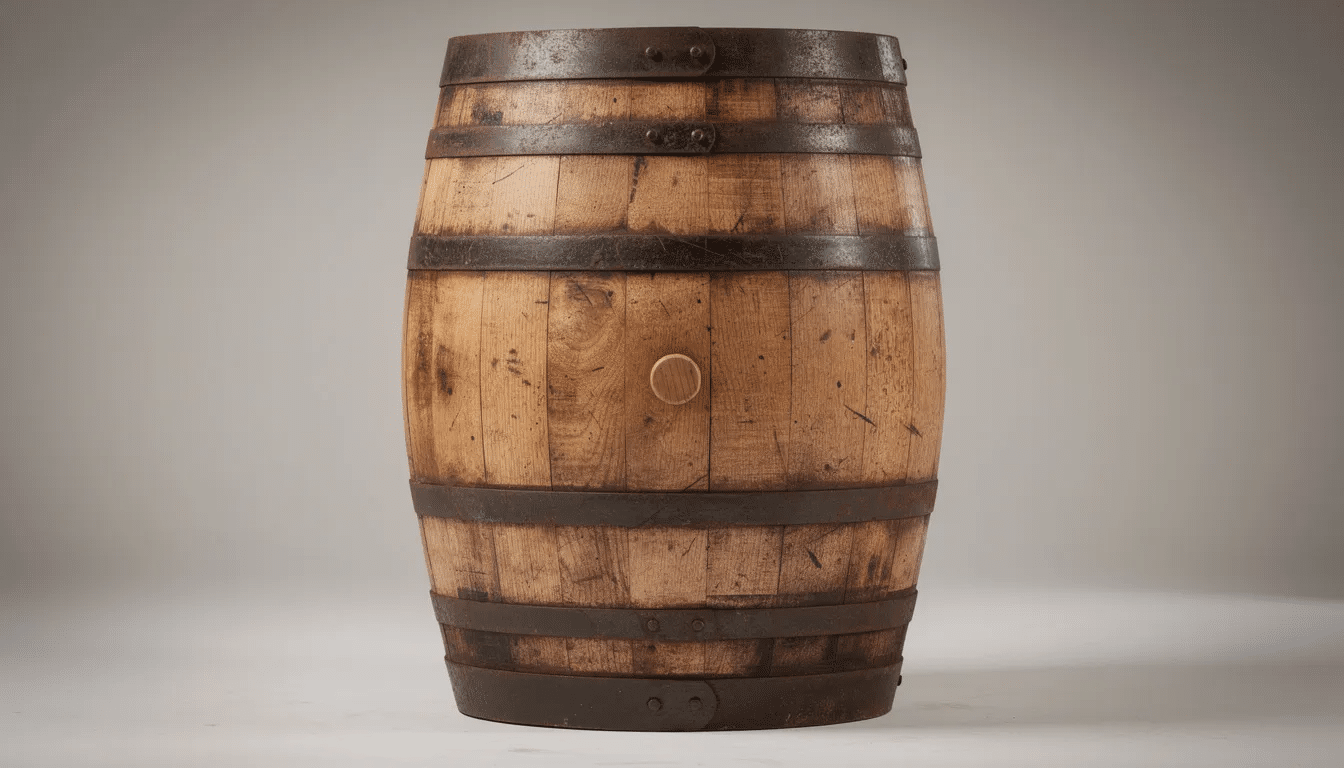
A hogshead is a traditional barrel used primarily for aging and storing wine. Historically, it was also used for other…
definition
A hogshead is a traditional barrel used primarily for aging and storing wine. Historically, it was also used for other liquids such as beer, cider, and spirits. The term ‘hogshead’ is also abbreviated as ‘hhd’ and sometimes spelled as ‘hog’s head.’ In the wine world, these wooden casks play a crucial role in the maturation process, allowing wine to develop complexity, flavor, and character over time.
The term originates in the 14th century and was referred to in Middle English as ‘hog’s head.’ It is believed to be a corruption of the Germanic term ‘ox-head,’ referring to a physical mark on the casks. Hogsheads have been critical to various industries since at least the 15th century, serving as both a physical case (container) and a standardized unit of measurement in international trade.
The hogshead was first standardized by an act of Parliament in 1423, though the standards continued to vary by locality and content. Hogsheads are especially used as units of liquid capacity, especially in historical and shipping contexts, and their size and content have played a significant role in the distribution and trade of wine and spirits. The term “hogshead” dates back centuries and has been a standard unit of measure in the cooperage trade.
What They’re Made From
Hogsheads are crafted from oak, with the specific type of oak varying by region and winemaking tradition. French oak (Quercus robur and Quercus petraea) and American oak (Quercus alba) are the most common choices. The construction involves carefully selected staves—the vertical wooden planks that form the barrel’s body—which are heated and bent into shape, then held together by metal hoops. The interior is typically toasted or charred to varying degrees, which influences the flavors imparted to the wine.
The casks can be made from the staves of ex-Bourbon or Tennessee whiskey casks. In modern Scotch whisky production, they typically hold 225–250 liters and are often reassembled from dismantled American bourbon barrels. The staves used in these casks are equivalent to those found in bourbon barrels, making them a standard comparative measure for cask construction. The craftsmanship involved in making these is considerable, with skilled coopers using techniques passed down through generations.
Different Sizes and Various Units
The size varies depending on the region and its contents. In Britain, it contains about 300 liters (66 imperial gallons; 79 US gallons). Those made for beer or ale came to be 54 gallons (249.54221 liters with the pre-1824 beer and ale gallon, or 245.48886 liters with the imperial gallon). In the United Kingdom, a traditional hogshead for wine is 52.5 imperial gallons (approx. 238.7 liters) and for beer and ale is 54 imperial gallons (approx. 245.5 liters).
Large-volume examples are used for commodities like tobacco or sugar, often have capacities ranging from 100 to 140 gallons. They typically weigh approximately 60 kg when empty. The height of a whisky hogshead is typically 85–90 cm, with a width (bulge) of 70–75 cm and a width (heads) of 60–65 cm. The standard size is often described as being 48 inches long.
Hogsheads were traditionally equal to two barrels (approx. 63 U.S. gallons or 238 liters) for taxing and transporting wine in colonial America. They were a strong vessel that (especially as units of liquid capacity in shipping and historical contexts) were also used for bulk items like salted fish, cider, flour, and hardware packed in straw.
In the wine industry, a standard hogshead typically holds around 300 liters (about 79 gallons), though this can vary. For reference, a Bordeaux Bordeaux is one of France’s most famous … More hogshead holds approximately 225-230 liters, while a Burgundy, they might hold around 228 liters.
Port wine hogsheads are slightly larger at about 250 liters. These measurements aren’t rigidly standardized and have evolved differently across wine regions. The hogshead sits between smaller barrels like the barrique (225 liters) and larger vessels like puncheons (450-500 liters).
Why Size Is Important
Hogsheads are vital to winemaking for several reasons. The oak allows for micro-oxygenation, a slow introduction of oxygen that helps soften tannins and develop the wine’s structure. The wood itself contributes flavors—vanilla, spice, toast, and caramel notes—that become integrated into the wine.
The size of the hogshead cask affects the ratio of wine to wood contact, influencing how quickly these characteristics develop. Hogsheads are favored in winemaking for fermentation, aging, and storage due to their reduced oxygen exposure and subtle tannin extraction—this way, winemakers achieve a balanced oak influence without overwhelming the fruit.
Conclusion
Wine hogsheads represent centuries of tradition in winemaking, combining craftsmanship with functionality. These oak vessels are more than mere containers—they’re instruments that shape a wine’s final character. While modern winemaking has introduced alternatives such as stainless steel tanks and oak chips, traditional hogsheads remain prized for the nuanced, complex qualities they bring to fine wines. Understanding hogsheads helps us appreciate the care and time invested in producing quality wines and why certain bottles command premium prices for the patience and tradition they embody.