
Bâtonnage
Bâtonnage originated several centuries ago in the Burgundy region of France, in Chablis and the Côte d’Or. The term comes…
definition
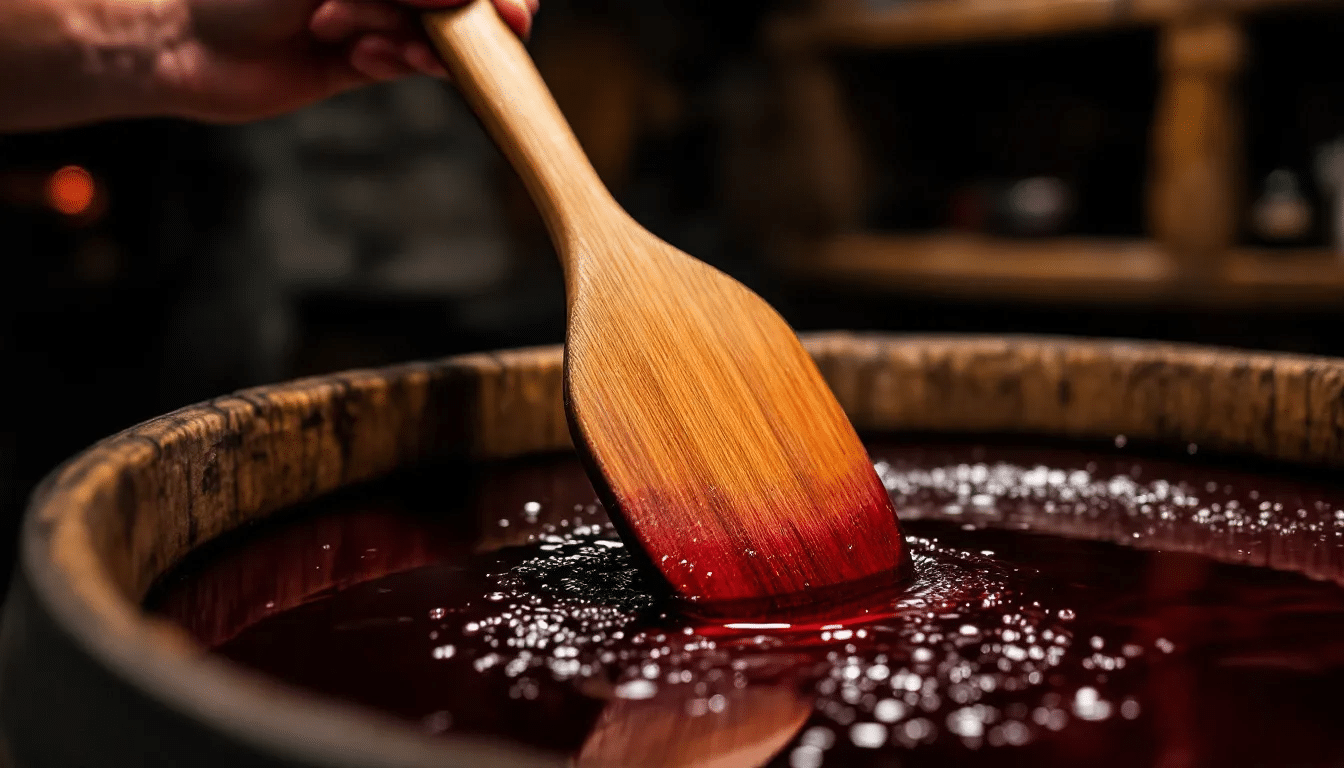
Bâtonnage originated several centuries ago in the Burgundy region of France, in Chablis and the Côte d’Or. The term comes from the French word “bâton,” meaning a stick or rod, the traditional wooden tool used to stir the lees. This technique was developed by Burgundian winemakers who observed that wines aged on their lees “sur lie” (the dead yeast cells and other sediment) developed more complex flavors and improved texture. To describe ‘aged sur lie’ specifically, it refers to a winemaking process where wine remains in contact with the lees during aging, enhancing flavors, creaminess, and complexity, especially in Chardonnay and sparkling wines.
Lees are formed when yeasts die after fermentation and settle to the bottom of the aging vessel, creating a layer of sediment. These lees form the basis for bâtonnage, and their management is crucial for controlling wine flavor and clarity. During fermentation, yeasts convert sugar from the grapes into alcohol, which impacts the wine’s quality and aging potential. Compounds from grapes, such as glutathione, also influence the stability and antioxidant properties of the wine.
The practice became more systematized and widely adopted throughout France during the 18th and 19th centuries, eventually spreading to wine regions worldwide as winemakers recognized the benefits of creating premium wines with enhanced complexity and mouthfeel during the fermentation process.
Bâtonnage in Winemaking
Lees stirring, or bâtonnage, gently stirs up dead yeast cells that sink to the bottom of barrels after the wine finishes fermenting. It’s especially important when making barrel-fermented Chardonnay, and it affects the palate, aromas, and flavors of the finished wine. The French have a special term, “sur lie,” that describes letting wine age while sitting on top of the lees. This method creates wines with incredible complexity and a rich, full-bodied texture.
During winemaking, yeast cells and other bits that settle out change how the wine develops. Stirring the lees helps all the elements blend perfectly and eradicates smells like rotten eggs (hydrogen sulfide and other sulfur compounds) from ruining the wine. This careful management of lees contact is essential for creating wines with amazing aromatic complexity, creamy mouthfeel, and flavors that work together in perfect harmony.
When is Bâtonnage Used?
Bâtonnage is primarily used in white wine production it can occasionally be used for red wines. The most common wines that benefit from this technique include:
White Wines:
- Chardonnay (especially premium, oak-aged versions)
- White Burgundy wines (Meursault, Puligny-Montrachet, Chassagne-Montrachet)
- Chablis (particularly Premier and Grand Cru

- Sauvignon BlancPronunciation: SO-vee-nyohn BLAHN (Frenc… More (in some premium expressions)
- SémillonSémillon is a golden-skinned white wine … More and Sémillon blends
- ViognierViognier (pronounced vee-own-YAY) is an … More
- White Rhône blends


Sparkling Wines:
- ChampagneThe Champagne region is approximately 15… More (during the tirageTirage is a French term (“drawing” or “p… More process)
- CrémantCrémant’s story begins in 1531; it is th… More wines
- The traditional method of sparkling wines worldwide


Bâtonnage is important in traditional sparkling wine production to enhance the complexity and mouthfeel. This technique characteristically imparts flavors such as toast, brioche, and creamy textures to these wines. By adjusting the frequency and duration of bâtonnage, winemakers can influence the style of the wine, ranging from richer, fuller-bodied profiles to more delicate and refined expressions.
Occasionally, bâtonnage is used for red wines:
- Premium Pinot NoirPinot Noir is one of the world’s most re… More
- Some high-end Bordeaux
- Certain Rhône red wines

How Does Bâtonnage Work?
Bâtonnage is typically performed after primary fermentation is complete, during the aging process rather than during active fermentation.
Timing: The technique is applied during the first few months of aging, usually 2-3 times per week; the timing and frequency of bâtonnage are adjusted as needed to optimize wine quality.
Physical Process: Winemakers use a long wooden or stainless steel rod (bâton) to gently stir the settled lees at the bottom of the vessel, such as a barrel or tank. This action suspends the yeast cells and other particles back into the wine. The lees are stirred to increase their interaction with the wine, which also affects the amount of oxygen introduced during the process. The lees mustn’t be left undisturbed for too long, as this can lead to undesirable flavors or faults in the wine.
Lees Contact: The stirring increases contact between the wine and the lees, which consists primarily of dead yeast cells, grape pulp particles, and tartrate crystals. During bâtonnage, the concentration of compounds such as amino acids, volatile sulfur compounds, and antioxidants released from the lees can significantly influence the wine’s sensory qualities and stability.
Duration: The process typically continues for 3-6 months; some premium wines may undergo bâtonnage for up to a year or more. The winemaker carefully monitors the point at which bâtonnage should be stopped to avoid negative effects, such as excessive oxidation or the development of off-flavors.
Frequency Adjustment: Early in the process, stirring might occur 2-3 times weekly, gradually reducing to once weekly or even less frequently as the wine develops. Bâtonnage is completed before bottling to ensure the wine achieves the desired complexity and texture.
The versatility of bâtonnage allows winemakers to enhance wine styles, from the classic barrel-fermented Chardonnay to innovative sparkling wines. Lees stirring isn’t just limited to white wines – it plays a major role in creating complex sparkling wines, where sur lie aging deepens the wine’s character and makes the texture incredibly refined. When it comes to sparkling wines, extended contact with the lees during sur lie aging can give the signature notes of fresh brioche and warm toast, while helping to create a more persistent mousse and a refined mouthfeel.
Bâtonnage is used for certain red wines, especially robust varieties like Cabernet Sauvignon, where sur lie aging works wonders to soften harsh tannins and add layers of complexity. The use of lees stirring enables winemakers to influence malolactic fermentation, reducing the risk of spoilage, creating a more stable final product, and reducing the risk of oxidation.
What Are the Benefits?
The practice of bâtonnage provides several significant benefits to wine quality:
Enhanced Texture and Mouthfeel:
- Creates a creamier, more viscous, and richer texture
- Adds weight and body to the wine
- Provides a silky, smooth finishFinish refers to the practice of aging s… More

Flavor Complexity:
- Imparts subtle bread, brioche, and biscuit notes
- Adds nutty, toasty characteristics
- Contributes umami and savorySavory wine refers to wines that exhibit… More elements
- Enhances the wine’s overall depth and complexity

Chemical Benefits:
- Releases mannoproteins from yeast cell walls, which improve mouthfeel
- Provides natural antioxidants that help preserve the wine
- Can help integrate oak flavors more smoothly
- May enhance malolactic fermentation when desired
- The presence of sugars during fermentation influences the breakdown of lees, which can further enhance the benefits of bâtonnage.
- Some studies have observed increased concentrations of certain compounds after bâtonnage, suggesting potential improvements in wine stability and complexity.
Aromatic Development:
- Adds subtle yeasty, bakery-like aromas
- Can enhance fruit expression through better integration
- Contributes to longer-lasting aromatic complexity
Color Wine color refers to the visual appearan… More Stability:
- In white wines, can help to maintain color stability
- Reduces browning and oxidation when performed properly
Conclusion
Bâtonnage represents one of the most elegant and time-honored techniques in premium winemaking, transforming simple grape juice into complex, textured wines that showcase both terroir and craftsmanship. This ancient Burgundian practice has proven its worth across centuries and continents, becoming an essential tool for winemakers seeking to create wines with exceptional depth, complexity, and mouthfeel. Much of the magic of bâtonnage happens in the cellar, where careful management of the lees and aging environment is crucial to the final result.
The technique requires skill, timing, and patience, as over-stirring can lead to unwanted off-flavors, while under-stirring may not achieve the desired benefits. When executed properly, bâtonnage elevates wines from good to exceptional, adding layers of complexity that cannot be achieved through other winemaking methods.