
Millerandage
Millerandage (also spelled “millerandage” or referred to as “hen and chickens”) is a physiological disorder in grapevines that occurs during…
definition
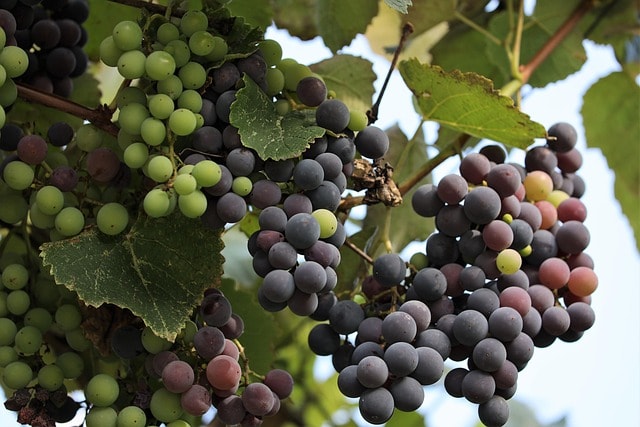
Millerandage (also spelled “millerandage” or referred to as “hen and chickens”) is a physiological disorder in grapevines that occurs during flowering and fruit set. It is influenced by the incomplete distribution of pollen during pollination or fertilization, resulting in the presence of grape bunches with berries of potentially dramatically different sizes.
Millerandage leads to uneven development and distribution of growth hormones in grapes within the same bunch or grape cluster, resulting in berries of uneven size.
- Poor weather conditions during flowering (cold, wet, or windy weather) disrupt pollination
- Nutrient deficiencies, particularly boron or zinc deficiencies in the soil
- Vine stress from excessive vigor, water stress, or disease
- Varietal susceptibility – certain varieties, such as Pinot Noir
 Pinot Noir is one of the world’s most re… More, ZinfandelZinfandel is one of America’s most disti… More, and SangioveseSangiovese is one of Italy’s most import… More, are particularly prone to this condition
- Temperature fluctuations during the critical flowering period (typically 10-14 days)
- Wind and pests can disrupt flowering and pollination, contributing to the irregularity


The result is clusters containing a mix of normal-sized berries, small seedless berries (called “shot berries”), and sometimes undeveloped berries that remain green. The grape cluster will contain both larger berries (hens) and smaller berries (chicks), and the smaller berries are often seedless and stay green.
These smaller berries, sometimes called ‘chicks’, are contrasted with the larger, fully developed ‘hens’ in the same bunch. The uneven size and development of berries within a cluster is an irregularity in viticulture, and is often attributed to environmental factors such as wind, pests, and nutrient deficiencies.
When discussing the role of nutrients, the leaves play a crucial role in providing energy for berry development, and poor leaf health can exacerbate the problem. The health and vigor of vines influence the development of seeds within the berries, and poor seed development leads to the production of smaller berries.
Why It Is Important
Millerandage has significant implications for both vineyard management and wine quality:
Viticultural Impact:
- Reduced overall yieldYield in winemaking refers to the amount… More, sometimes dramatically (20-50% crop loss)
- Creates uneven ripening within clusters
- Increases labor during harvest (sorting requirements)
- Makes mechanized harvesting more challenging

Quality Considerations:
- Can enhance quality in moderation by naturally reducing yields and concentrating flavors
- Shot berries have a higher skin-to-juice ratio, increasing phenolic concentration, colorWhat role do Anthocyanins play in wine? … More, and tannins
- Creates more complexity in the final wine
- Severe millerandage can lead to quality issues from uneven ripeness. The presence of unripe berries can introduce green flavors to the wine.
- Millerandage can be a success and potentially can result in positive and negative effects in wine quality, depending on its extent and how it is managed.


What Wines Are Made Using Millerandage
While millerandage isn’t intentionally induced, certain wines and regions commonly experience it:
Grape Varieties Prone to Millerandage:
- MerlotMerlot is one of the world’s most widely… More – particularly susceptible, especially in Bordeaux
- Grenache – common in Southern Rhône and Spain
- MalbecMalbec is a distinctive red wine varieta… More – frequently affected in Argentina and Cahors
- GewürztraminerGewürztraminer is one of the wine world’… More – in AlsaceAlsace is located in northeastern France… More
- ChardonnayChardonnay is a white wine made from gre… More – can occur in cooler climates
- Pinot Noir – considered particularly susceptible to uneven development and millerandage; challenging to grow due to this, but wines derived from these grapes can have unique aromatic notes not typical of the variety
- Zinfandel – considered prone to millerandage, with uneven ripening, adding complexity to vineyard management and wine characteristics
- Sangiovese – considered challenging due to its susceptibility to uneven ripening and potential for green flavors in the resulting wine




Notable Wine Regions:
- BordeauxBordeaux is one of France’s most famous … More (especially Right Bank appellations like Pomerol and Saint-ÉmilionSaint-Émilion is located in the Right Ba… More)
- Rhône Valley (both Northern and Southern)
- ChampagneThe Champagne region is approximately 15… More – where it can affect blend consistency
- Burgundy – particularly in challenging vintages



Millerandage is a phenomenon that occurs in vineyards worldwide.
Some prestigious estates view moderate millerandage as beneficial, particularly for red wines where concentration is prized.
Key Characteristics
Visual Indicators:
- Grape bunches with mixed berry sizes (some normal, some very small)
- Shot berries appear darker and harder than normal berries
- Loose, straggly clusters rather than compact bunches
Wine Characteristics:
- Increased concentration of flavor and colorWine color refers to the visual appearan… More; the higher skin-to-juice ratio can result in wines with a richRich wine refers to wines that deliver a… More concentration of flavors
- Higher tannin levels due to increased skin-to-juice ratio
- Greater phenolic complexity
- Potential for more structured wines
- Enhanced aging potential in red wines
- The unique conditions caused by millerandage can help certain wines develop greater complexity and structure over time


Vintage Variation:
- More common in cool, wet years
- It can be a defining characteristic of certain vintages
- Skilled winemakers can turn it into an advantage
Prevention and Management Strategies
Preventing and managing Millerandage is important for consistent harvests. While some things that cause uneven berry development are totally out of a viticulturist’s control, there are lots of smart steps that can help limit problems and reduce the impact on your final wine.
Cultural Practices: Growers can boost their chances of good fruit set and uniform berry size by fine-tuning their vineyard work. Canopy management ensures that grape flowers are well exposed to sunshine and have good airflow. It also cuts down the risk of uneven ripening. Managing vine vigor through balanced pruning and controlled watering helps stop the excessive growth that steals energy away from berry development.
Nutritional Management: It is crucial to ensure that the vine receives all the nutrients it needs for proper fertilization and berry formation. This is especially true for boron and zinc. Regular soil and leaf testing helps growers identify and correct nutritional problems before flowering happens. This supports the development of uniform grape clusters, reducing the production of small and seedless berries.
Weather and Timing Adjustments: Weather is a major player that affects flowering and fruit set. Adjusting pruning schedules helps to influence when the vine flowers, helping to avoid periods of cold, wet, or windy weather. In areas that get hit with spring frosts or heavy rain, installing protective windbreaks or using frost protection aids delicate grape flowers during this make-or-break time.
Varietal and Site Selection: Planting and cultivating grape varieties that are less susceptible to Millerandage or planting vineyards in areas with good microclimates can cut down the risk of uneven berry development. The combination of the right grape variety and the best vineyard site is key to consistent wine quality.
Harvest and Sorting: Even with the best vineyard management, some degree of Millerandage might still be present. Careful hand-harvesting and sorting in the vineyard or winery lets growers remove underdeveloped or green berries, ensuring that only the best fruit is used.
Conclusion
Millerandage is one of nature’s paradoxes in winemaking – a viticultural problem that can become a quality advantage. It reduces yields and complicates vineyard management; however, moderate millerandage often produces more concentrated, complex, and age-worthy wines, particularly in red wine production.
For winemakers, the key is recognizing when millerandage enhances quality versus when it creates problems requiring intervention through careful sorting and harvest timing. In many prestigious wine regions, vintages marked by moderate millerandage are often remembered for producing particularly concentrated and memorable wines, demonstrating how agricultural challenges can translate into vinous excellence.